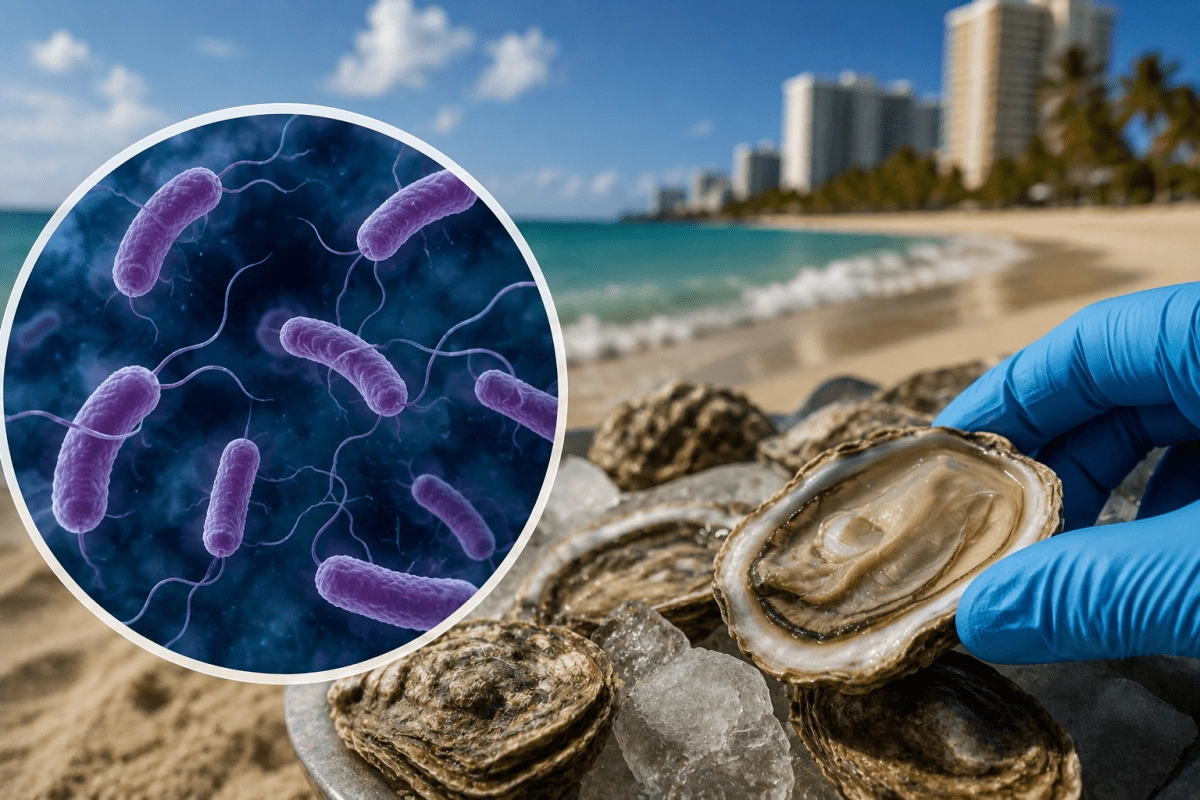

Florida confirmed 11 cases and one death from Vibrio vulnificus so far in 2026, a potentially deadly bacteria that can be found in salt and brackish waters and that tends to be more active during the warm months.
According to the most recent update from the Florida Department of Health, dated July 23, the death occurred in Palm Beach County. That county has two cases, while infections were also reported in Miami-Dade, Lee, Hillsborough, Marion, Okaloosa, Polk and St. Johns.
Although it is often called “flesh-eating bacteria,” Vibrio vulnificus does not literally devour tissue. The term is used because some wound infections can progress rapidly and cause necrotizing fasciitis, severe destruction of the skin and soft tissues.
Where were the cases recorded in Florida?
The 11 cases confirmed by the state are distributed as follows:
The official figure corresponds to the latest report published by the Florida Department of Health. It does not mean that all beaches in those counties have contaminated water or that there is a general closure order.
Nor is it a bacteria exclusively associated with a specific beach. Vibrio lives naturally in coastal waters and can be found especially in areas where fresh and salt water mix.
How can the bacteria be spread?
There are two main ways to get a Vibrio infection. The first occurs when an open wound comes into contact with salt or brackish water. This includes cuts, scrapes, recent surgical wounds, piercings, and tattoos that have not yet healed.
Infection can also occur when handling raw shellfish or when its juices come into contact with a break in the skin.
The second way is food. A person can become ill after eating raw or undercooked shellfish, especially oysters. The CDC warns that a contaminated oyster does not necessarily look, smell, or taste different.
Is it dangerous to enter the sea in Florida?
For most healthy people, the risk of developing a serious infection remains low. The presence of cases does not mean that all people should avoid Florida beaches.
However, those with open wounds should stay out of salt or brackish water until the injury has healed. When exposure cannot be avoided, CDC recommends covering the wound with a waterproof bandage.
After contact with coastal water, a wound should be washed immediately with soap and clean running water. These precautions also apply when fishing, walking through flooded areas, or handling raw shellfish.
Who is at greatest risk of complications
Serious infections are more common among people who have:
In these groups, the bacteria can enter the bloodstream and cause septicemia, dangerously low blood pressure, and blistering lesions.
What are the symptoms
Symptoms depend on the form of exposure. When the infection is acquired through food, it can cause watery diarrhea, abdominal cramps, nausea, vomiting, fever and/or chills.
When it affects a wound, in turn, it can cause intense pain, swelling, redness, a sensation of heat, change in skin color, blisters and fever.
Bloodstream infections can cause chills, fever, a severe drop in blood pressure, and skin lesions.
Why can it move so fast?
Severe Vibrio vulnificus infections can progress within a few hours. The CDC estimates that about one in five infected people die, sometimes just a day or two after getting sick.
In cases involving wounds, treatment may require urgently administered antibiotics and surgery to remove infected tissue. In extreme situations an amputation may be necessary.
The CDC indicates that early treatment improves the chances of survival and recommends that doctors not wait for laboratory confirmation when there is a strong suspicion of serious infection.
When to seek urgent medical attention
A person should seek medical advice immediately if they develop increasing pain, swelling, blisters, fever or color changes around a wound after being in the sea, brackish water or a flooded coastal area.
You should also tell your doctor if you have recently eaten raw oysters or shellfish.
The combination of a wound exposed to coastal water and rapidly progressing symptoms requires emergency care. It is not advisable to wait for the injury to improve on its own.
How to prevent a Vibrio infection
CDC authorities recommend:
To eliminate bacteria, seafood must be cooked thoroughly. Lemon, hot sauce, and alcohol do not destroy Vibrio.
Cases increase after hurricanes and floods
Florida has seen increases in infections after major storms. The state recorded 74 cases and 17 deaths in 2022, the year of Hurricane Ian, and 82 cases and 19 deaths in 2024, when several areas were affected by Hurricane Helene.
Swells, floods and accumulations of brackish water can expand contact between people and environments where the bacteria live. The risk increases especially when there is debris capable of causing injuries.
In 2025, Florida reported 33 cases and five deaths. The 11 confirmed cases until July 2026 remain below the previous year's total, but authorities insist on prevention measures during the warm season.
There is no general alert to close the beaches
The state report confirms human cases, but does not establish a general ban on bathing or order the closure of all Florida beaches.
The warning focuses mainly on people with open wounds, high-risk illnesses and those who consume raw seafood.
Therefore, before presenting the case as a generalized crisis on beaches, it is important to distinguish between the natural existence of the bacteria in coastal waters and localized contamination that forces the closure of a specific area.