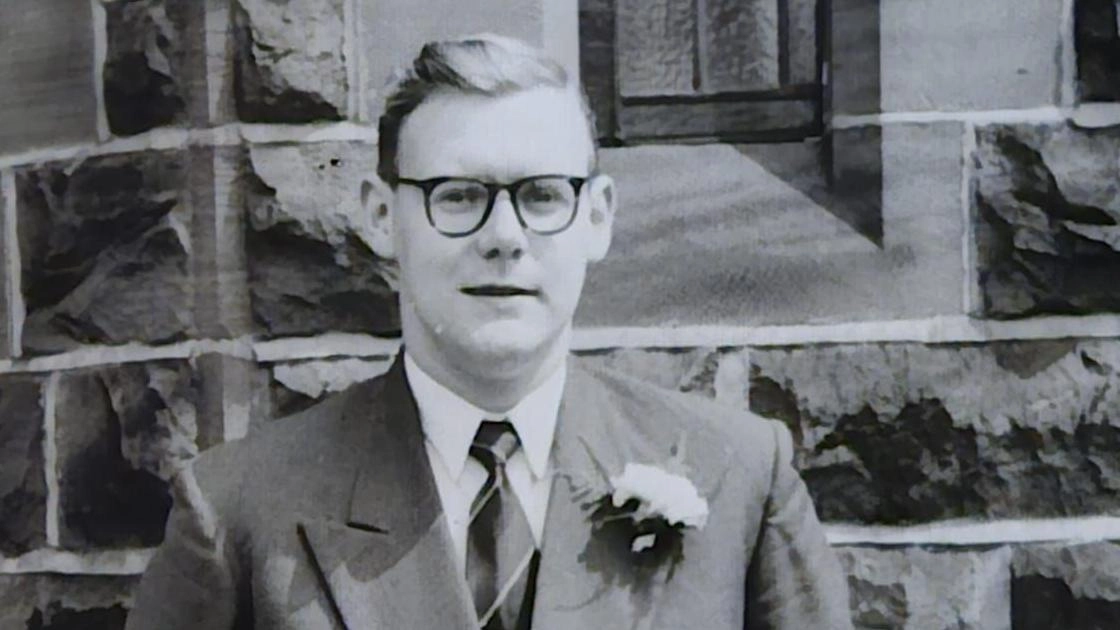

Shortly after midnight on May 1, 1984, civil servant Anthony Littler got off a train in London and walked down a dark alley toward his home.
Two minutes later, the 45-year-old man lay dying on the ground. He had received two blows to the head. Nothing was stolen. There were no witnesses, no forensic analysis, and no clear motive.
Anthony, whom his friends called “a gentle giant,” lived alone and was a fan of craft beer.
For 42 years no one was brought to justice, until on July 3, the situation changed.
Michael Stewart, 57, and Anthony Stewart, 60, were sentenced to life in prison with a minimum sentence of 10 and 15 years respectively for that murder. The brothers were 15 and 18 years old at the time of the attack.
Although there was no evidence that Anthony Littler was gay, Judge Cutts noted that the Stewarts had targeted gay men as robbery victims. “1984 was another time and, in many ways, another place,” he said.
In a televised hearing, the chief judge told the defendants: "I am absolutely certain that your group was lying in wait for a victim. You attacked this decent, honest individual and took his life."
Building a case
Cold cases are often solved through science: DNA, fingerprints, old evidence analyzed with new technology.
This case was different. Detectives resorted to a daring undercover operation: they bugged Michael Stewart's home and car, planted listening devices in his brother's car, and sent two undercover agents to infiltrate Michael's life.
They were waiting for him to do what, over the years, he had done repeatedly: speak.
Anthony Littler, a quiet man with simple routines, was 1.93 meters tall, worked in public administration and lived in an apartment north of London.
He was deeply devoted to his mother and frequently traveled to St Helens, Merseyside, where he was born and raised, to visit her.
Anthony's great passion was craft beer. On the last night of his life he crossed London to attend a meeting of the Forest Ale Preservation Society in a pub in Carshalton, where he shared five or six beers with friends.
They said goodbye when the pub closed.
Anthony returned through London, reached East Finchley station and took a shortcut home, turning onto a narrow path next to the railway line.
Within minutes, he was attacked with such violence that he never regained consciousness.
“He was a bit like an older brother,” recalls Patricia McLure, one of Anthony's last close relatives still living.
"He used to take me around in my stroller. He was always there at family birthdays and he was always there at Christmas."
Patricia also said that what tormented her was that Anthony had not defended himself.
“As a child, I would never throw a rock at a dog,” she says. “He was always a kind person, and to die in such a horrible way is just very unfair.”
Pleas for help on ITV's "Police 5" and BBC One's "Crimewatch" were unsuccessful. The investigation was closed in January 1985.
A second investigation, in 1993, also yielded no results. A third, between 2012 and 2015, also concluded without charges being brought against anyone.
“I resigned myself to the idea that he was gone and that the culprits hadn't been caught,” Patricia says. "He left me with an eternal sadness that was always present. It resurfaced every Christmas when he was not there."
For 42 years, he guessed, the killers thought they had gone unpunished.
“And until the police carried out this investigation,” he says, “they were free.”
In the early days of the original Metropolitan Police investigation, officers knocked on a door just a few hundred meters from the alley: the Stewart family home. There they spoke with Michael Stewart, 15, and a week later, with his brother Anthony, who was 18 at the time.
Door-to-door visitation forms indicated that both were safe in their homes the night of the murder. On Anthony Stewart's form was a note that said, “Does not use alley.”
This was not true, and the court would hear that the brothers had a penchant for violence and had been in trouble with the police for years.
In 2013, the brothers fell out after a bitter dispute. Daniel, the youngest of the three, did not participate in the attack and was only 10 years old when Anthony was murdered.
During that family dispute, he told police that Michael had threatened to burn down his house and kill him.
Then, Daniel revealed to the detectives something much more serious: a family secret from his childhood.
According to what he said, Michael bragged about the murder a few days after it occurred. His brother Anthony also spoke about the subject years later.
Daniel told police that his brothers often went out to attack men they believed were gay and that Littler had been attacked during an attempted robbery that went wrong.
“They just wanted to rob him, but he died,” Daniel told the police.
He wasn't the only one who showed up.
A relative of the family, whose identity cannot be revealed for legal reasons, recalled that Michael pointed toward the station from a car and said something along the lines of: “That's where we killed him.”
Covert operation
When Detective Chief Inspector Neil John arrived at the Metropolitan Police's specialist crime command in 2019, he inherited two landmark cases, including this one.
“Documents were missing, evidence was missing,” John says. "There were no security cameras, no forensic analysis. Unfortunately, all the witnesses we wanted to talk to had died."
So his team pieced the case together from what was left.
A museum curator helped decipher the 1984 train timetable. Original Ordnance Survey maps were located in the British Library because the streets around East Finchley had changed.
A police search team spent a week in the Met's artefact storage room, sorting through more than 200 large boxes in the hope of finding the missing pieces.
But the documentation, the old testimonies of the witnesses and the supposed confessions of the brothers had given the detectives an avenue of investigation.
After analyzing the material, John deemed the case strong enough to request approval for a covert operation, which was granted in September 2023, when Operation Snowpitch began.
“I've never had a case like this before,” John says. “And I will never have a case like this again.”
Operation Snowpitch was all about patience.
They hid listening devices in Michael Stewart's apartment and car, as well as in Anthony Stewart's car.
But the most important part of the operation was more personal in nature: two undercover agents, known as JJ and Anna, were sent into Michael Stewart's life.
JJ was the one who made the first approach.
He struck up a conversation with Michael about a broken elevator in his building. Soon, JJ began spending time with him: they watched gangster movies, played video games, and listened to his stories.
Within just three months, his relationship with JJ was so close that when Michael Stewart was later arrested for murder, it was JJ he asked to pick him up from the police station.
On the car ride home, Michael spoke.
“I know who did it,” he confided to the man who, unknowingly, was recording him.
According to Michael, it was his brother and three of his friends. They had gone out to “attack homosexuals”, they had cornered a man in an alley and hit him on the head, according to what was stated in court.
There was no evidence Anthony Littler was gay, the court heard.
The missing piece
It became a routine. Time and time again during those months, the trial heard, Michael pointed the finger at his brother, always insisting that he himself had nothing to do with the murder.
But the recordings continued to give him away.
The other undercover agent, Anna, met him separately, and during a clandestinely recorded conversation in a cafe in December 2023, suggested that her nephew had killed someone.
“My nephew didn't kill anyone,” Michael responded. “It was my brother.”
By then, the investigation had already come to light. Michael had been arrested and questioned about the murder, and then released; meanwhile, unbeknownst to him, the covert operation continued discreetly around him.
Then, during a police interrogation in March 2024, the lapse occurred that helped place Michael at the scene.
Denying that he was covered in blood that night, Michael said: “Well, if I was at the top of the alley keeping watch… how could I be covered in blood?”
No one, not the police, not his family, not a single witness, had ever accused him of being the lookout, prosecutor John Price KC told the jury.
That detail didn't exist anywhere other than Michael's memory of that night.
In his attempt to offer an explanation to get out of trouble, he had stood at the top of the alley while Anthony was beaten to the ground.
And that explained a mystery that had remained hidden in the archives since 1984.
Two minutes after the attack, a young man called 999 from a phone box near the alley, asking for an ambulance for a man who was bleeding profusely, and hung up without giving his name.
Nothing was found and the call was dismissed as a false alarm.
Only someone who had been there could have realized it so quickly, Price said.
As the prosecution explained to the jury, the caller was Michael Stewart, 15, the lookout, the first to run and raise the alarm for the dying man his group had left behind.
For Patricia, knowing that the men who killed her cousin had finally been brought to justice was an overwhelming thought. "How dare you? You ruined my cousin's life, and I guess you guys have had a good life."
"They have had 42 years of freedom, and my cousin has had 42 years of missing out on his life. He has missed out on the possibility of getting married and starting his own family."
“It is a relief that justice has finally been done,” he says.
"That's not going to erase the pain. It's not going to bring it back. But it's finally possible to turn the page. They already have those bastards!"
This article was originally written in English and we used an artificial intelligence tool to translate it. A BBC Mundo journalist reviewed the text before its publication. Learn more about how we use AI.