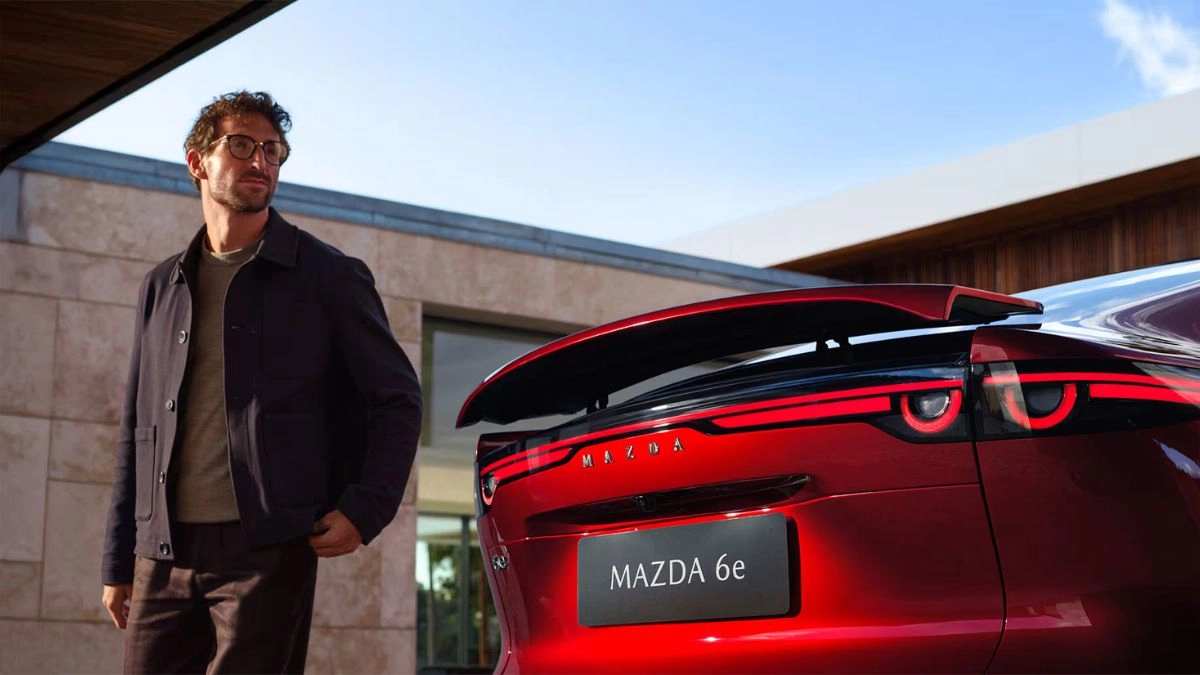

Mazda is already working on an important evolution for the 6e, its electric sedan. Although the model arrived with high expectations to the European market, the brand believes that there is still room to improve two aspects that many drivers value when choosing a vehicle of this type, autonomy and recharging time.
Read also: Hennessey presents a manual hypercar of only 71 units
With that objective, the Japanese firm is preparing an update that will debut in 2027 and that will modify one of the most important elements of the vehicle.
You can read: Audi prepares a compact electric car with record consumption
The strategy seeks to offer a more competitive product without altering the design that has made the Mazda6e one of the brand's most attractive electric cars.
A single battery for the entire range
The Mazda6e is currently offered with two battery technologies. The entry-level version uses a lithium-ferrophosphate (LFP) battery, while the longer-range variant incorporates a nickel-manganese-cobalt (NCM) battery.
However, Mazda decided to change course. The manufacturer will eliminate the NCM battery and adopt a single higher capacity LFP battery for all versions.
The intention is to combine better autonomy with faster charging times, preventing customers from having to choose between one advantage or another.
More autonomy and more efficient recharging
The Mazda6e with the longest range currently approves up to 552 kilometers under the WLTP cycle. Although this is a competitive figure, the brand believes that it can improve compared to the new generation of electric vehicles that is reaching the market.
The official autonomy data of the future update are not yet known, but Mazda assures that the new package will allow optimizing both performance and recharging speed, one of the aspects that the model received the most criticism at its launch.
The CX-6e experience leads the way
This decision did not come out of nowhere. Mazda has already applied a similar strategy in the development of the new CX-6e, an electric SUV that will reach dealerships with a 78 kWh LFP battery and charging capacity of up to 195 kW in direct current.
Thanks to this formula, the company simplifies production and reduces the complexity of the battery management system. The differences between versions will focus mainly on the equipment, maintaining the well-known Takumi and Takumi Plus configurations.
Mazda maintains that the new battery will not only benefit autonomy. The greater thermal stability of LFP technology will help reduce demands on the cooling system during rapid recharges and in high power demand situations.
In addition, the location of the battery pack in the lower part of the chassis will continue to favor a reduced center of gravity and balanced weight distribution. With this, the brand hopes to preserve the dynamic behavior that characterizes its models, while making the Mazda6e a much more competitive electric sedan when its update scheduled for 2027 arrives.