

Trump says midterm elections will not affect his war plan against Iran
The president rejected the notion that the November conflict will influence Washington's military actions in the Middle East
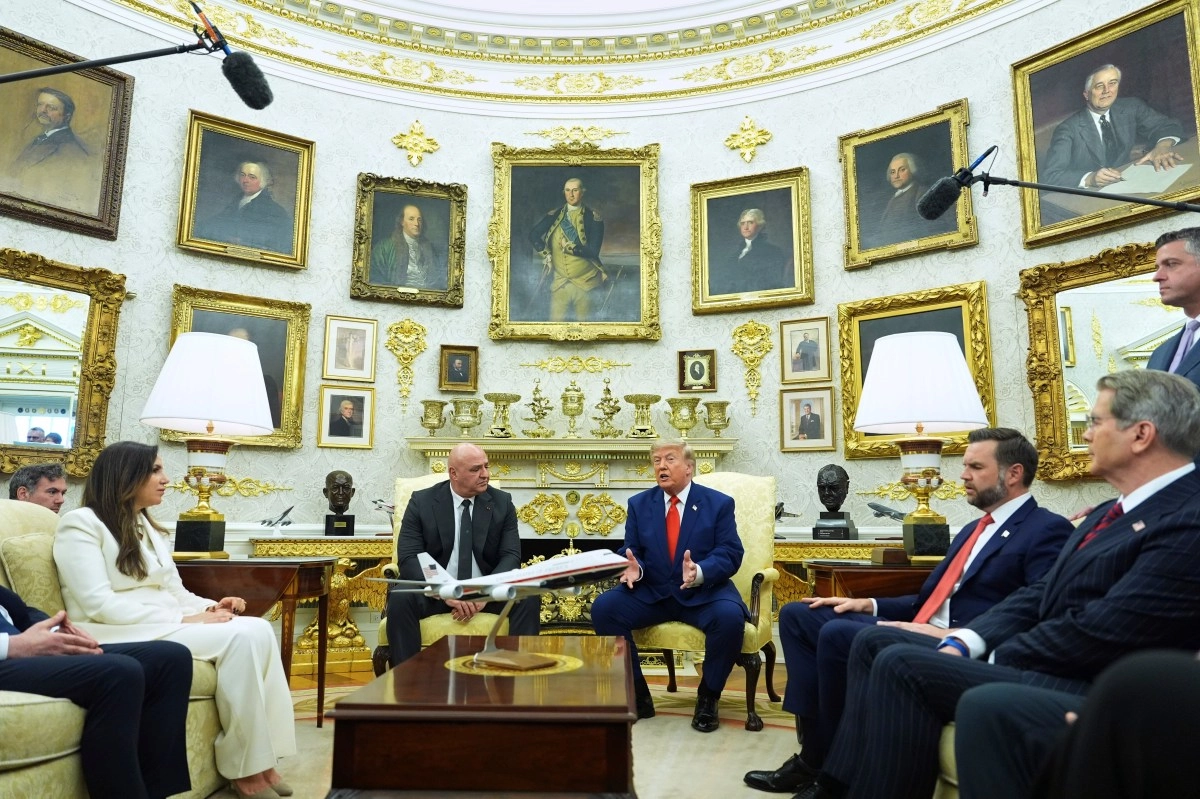

President Donald Trump assured that the November legislative elections will not modify his strategy towards Iran, despite the growing political pressure derived from the conflict in the Middle East, the increase in energy prices and the death of three US soldiers over the weekend.
During a meeting at the White House with the president of Lebanon, Joseph Aoun, Trump rejected that the electoral calendar influences his military decisions and maintained that he will act based on what he considers convenient for national security.
"No, the elections have nothing to do with this. I'm just going to do the right thing," the president declared from the Oval Office, where he also suggested that Tehran could be trying to influence the American political scene through its actions around the Strait of Hormuz, one of the most important maritime routes for the global oil trade.
The statements come as the conflict with Iran enters a new phase of escalation, with crossed attacks, new military threats and an increasingly visible impact on international energy markets.
Republicans observe with concern the political cost of the conflict
Although Trump insisted that the war will not affect his decisions, concerns are growing within the Republican Party about the political consequences of the confrontation. The increase in gasoline and diesel prices, driven by uncertainty around the Strait of Hormuz, has begun to impact American consumers, while several Republican lawmakers fear that a prolonged war could influence the midterm elections, in which control of Congress will be at stake.
The pressure increased after the death of two American soldiers in Iranian attacks against military installations in Jordan and another soldier who died in Iraq during the controlled detonation of an Iranian drone.
Referring to these facts, Trump maintained that the United States has the best military equipment in the world, although he noted that "when you let others do your job, sometimes things don't go well." The president confirmed that he will attend the tribute to the fallen soldiers at Dover Air Base.
During the exchange with the press, he also defended the effectiveness of the US military campaign and stated that Iran seeks to open negotiations to stop the fighting.
“They desperately want to come together to put an end to this because they are being decimated,” the president said, responding to a journalist who questioned whether there were signs that Tehran was willing to reduce the confrontation.
Meeting with the president of Lebanon expands the regional agenda
Joseph Aoun's visit marked the first meeting of a Lebanese president in the White House since 2009 and allowed talks to expand beyond the war between the United States and Iran.
Trump promised support for the Lebanese government and announced that he will instruct his administration to once again allow direct flights between the United States and Lebanon, suspended since 1985 after the hijacking of TWA Flight 847. In addition, he expressed support for the framework agreement reached between Israel and Lebanon to advance the gradual withdrawal of Israeli troops and the strengthening of the Lebanese Army in areas previously controlled by Hezbollah.
The president also downplayed threats by the Iran-backed Houthis to block Saudi vessels in the Red Sea. "If something like this happens, we'll take care of it. We've done it before," he said. Meanwhile, the administration continues to advocate before Congress for a supplemental request of $88 billion, intended primarily to finance military operations related to the war against Iran, against a backdrop of growing political debate over the economic and strategic cost of the conflict.