

The head of the DEA assures that the Sinaloa Cartel and the CJNG are the number one priority
DEA Administrator Terry Cole assured that the two Mexican criminal groups are first on the agency's priority list.
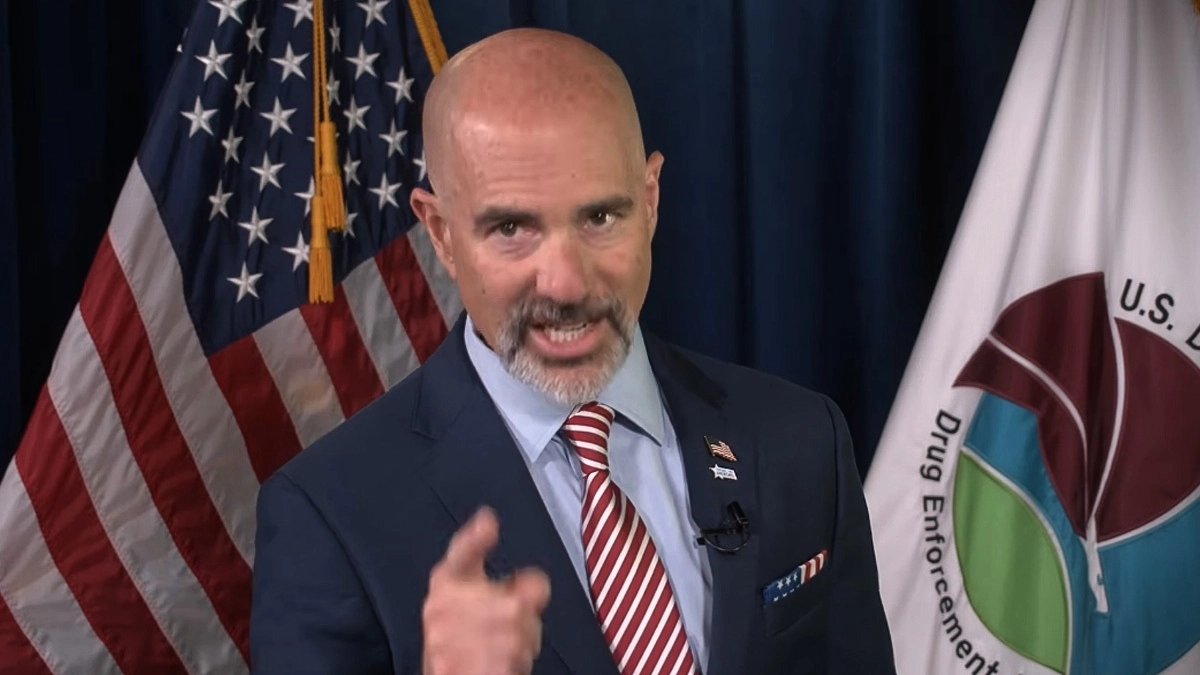

The United States Drug Enforcement Administration (DEA) identified the Sinaloa Cartel and the Jalisco New Generation Cartel (CJNG) as its main targets in the strategy to combat fentanyl trafficking, considering that both organizations represent the greatest threat related to the opioid crisis facing that country.
During an institutional message released this week, DEA Administrator Terry Cole assured that the two Mexican criminal groups occupy first place on the agency's priority list due to their alleged participation in the production and distribution of fentanyl to US territory.
“The American people expect and deserve that the DEA eliminates this threat, and that is exactly what we are doing,” said the official, who maintained that the synthetic opioid has destroyed families and communities in the United States.
Cole highlighted that, since the beginning of the current US administration, authorities have seized around 14,000 kilograms of fentanyl and more than 62 million pills containing this substance, equivalent to hundreds of millions of potentially lethal doses.
The head of the DEA stated that the agency is using all its resources to pursue those who participate in the production, distribution and financing chain of fentanyl trafficking. He even pointed out that the organization is looking for those responsible for this illicit business under a strategy focused on combating those it described as “foreign terrorists.”
Likewise, he maintained that the DEA is going through one of the moments of greatest coordination and concentration of efforts to confront the synthetic opioid crisis, a problem that continues to be one of the main public health concerns in the United States.
The message concluded with a call to the corporation's agents to intensify actions against drug trafficking cartels.
“Full throttle, no brakes,” Cole said, reiterating the institution's commitment to building a “fentanyl-free America.”