

Earthquake in Venezuela: what the USGS estimate of up to 100,000 dead means
The USGS PAGER model projects a scenario of up to 100,000 deaths from the double earthquake in Venezuela. The figure is not an official balance
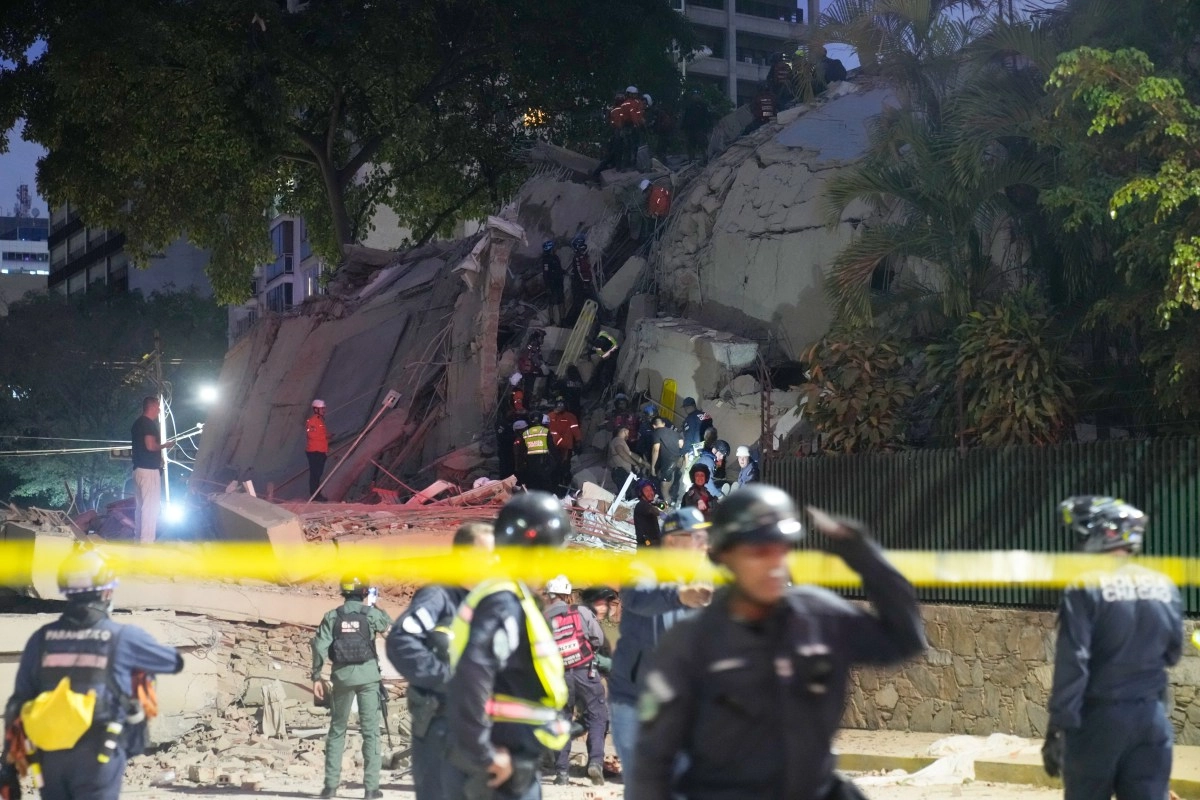

The double earthquake that hit Venezuela left scenes of destruction, collapsed buildings and thousands of families searching for information about their loved ones. But, in addition to the preliminary official balance, one piece of information set off international alarm: the United States Geological Survey warned that the number of deaths could be in a range of 10,000 to 100,000 people, according to its automatic impact model.
The figure is not a confirmed balance. This is an estimate generated by the USGS PAGER system, a tool that quickly calculates the possible impact of an earthquake based on the magnitude, intensity of the movement, the exposed population and the vulnerability of buildings.
According to Reuters, two earthquakes of magnitude 7.2 and 7.5 shook Venezuela less than a minute apart, about 160 kilometers west of Caracas. In the first hours, the official toll was at least 164 dead and almost 1,000 injured, while search and rescue tasks continued.
You can see: When was the last big earthquake in Venezuela and how many deaths it left
What the USGS said about the earthquake in Venezuela
The USGS reported two strong earthquakes in Venezuela and warned that “high casualties and extensive damage” were likely, with a potentially widespread disaster. According to international reports, the agency's initial model estimated that the number of deaths could be between 10,000 and 100,000, although that figure does not yet correspond to an official count.
The USGS PAGER system does not count deaths in the field. Its function is to project possible human and economic losses shortly after a significant earthquake. To do this, it crosses data on seismic intensity, exposed population, type of construction and vulnerability of the affected area.
Therefore, when the system indicates a scenario of between 10,000 and 100,000 victims, what it indicates is that the earthquake can have catastrophic consequences if the structural damage and population exposure coincide with the worst projections.
What is the difference between an estimate and an official figure
The difference is key. A USGS estimate is an automatic projection. An official figure comes from reports from authorities, hospitals, emergency teams and organizations working on the ground.
In the first hours after a strong earthquake, balances often change rapidly. There are cut-off areas, collapsed buildings, trapped people, saturated hospitals and damage that takes time to be confirmed.
Therefore, the USGS range serves as an early warning to gauge the potential severity of the emergency, but should not be read as a definitive death toll.
You can see: Earthquake in Venezuela: how to search for relatives from the US.
Why the estimate can be so high
The high projection responds to several factors. The two earthquakes were very strong, occurred seconds apart and affected densely populated areas near Caracas and the northern coast of Venezuela.
International media reported collapsed buildings, damage to infrastructure, service outages and rescue operations underway. The Guardian reported that Venezuela declared a state of emergency after the two earthquakes and that there was severe damage, closure of the Simón Bolívar international airport and suspension of transportation services in affected areas.
In addition, the vulnerability of some buildings, urban density and communication difficulties can complicate rescue tasks and increase the risk that the balance will increase as the hours go by.
What is known about the number of victims
The official balance remained preliminary. Reuters reported at least 164 dead and nearly 1,000 injured, mainly in areas such as La Guaira and Caracas, while more than 10,000 people were reported missing amid the search efforts.
El País also reported that the USGS estimated a 42% probability that the number of deaths could be between 10,000 and 100,000, a warning that increases concern about the real scope of the tragedy.
The distance between initial official figures and impact projections is not unusual in major disasters. In earthquakes with landslides and cut-off areas, the number of victims may increase as rescue efforts progress.
You can see: Trump offers aid to Venezuela after devastating earthquakes; thousands of fatalities are predicted
How it affects Venezuelans in the United States
The emergency also hits the Venezuelan diaspora in the United States. Thousands of people try to communicate with relatives in Venezuela through WhatsApp, calls, social networks and community contacts.
The lack of clear information increases anxiety. In a country with a history of digital restrictions, censorship, media blocking and connectivity failures, verifying data in the midst of a catastrophe can be especially difficult.
For this reason, emergency specialists recommend avoiding spreading rumors, anonymous audios or videos without a confirmed date or location. The safest thing is to cross information from seismic organizations, reliable media, humanitarian organizations and direct contacts in the area.
What to do if you can't contact a family member
From the United States, the first thing is to try several channels without saturating the network: text messages, WhatsApp, Telegram, email, Instagram or Facebook. A short message usually works better than a repeated call if the signal is low or the battery is low.
It is also advisable to contact neighbors, close relatives, co-workers or friends of the person. If there is no response, it is useful to gather full name, city, area where she lives, last contact, telephone number, social networks and any information that may help locate her.
For families who have lost contact with a loved one due to a disaster, the American Red Cross offers humanitarian family reunification programs that can help attempt to reestablish communication in crisis settings.
A warning that increases international pressure
The USGS estimate raises international concern and indicates the possible magnitude of the disaster. Although the final number of victims is not yet known, the PAGER model indicates that Venezuela could face a seismic tragedy of enormous scale.
At this time, the priority is to rescue survivors, confirm information, enable humanitarian aid and ensure that families can communicate with their loved ones.