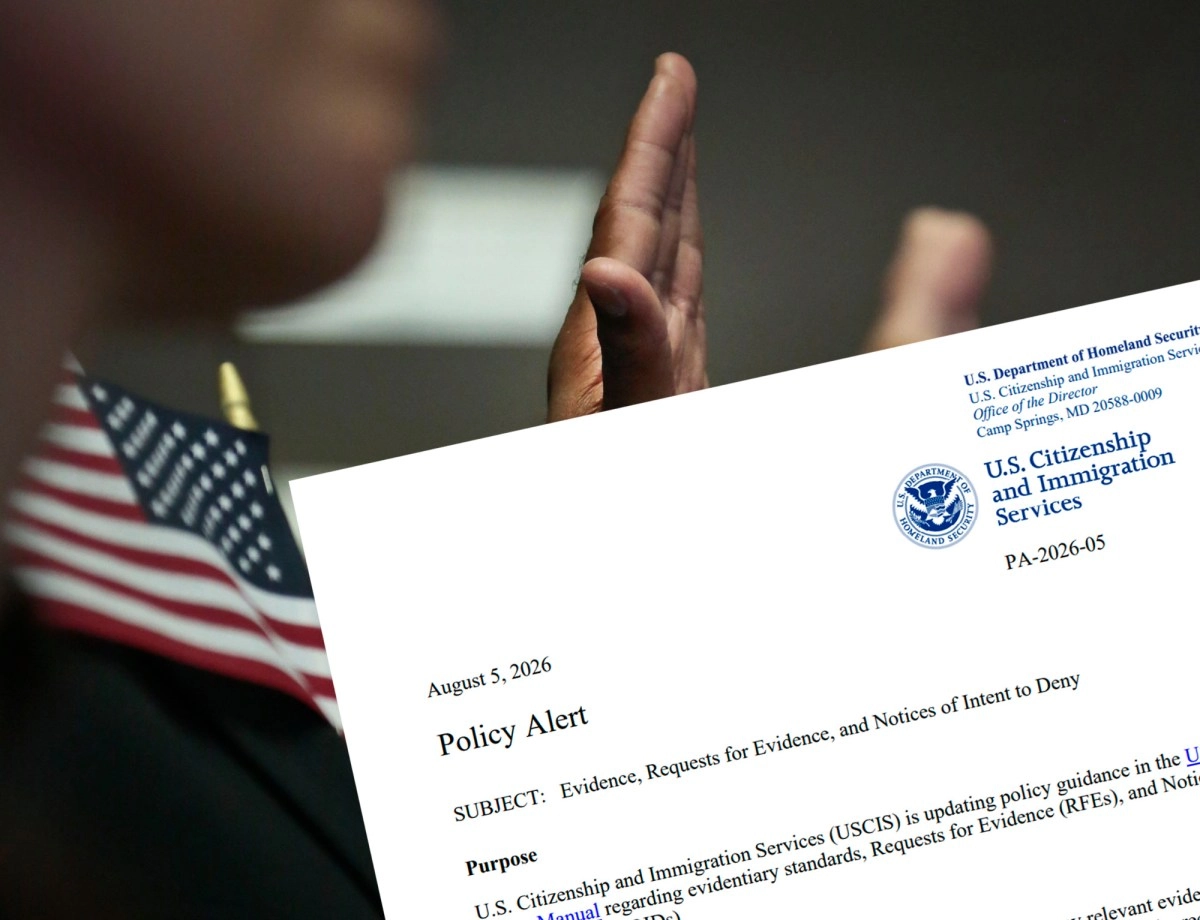

The U.S. Citizenship and Immigration Services (USCIS) office warns immigrants making applications for benefits, such as a Green Card, that it will reject the requests if the person does not initially submit the information “to meet the requirements.”
“Generally, if an applicant fails to demonstrate eligibility or provide all required initial evidence when submitting the application, USCIS may deny the application without first issuing a Request for Evidence (RFE) or a Notice of Intent to Deny (NOID),” the agency warned.
Regularly, the RFE and the NOID served immigrants and their lawyers to send complementary information about a visa or naturalization request, but now the agency will stop requesting more data or evidence, it will simply deny the request, it was indicated in a policy update warning that the forms contain indications that must be completed one hundred percent.
“USCIS form instructions specify all of the initial evidence required for each benefit application, providing applicants with all the information necessary to meet the requirements,” the agency said.
The office led by Joseph Edlow indicates that the decision is integrated into the policies of all Department of Homeland Security (DHS) forms, to “restore the integrity of the immigration system,” considering that there are foreigners who present applications for benefits without meeting the requirements.
During the administration of President Joe Biden, the agency that processes immigration procedures, such as asylum, Temporary Protected Status (TPS), DACA, work visas, Legal Permanent Residence, Employment Authorization Documents (EDA), naturalization, among others, sent notices to petitioners to obtain additional information about the cases and determine eligibility.
“It is up to the applicant to demonstrate that they meet the requirements to receive the requested benefit at the time of submitting the application and that they continue to meet said requirements during the evaluation process,” the new rule document states.
For the current government, this practice was a way of encouraging officials to “request evidence before denying a benefit request,” in processes that are now considered “frivolous” or unfounded.
“This previous policy allowed frivolous or substantially incomplete applications to delay USCIS processing for other waiting individuals,” the immigration office notes.
The Trump administration's change could prevent a person with a pending procedure from being granted a temporary work permit.
“[Benefit applicants] were previously allowed to exploit the system by filing provisional applications for associated immigration benefits, such as employment authorization, while they waited for a decision on their case,” USCIS notes.
Although the agency could continue to send RFE or NOID in some cases, now the officials who review each request will be able to decide at their discretion or reject the request without arguments.
The new policy is effective immediately and applies to applications pending or submitted on or after August 5, 2026.
Immigrants are recommended to seek advice from a certified attorney before filing a petition for immigration benefits.