
In March, Facebook founder Mark Zuckerberg bought what is so far the most expensive property ever sold in Miami: he paid $170 million for a nearly 30,000-square-foot mansion still under construction on the private island of Indian Creek.
But this is not the most expensive property that can be found for sale in this South Florida city.
Currently, that record is held by bond trader John Daveney's home in Key Biscayne, which is for sale for $237 million. In fact, if you're a movie fan, you might recognize her.
It appears in the famous 1983 film Scarface - directed by Brian de Palma and starring Al Pacino - as the mansion of drug lord Frank López. It is where we first see Elvira, the character played by Michelle Pfieffer, descending in an iconic glass elevator.
Although it is impossible for 99.9% of the world's population to consider paying these extraordinary amounts for a home, for the 0.1% who can, Miami has become one of the preferred destinations.
“There are a large number of high-income individuals who have moved to Florida for the benefits that life in Miami offers,” E.B. explains to BBC Mundo. Solomont, journalist for The Wall Street Journal specialized in the residential real estate market.
“There is low crime, a great climate, beautiful communities and no state taxes are paid,” says Mayi De la Vega, founder of One Sotheby’s International Realty, one of the most recognized ultra-luxury home sales firms in South Florida.
“Once you have one, two or three influential business leaders move in, there will be others who see the benefits and follow, and suddenly, they are no longer pioneers,” notes Solomont. “Suddenly, there is a whole community.”
Mayi De la Vega maintains that Miami's real estate market has entered “a new era of ‘trophy properties’ because sales numbers for homes over $60 million are on the rise and the market only continues to grow.”
“If we talk about 2025, our last full year, we had sales worth more than US$517 million, all with properties of more than US$60 million,” he explains.
But why Miami? Why this city in South Florida that has made it such an attractive place for the wealthiest in the world?
The pandemic as a turning point
Due to its climate, its beaches and its good air communications, Miami has historically been seen as an attractive destination for people with great fortunes, particularly those from Latin America.
“But it was during the Covid pandemic that people in the US realized that Florida was open for business,” explains E.B. Solomont.
During the pandemic, Florida generated controversy by becoming one of the first states to lift mobility restrictions for people in public spaces, get rid of the mask mandate and reopen schools, bars and restaurants.
And although these decisions earned Florida a lot of criticism, they also turned the state governed by Republican Ron DeSantis into an ideal destination for high-income people who lived in other places with much stricter public health measures, such as New York, California or Illinois.
“When you add to that the fact that Florida is a tax haven [Florida residents do not pay state tax unlike other states], Miami became immensely popular not only because of the space and the lifestyle but because of that great tax incentive,” explains Solomont.
With the arrival of the first influential figures from the world of technology and business - such as the co-founder of PayPal Peter Thiel or the creator of the Citadel investment fund, Ken Griffin - a “cumulative phenomenon” was generated, as De la Vega explains.
“There is a part that has to do with fashion,” he points out, “people saying 'this person has the same money as me and bought there, should I buy there too?'”
This caused the supply focused on the ultra-luxury market to multiply in some areas and prices to rise.
Ultramillionaires in Miami
Mayi de la Vega believes there is a clear rule when it comes to prices in the real estate sector.
“One of the most important things you learn in real estate is the concept of the three U’s: location, location, location.”
And in Miami-Dade County, that means ocean or bay views.
“Waterfront properties command higher prices because they are so scarce,” says Solomont. “Currently there is a situation in which you have more buyers than waterfront homes available, and until that changes, prices will continue to rise,” the journalist points out.
There is perhaps no place that better reflects this reality than the most exclusive of Miami's private islands, Indian Creek, which, according to De la Vega, “continues to lead in terms of astronomical prices.”
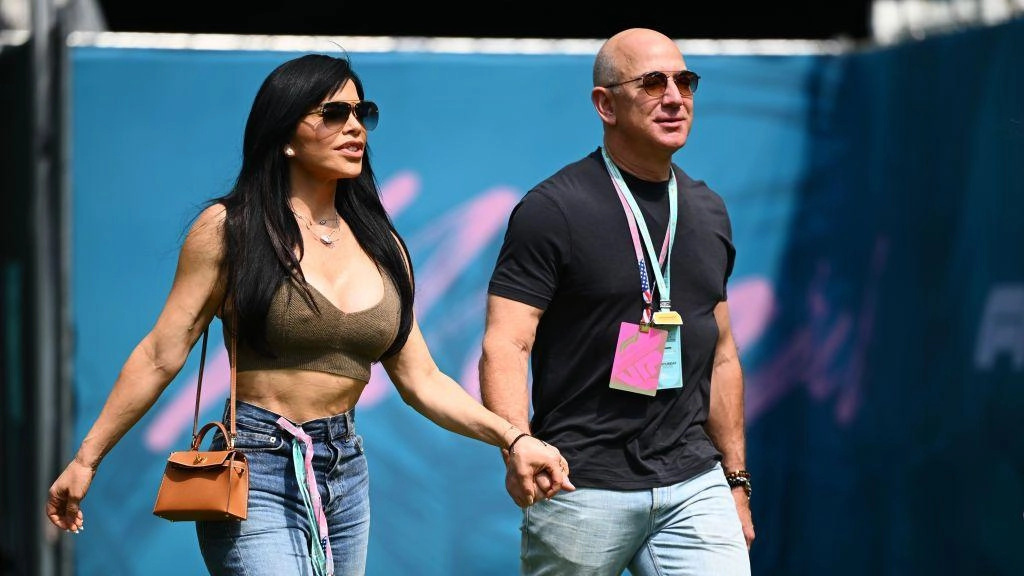
Indian Creek is known as the “billionaire bunker” and is where Mark Zuckerberg, Jeff Bezos and Ivanka Trump have their mansions. And despite not being much larger than New York's Central Park, the island has its own mayor and its own police force, and is entered via a discreet white bridge guarded by two guard booths.
“And if you ask, why Indian Creek?” says De la Vega, “because it is a private island, it has many amenities, it has large lots, it is surrounded by water, which makes it a paradise for those who have a boat and, in addition, it has incredible security.”
“It is a private island with a golf course, a ‘millionaires island’ with land that sells for US$200 million,” he explains.
But the ultra-luxury market is not just limited to isolated communities like Indian Creek: the Wall Street Journal estimates that North Bay Road, a roughly 4-mile-long street in Miami Beach that is home to stars like Shakira and David and Victoria Beckham, has about $1.7 billion in properties, making it the street with the highest asset value in the entire United States.
There are also properties worth more than $60 million for sale in more traditional areas of Miami, such as Coconut Grove, Coral Gables or Key Biscayne.
Changes
Bond broker John Devaney says that when he bought the properties that now make up his $237 million residence in Key Biscayne in 2003, he was attracted by the immense heliport of around 1,000 square meters that extends over the water and that was once used by former US president Richard Nixon.
“One day when I was 33 years old I was flying in a helicopter and when I, who grew up in Key Biscayne, saw that helipad I said to myself: 'I would love to have it to land my helicopters.'”
At that time, in a sale that broke all records of the time, he paid US$15 million for the lot where the house is built, and later paid another US$15 million for the adjoining lot.
They were normal pre-pandemic prices in Miami, explains De la Vega. “I remember that one of the properties we sold at that time was Shaquille O’Neill’s on Star Island [another private island located at the entrance to Miami Beach] and it was for US$16 or US$18 million.”
One of the explanations for the excessive increase in property prices in the ultra-luxury market in recent years is the amount of money that the richest have at their disposal.
According to data compiled in the so-called “Inequality Index” by economists at the University of California, Berkeley and the Paris School of Economics, the wealth of the wealthiest 0.1% of the population has multiplied almost 13 times in the last 50 years. For the study, those with fortunes of more than US$43 million were defined as part of the 0.1%.
Solomont says this availability of money triggers what people pay for the things they buy: “Real estate agents say value is what someone is willing to pay for something.”
"For you and me, paying US$1 million for a property may be inconceivable. For others, paying US$10 million would be an exaggeration. But when you have billions in your accounts, buying a US$60 million property may not be something exceptional. Many pay in cash."
“It's not that there isn't a disconnect between what ordinary people can pay for a home and these multimillion-dollar mansions,” Solomont says, “but the volume we see of sales [of more than $60 million] taking place is evidence that there is a market that continues to push the limits.”
According to De la Vega, this growth in higher-value properties is also driving lower-range home prices.
All of this has been directly reflected in the prices paid by ordinary Miami residents: according to the US Bureau of Statistics, the Miami-Ft. Lauderdale-Palm Beach surpassed New York in terms of cost of living in the US according to analysis of 2024 data.
The region known as the “Gold Coast” is now approximately 5% higher than the New York metropolitan area and its suburbs.
Additionally, consumer prices in South Florida have increased 36% since 2019, according to the U.S. Bureau of Labor Statistics.
As reported by the Fox Business channel, housing prices in South Florida have skyrocketed 79% since the pandemic, while the average annual home insurance premium is the highest in the country.
That is why it is not surprising that, after the enormous influx of new residents that occurred as a result of the pandemic, Miami has been losing population in recent years.
Although the ultra-luxury market in Miami seems to have no ceiling, its growth raises doubts among analysts. "At a certain point, people will want to know if there is a bubble. Is it realistic to pay $75 million for a house on the water?" Solomont asks.