The judicial challenges for the former president of Bolivia, Evo Morales, do not stop increasing.
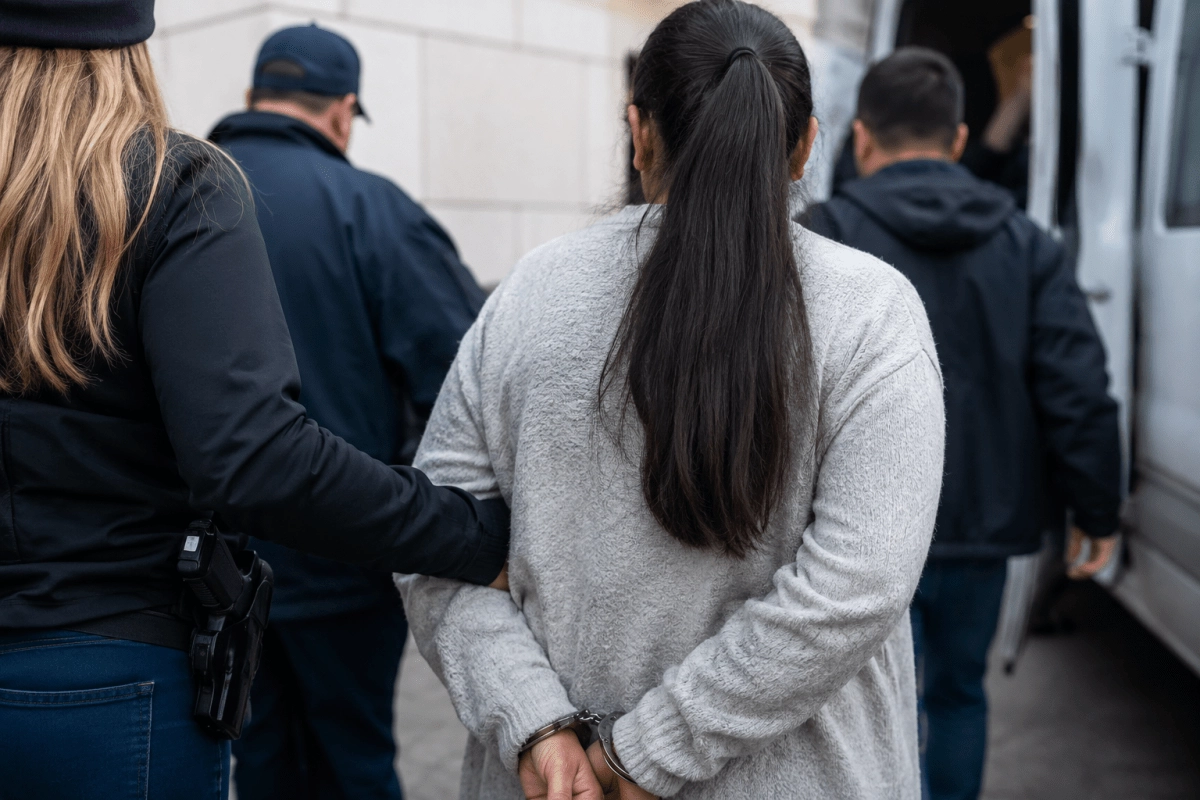
On Wednesday, the Santa Cruz Departmental Prosecutor's Office issued an arrest warrant against the former president for allegedly encouraging the recent wave of protests and road blockades that paralyzed the Andean country for more than 50 days.
It is not the first time that the Bolivian justice system has ordered the arrest of Morales. The former leftist ruler, who led the country between 2006 and 2019, has rejected the accusations and complaints that they are part of a “political persecution” promoted by the current government of the right-wing Rodrigo Paz.
“They seek to hold us responsible for social mobilizations to hide the true drama that Bolivia is experiencing: a deep economic and social crisis, the result of a model that has abandoned the people and protects corruption,” wrote the former president, 66, on his X account (former Twitter).
"They are not going to intimidate us. We will continue fighting alongside the people," he warned.
For its part, the Paz government refuted Morales' allegations.
“It is not the government that issues the arrest warrant, it is justice,” declared José Luis Gálvez, spokesperson for President Paz, to the Bolivian newspaper El Deber.
The signs
The Bolivian Prosecutor's Office points to Morales for the alleged commission of six crimes: armed uprising against the security and sovereignty of the State, terrorism, attack against the security of means of transportation, criminal association, public incitement to commit a crime and attack against the security of public services.
Only the crimes of terrorism and armed uprising that are charged to the former president contemplate maximum sentences of 20 and 30 years in prison, respectively, in accordance with the provisions of the Bolivian Penal Code.
The investigation against Morales began following a complaint from the pro-Santa Cruz Committee, represented by its president, Stello Cochamanidis Garcés, which was later joined by the Minister of Government, Marco Antonio Oviedo Huerta, according to the order that local media have reproduced.
“He has to come and explain what his role was in the 53 days (of road blockades), to explain why he gave the statements he did, why he took responsibility, because he said so, that he was the one who was practically in charge of the actions,” said Gálvez.
Morales, for his part, justified the protest actions promoted in rejection of the economic measures applied by the Paz government, as well as inflation and fuel shortages.
"(In the past) with road blockades we have recovered democracy. Road blockades have defeated Plan Condor and have defeated military dictatorships," he declared in June.
And although he has denied that he sought to force Paz's departure from the presidency, on May 24, Morales wrote on the social network
The protests recorded between May and June not only caused an acute shortage of medicine, fuel and food in cities such as La Paz and El Alto, but also left 22 dead, 88 injured and 573 arrested, according to a report that the Bolivian Ombudsman's Office presented at the beginning of July.
According to the report, most of the deaths (11) occurred in traffic accidents recorded when the victims were trying to overcome the blockades; three occurred in clashes between protesters and members of the police and military forces, and three others died while trying to reach hospitals.
Another arrest warrant
In 2024, the Prosecutor's Office issued a first arrest warrant against Morales, this time for the crimes of human trafficking and smuggling, which was renewed in mid-2025.
According to the institution, the accusations arose from the alleged relationship that the former leftist ruler had with a minor during his last term in 2015 and with whom he supposedly had a daughter.
The former president has denied the facts and, at the time, accused the country's previous president, his former ally Luis Arce, of launching a "brutal judicial war."
The trial began last May, but had to be paralyzed due to the absence of Morales, who remains entrenched in the coca-growing region of Chapare, in the department of Cochabamba, his political fiefdom in the center of the country.
“The only thing missing was for them to order my immediate dismemberment in a square, as happened in the Colony when the conquerors severely punished the indigenous people who rebelled against oppression,” he declared in January 2025 when he was declared in rebellion.
Morales is protected by “2,000 people, every day and 24 hours a day,” Vicente Choque, from the Single Trade Union Confederation of Peasant Workers of Bolivia and one of the men closest to the former head of state, told the AFP agency.
“Morales has taken steps to put a human fence and we do not want to put people's lives at risk,” said the presidential spokesperson.
Download the new BBC World Service app. Choose BBC News World and receive news alerts, documentaries and analysis, all in one place. Important: The new app is not available in the United Kingdom or the United States.