
First, Brazil denied entry to an official United States delegation over suspicions that it wanted to sow doubts about the trustworthiness of its electoral system.
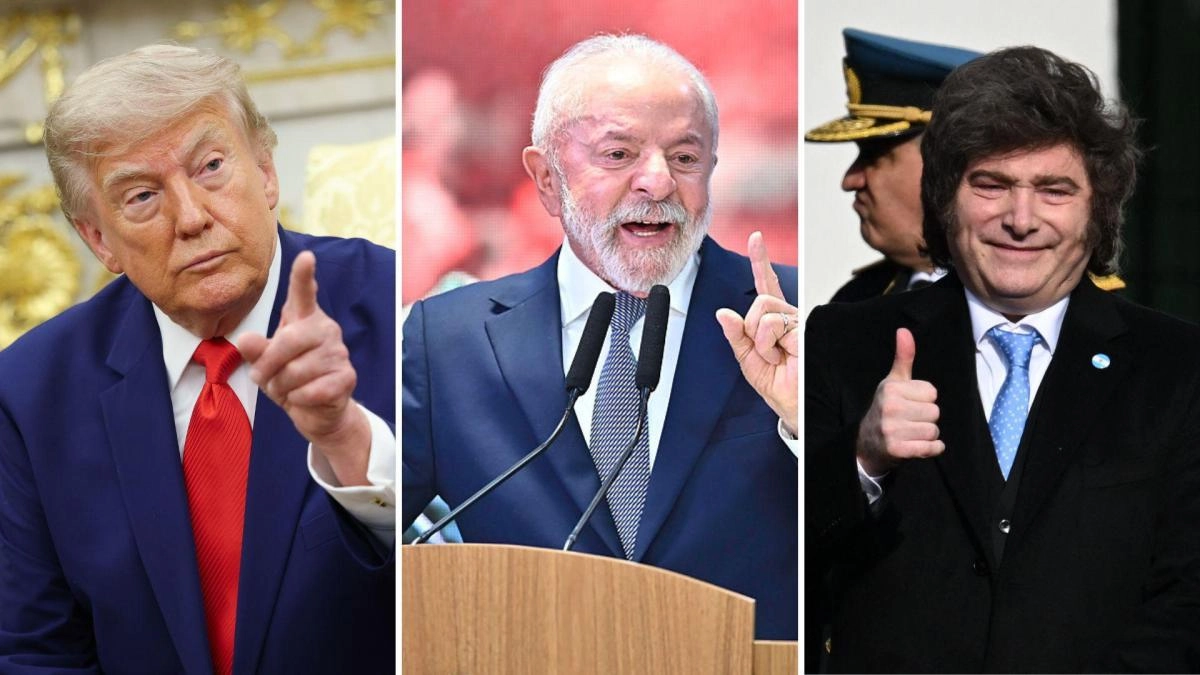
Later, the Argentine president, Javier Milei, called his Brazilian counterpart, Luiz Inácio Lula da Silva, a “thief and corrupt,” who in response withdrew his ambassador in Buenos Aires.
And this week, the US canceled the visa of the Brazilian ambassador in Washington because it considers that Lula's government is delaying the acceptance of its new diplomatic representative in the country.
Perhaps this succession of unusual events involving three of the largest countries on the continent in less than two weeks is a mere coincidence.
But the truth is that Brazil's tensions with the US and Argentina reached extraordinary levels after the series of diplomatic friction, political criticism and gestures of suspicion.
“No evidence has come to light that this is a coordinated attack (on Lula) by Trump and Milei, but it wouldn't surprise me,” says Cynthia Arnson, associate professor of international relations at Johns Hopkins University in Washington.
“Milei and Trump are close allies, they share an antipathy towards Lula and would be delighted if Flávio Bolsonaro were elected,” Arnson tells BBC Mundo.
But how much could all this influence the Brazilian elections?
“Banana peels”
The idea that the US seeks to improperly meddle in the Brazilian elections has been raised by Lula's government and rejected by Trump's.
A statement released Tuesday by Brazil's presidency indicated that the two US State Department officials who were denied entry visas to the country on July 24 planned to "call into question the integrity of the Brazilian electoral system."
Lula himself defended that decision on Wednesday.
“Brazil is not only prepared, but will confront anyone from outside who wants to interfere in our electoral process,” he stated.
Instead, upon learning of Brazil's decision to revoke the visas of its officials, the State Department maintained that "any suggestion of a 'scheme' to undermine the elections of a democratic nation is a baseless lie."
And he noted that his officials (one of whom worked to strengthen Washington's ties with the European radical right) wanted to hold meetings in Brazil to discuss electoral integrity and freedoms of religion and expression.
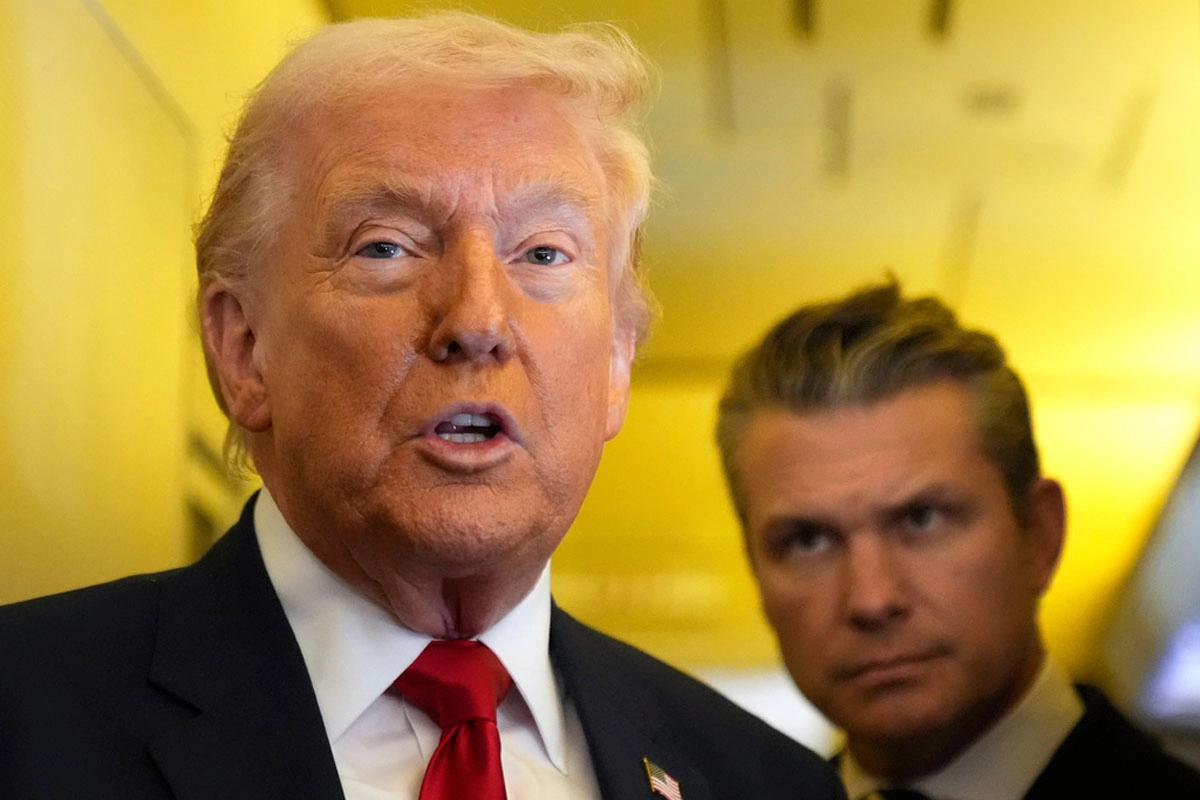
Washington also indicated that the decision to revoke the visa of the Brazilian ambassador, Maria Luiza Ribeiro Viotti, on Tuesday responds to a delay by the South American country in accepting the new ambassador appointed by Trump, Daniel Perez, a Republican state legislator from Florida.
But Lula described the cancellation of his diplomat's visa as “irresponsible” and maintained that the US had not sent an ambassador to Brazil for a year and a half.
Washington's measure is unprecedented in the bilateral relationship with Brasilia and seems aimed at putting pressure on Lula's government, experts say.
“The feeling I have is that the US government is throwing banana peels in the hope that Brazil, in one of them, will respond in a certain way that justifies more restrictive measures by the US,” says Guilherme Casarões, an international relations expert at Florida International University.
The Trump administration also imposed 25% tariffs on imports of various products from Brazil in July, arguing that the South American country has unfair trade practices.
“So many political, economic and legal instruments have already been deployed against Brazil that it is difficult for us to affirm that the US wants nothing to do with these (Brazilian) elections,” Casarões tells BBC Brazil. “I cannot help but characterize this as attempted interference.”
“A very complex game”
For Trump and Milei, a victory for the right in the Brazilian elections would have special importance due to the political weight of this country in a region where conservatives are expanding their power.
Both presidents have shown their interest in promoting the arrival of governments ideologically close to them in Latin America.
Before the runoff for the presidency of Chile in December, for example, Milei expressed his support for José Antonio Kast, the ultraconservative who would win the race and today governs Chile.
On July 25, the Argentine president participated in the launch event for Senator Bolsonaro's presidential candidacy in Sao Paulo, where he launched his first grievances against Lula and asked to “stop the socialist trash” at the polls.
In response, the Brazilian government called its ambassador in Buenos Aires for consultations and asked Argentina's representative in Brasilia for explanations.
But Milei again publicly charged against Lula and on Tuesday Brazil decided to lower its relationship with Argentina to the level of chargé d'affaires, in the worst diplomatic crisis between Mercosur's two largest trading partners in several years.
While Lula has tried to avoid a direct confrontation with Milei (“Who is that guy?” he asked a few days ago in a public appearance), the Argentine Foreign Ministry said in a statement that Brazil is isolating itself “from the rest of the region for purely ideological reasons.”
Trump has also openly endorsed right-wing candidates in recent elections in Latin America, such as in Colombia and Honduras, and hosted Bolsonaro at the White House in May when his campaign was struggling.
Last year, Trump also imposed tariffs on Brazil in an attempt to halt the coup attempt trial of former Brazilian President Jair Bolsonaro, a longtime ally of his who was convicted anyway.
That sparked Trump's first major confrontation with Lula, who began to accuse Washington of seeking to improperly meddle in Brazil's internal affairs.
But polls indicated that this duel benefited Lula politically within Brazil, and Trump later sought to get closer to his Brazilian counterpart: the two met twice, in what seemed to be a growing mutual understanding.
Now bilateral tensions are once again distancing them and raising questions about the effect of all this on a Brazilian election where Lula will seek a new mandate.
“Public opinion can be volatile, so the White House and the Pink House must be betting that their hostility ends up working in Bolsonaro's favor,” Arnson assesses.
Maurício Santoro, a political scientist at the Center for Political and Strategic Studies of the Brazilian Navy, rules out that Milei's statements can change Brazilian voters, but warns that Trump's actions are different.
“In some cases, such as the issue of tariffs and trade, they can finally benefit Lula to the extent that the president presented himself as a defender of Brazilian sovereignty in the face of foreign interference,” Santoro tells BBC Mundo.
But he points out that, on the other hand, the US decision to classify two Brazilian criminal groups, Comando Vermelho and the First Capital Command, as terrorist organizations in June against Lula's will had a positive impact on local public opinion concerned about insecurity.
“Perhaps never has a Brazilian election been so marked by international issues,” observes Santoro. "It is a very complex game whose rules we still do not understand well. Brazil is not Iran or Russia, we are not used to receiving sanctions: it is the first time and we are somewhat perplexed."