

Hormuz blockade threatens inflation, food catastrophe, and plunging 32 million people into poverty
Many poor countries have already started their fieldwork, but face a fertilizer shortage that threatens to ruin the 2026 and 2027 harvests
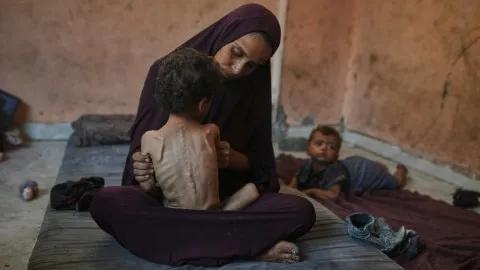

The escalating conflict in the Middle East and the double blockade of the Strait of Hormuz threatens to trigger a major global food crisis and push millions of people into poverty, agencies warned. United Nations and international financial institutions.
The Food and Agriculture Organization of the United Nations (FAO) warned that the disruption of maritime traffic on this strategic route is affecting the supply of fertilizers and other key inputs for global agricultural production. Between 20% and 45% of these exports depend on this route, currently restricted by military actions and conflicting political decisions.
“The clock is ticking,” warned FAO Chief Economist Maximo Torero, emphasizing that planting schedules continue to advance, especially in low-income countries that have already begun their agricultural cycles.
Immediate risk to production and prices
The blockade comes at a critical time. Many countries require fertilizers for their crops, but the scarcity and rising cost of these inputs could lead to lower agricultural yields and, subsequently, a sustained increase in food prices. Although the global price index remained relatively stable in March thanks to an abundance of cereals, experts warn that the pressure will begin to be felt more intensely in April and May, when farmers make their planting decisions. The FAO also warned of a possible diversion of agricultural land to biofuel production, incentivized by rising oil prices, which would further reduce the food supply. "We are in an input crisis; we don't want to turn it into a catastrophe," said David Laborde, the organization's director of agri-food economics, who called for avoiding export restrictions and reconsidering energy policies that exacerbate the problem. The organization urged the provision of urgent financing to vulnerable countries through instruments such as those of the International Monetary Fund, in order to guarantee immediate access to fertilizers and avoid subsidy competition that distorts the market. Global Impact and Increased Poverty: The impact of the war,which began in late February following attacks between forces led by the United States and Israel against Iran, has transcended the regional sphere. According to the United Nations Development Program (UNDP), up to 32 million people could fall into poverty if the crisis continues. The analysis indicates that the most affected countries will be those with less fiscal space and high dependence on energy and food imports. In these cases, rising fuel and food prices limit governments' ability to protect their populations. UN Secretary-General Antonio Guterres called for respect for freedom of navigation in the Strait of Hormuz in accordance with international law, stressing the urgency of stabilizing the situation. The World Bank Group, the IMF, and the World Food Program agreed that the war has already caused one of the greatest disruptions to modern energy markets, with direct effects on global food security. In regions such as sub-Saharan Africa, Asia, and the Arab States, the increased cost of fertilizers, energy, and transportation is already impacting economies and households. Furthermore, currency depreciation in several countries is increasing the cost of importing food and servicing external debt. Experts warn that, unlike natural phenomena such as El Nino, this crisis stems from political decisions that could be resolved through international agreements. However, if the blockade persists, it could create a “perfect storm” combining food inflation, lower agricultural production, and a rapid increase in poverty in the coming years. The analysis indicates that the countries most affected will be those with less fiscal space and high dependence on energy and food imports. In these cases, rising fuel and food prices limit governments' ability to protect their populations. UN Secretary-General Antonio Guterres called for respect for freedom of navigation in the Strait of Hormuz in accordance with international law, stressing the urgency of stabilizing the situation. The World Bank Group, the IMF, and the World Food Program agreed that the war has already caused one of the greatest disruptions to modern energy markets, with direct effects on global food security. In regions such as sub-Saharan Africa, Asia, and the Arab States, the increased cost of fertilizers, energy, and transportation is already impacting economies and households. Furthermore, currency depreciation in several countries increases the cost of importing food and paying external debt. Experts warn that, unlike natural phenomena such as El Nino, this crisis stems from political decisions that could be resolved through international agreements. However, if the blockade persists, it could create a “perfect storm” combining food inflation, lower agricultural production, and a rapid increase in poverty in the coming years. The analysis indicates that the countries most affected will be those with less fiscal space and high dependence on energy and food imports.In these cases, rising fuel and food prices limit governments' ability to protect their populations. UN Secretary-General Antonio Guterres called for respect for freedom of navigation in the Strait of Hormuz in accordance with international law, stressing the urgency of stabilizing the situation. The World Bank Group, the IMF, and the World Food Program agreed that the war has already caused one of the greatest disruptions to modern energy markets, with direct effects on global food security. In regions such as sub-Saharan Africa, Asia, and the Arab States, the increased cost of fertilizers, energy, and transportation is already impacting economies and households. Furthermore, currency depreciation in several countries increases the cost of importing food and paying external debt. Experts warn that, unlike natural phenomena such as El Nino, this crisis stems from political decisions that could be resolved through international agreements. However, if the blockade persists, it could create a “perfect storm” combining food inflation, lower agricultural production, and a rapid increase in poverty in the coming years.