

Iran could start enriching uranium in months: IAEA director general contradicts Donald Trump
Rafael Grossi statement contradicts those of the US president, who claims that Iran nuclear capabilities have been annihilated
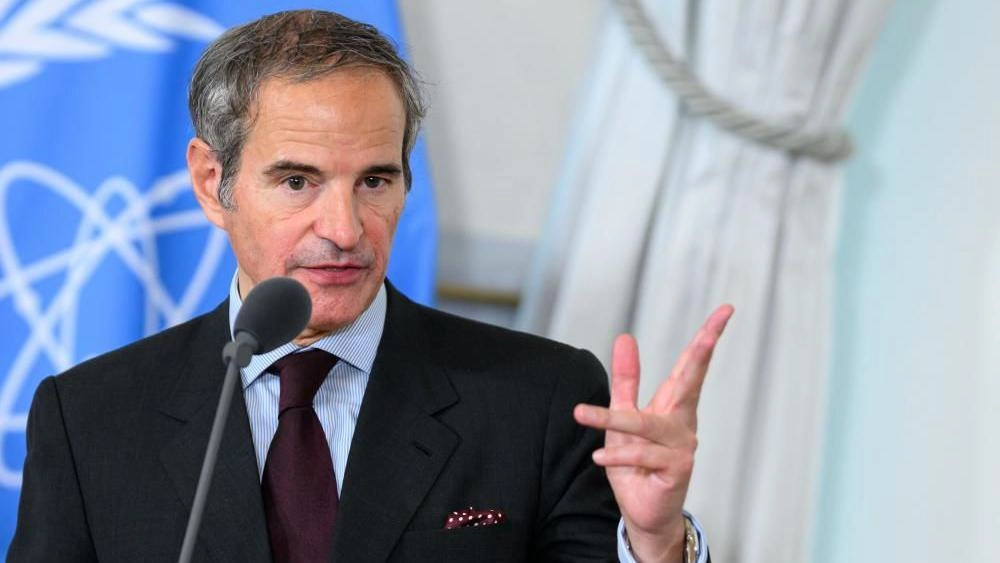

Iran has the capacity to start enriching uranium again - for a possible bomb - in a matter of months, said the head of the UN nuclear watchdog.
Rafael Grossi, director general of the International Atomic Energy Agency (IAEA), said that US attacks on three Iranian facilities last weekend had caused serious but “not total” damage, contradicting Donald Trump’s claim that Iran’s nuclear facilities had been “completely annihilated.”
“Frankly speaking, you can’t say that everything is gone and nothing is left,” Grossi said on Saturday.
Israel attacked nuclear and military facilities in Iran on June 13, claiming that Iran was close to building a nuclear weapon. The United States later joined the strikes, dropping bombs on Iran’s three nuclear facilities: Fordo, Natanz, and Isfahan.
The true extent of the damage has since remained unclear.
On Saturday, Grossi told CBS News, a US-based outlet affiliated with the BBC, that Tehran could have “in a matter of months… a few centrifuges spinning and producing enriched uranium.”
He added that Iran still had the “industrial and technological capabilities… so if they want, they can start doing it again.”
The IAEA is not the first agency to suggest that Iran’s nuclear capabilities may still remain. Earlier this week, a Pentagon intelligence assessment concluded that the US strikes only set the program back a few months.
Trump retorted furiously, declaring that Iran's nuclear facilities had been “completely destroyed” and accusing the media of “attempting to downgrade one of the most successful military attacks in history.”
For now, Iran and Israel have agreed to a cease-fire.
But Trump has said he would “without a doubt” consider bombing Iran again if intelligence discovered it could enrich uranium to alarming levels.
Iran, for its part, has sent mixed messages about the extent of the damage it has caused.
In a speech Thursday, Iran’s supreme leader, Ayatollah Ali Khamenei, said the strikes had achieved nothing significant. However, his foreign minister, Abbas Araghchi, said “excessive and grave” damage had been caused. Iran’s already strained relationship with the IAEA was further strained Wednesday when its parliament decided to suspend cooperation with the atomic watchdog, accusing the IAEA of siding with Israel and the United States. Both countries attacked Iran after the U.N. body declared last month that Tehran was in breach of its non-proliferation obligations for the first time in 20 years. Iran insists its nuclear program is peaceful and for civilian use only. Despite Iran’s refusal to cooperate with his organization, Grossi said he hoped to continue negotiations with Tehran. “I have to sit down with Iran and study it, because at the end of the day, this whole issue, after the military attacks, will have to have a lasting solution, which cannot be achieved without a solution.” be anything but diplomatic,” she said.
Under a 2015 nuclear deal with world powers, Iran was not allowed to enrich uranium above 3.67% purity the level required for commercial nuclear power plant fuel and could not conduct any enrichment at its Fordo plant for 15 years.
However, Trump withdrew from the deal during his first term in 2018, saying it did too little to halt the drive toward a bomb, and reinstated U.S. sanctions.
Iran retaliated by increasingly flouting the restrictions, particularly those on enrichment. It resumed enrichment at Fordo in 2021 and had stockpiled enough 60% enriched uranium to potentially make nine nuclear bombs, according to the IAEA.
Subscribe here to our new newsletter to receive a selection of our best content of the week every Friday.
You can also follow us on YouTube, Instagram, TikTok, X, Facebook and on our WhatsApp channel.
And remember that you can receive notifications in our app. Download the latest version and activate them.