

Jorge ‘el Indio’ Urquía dies: former Honduran footballer who played for Alavés and Mallorca
The former Honduras team forward died at 79 years after suffering a heart attack; he was part of the process leading to the 1982 World Cup in Spain.
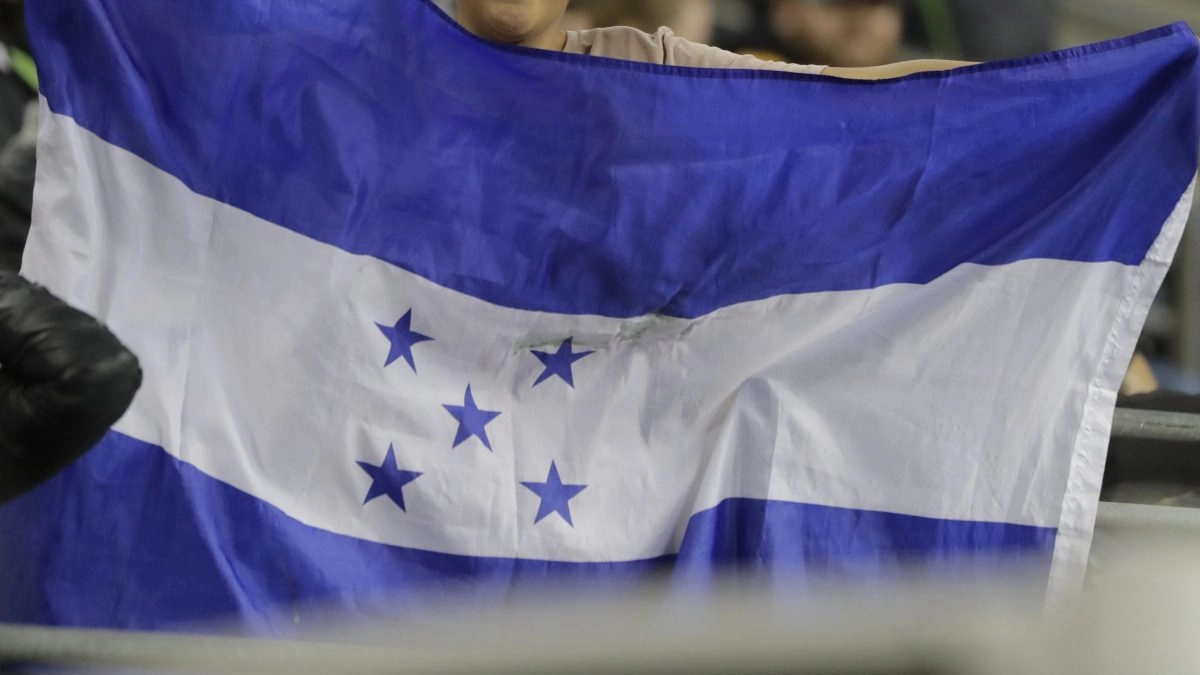

The former Honduran striker Jorge ‘el Indio’ Urquía, who defended the colors of the Honduras team team, in addition to Olimpi a, Alavés and Mallorca, died this Thursday at 79 years due to a heart attack, according to close relatives.
The former player, recognized as one of the Honduran figures who managed to emigrate to Spanish football in the 1970s decade, died in a care center for older adults in Tegucigalpa, where he lived for several years.
Jorge Urquía and his step in Honduran football
Popularly known as 'el Indio' Urquía, the attacker began his professional career in the late 60s with Atléti co Indio, a club that opened the doors for him to later arrive at Olimpia, the most awarded institution in Honduran football.
His outstanding performance with the capital team allowed him to become one of the most recognized forwards in the country and to attract the attention of European football.
Jorge Urquía's jump into Spanish football
Thanks to his performances with Olimpia, Jorge Urquía emigrated to Spain to play in the Second Division with Deportivo Alavés and later with Mallorca.
During his stage in Spanish football he shared a dressing room with prominent footballers. In Mallorca he met with his compatriot Jorge Brand, with whom he also was part of a remembered offensive pair in Olimpia.
Furthermore, in Alavés he was a teammate of the Argentine Jorge Valdano, who years later would shine with Real Madrid.
Jorge Urquía and the Honduras team team
The former striker also left his mark in the national team of Honduras, thanks to his scoring ability and delivery on the field.
Urquía participated in different World Cup qualifying processes, including the qualifiers heading to Mexico 1970 and Germany 1974.
His last call-up came for the hexagonal eliminatory on the way to the 1982 World Cup in Spain, played in Tegucigalpa during 1981, tournament in which Honduras achieved its qualification for a World Cup for the first time.
The return of Jorge Urquía to Olimpia
At the end of the 70s, the attacker returned to Tegucigalpa to rejoin Olimpia, club where he announced his retirement as a professional footballer.
However, when he seemed permanently away from the fields, coach José de la Paz Herrera called him back in 1981 to join the squad that played in the qualifying round for the 1982 World Cup in Spain.
Although in his last years he faced alcoholism problems, in the environment of Honduran football the memory of his offensive talent and his contribution to the international growth of several catrachos players in Spanish football.