

How does the opposition that Israel faces over Gaza compare with that that there was against South Africa by apartheid?
Paul Adams, BBC diplomatic correspondent, analyzes the parallels between the reactions to Israel and apartheid-era South Africa
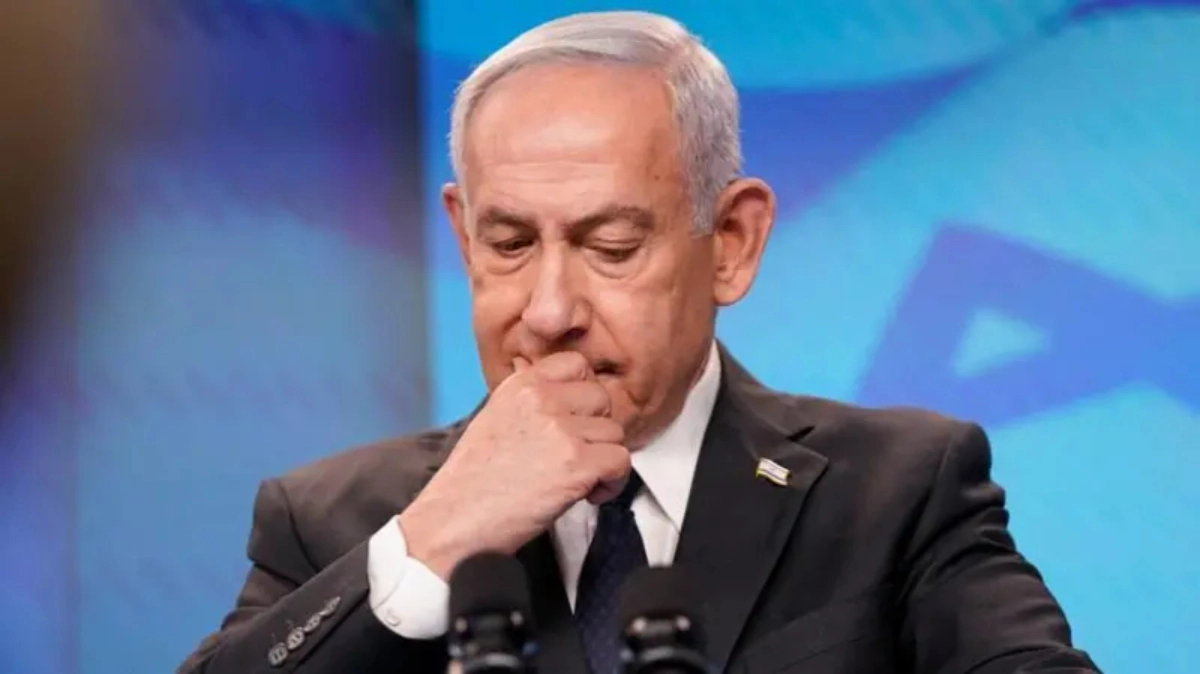

As the war in Gaza drags on, Israel's international isolation appears to be deepening.
Is a “South Africa moment” approaching, when a combination of political pressure and economic, sporting and cultural boycotts helped force Pretoria to abandon apartheid?
Or will the right-wing government of Israeli Prime Minister Benjamin Netanyahu weather the diplomatic storm, leaving Israel free to pursue its goals in Gaza and the occupied West Bank without causing permanent damage to its international image?
Two former Israeli prime ministers, Ehud Barak and Ehud Olmert, have already accused Netanyahu of turning Israel into an international pariah.
Due to an arrest warrant issued by the International Criminal Court, the number of countries to which Netanyahu can travel without risk of arrest has been drastically reduced.
At the UN, several countries—including the UK, France, Australia, Belgium, and Canada—have announced plans to recognize Palestine as a state next week.
And Gulf countries, reacting furiously to Tuesday’s September 9 Israeli attack on Hamas leaders in Qatar, met in Doha to discuss a response unified.
Some have called on countries with ties to Israel to reconsider their positions.
But with images of the Gaza famine emerging this summer and the Israeli army invading—and quite possibly razing—Gaza City, more and more European governments are showing their displeasure in ways that go beyond mere declarations.
Earlier this month, Belgium announced a series of sanctions, including a ban on imports from illegal Jewish settlements in the West Bank, a review of procurement policies for Israeli companies, and restrictions on consular assistance to Belgians living in settlements.
He also declared two hardline Israeli ministers, Itamar Ben-Gvir and Bezalel Smotrich, personae non gratae, along with Jewish settlers accused of violence against Palestinians in the West Bank.
Other countries, including Britain and France, had already taken similar steps.
However, sanctions imposed by the Biden administration last year on violent settlers were removed on Donald Trump's first day in the White House.
The Spain Factor
A week after Belgium's decision, Spain announced its own measures: it signed an existing de facto arms embargo into law, announced a partial ban on imports, banned anyone involved in genocide or war crimes in Gaza from entering Spanish territory, and prohibited ships and planes bound for Israel carrying weapons from docking in Spanish ports or entering its airspace.
The combative foreign minister of Israel's Gideon Saar accused Spain of promoting anti-Semitic policies and suggested that Spain would suffer more than Israel from the arms trade ban.
But there are other alarming signs for Israel.
In August, Norway's vast sovereign wealth fund, worth $2 trillion, announced it would begin divesting from Israeli-listed companies.
By mid-month, investments in 23 companies had been withdrawn, and Norwegian Finance Minister Jens Stoltenberg indicated the same could happen to others.
Meanwhile, the European Union (EU), Israel's largest trading partner, proposed sanctioning far-right ministers and approved partially suspending the commercial aspects of its association agreement with Israel.
In her State of the Union address on September 10, European Commission President Ursula von der Leyen said the events in Gaza have “shook the conscience of the world.”
A day later, 314 former European diplomats and officials wrote to von der Leyen and EU foreign policy chief Kaja Kallas, calling for tougher measures, including a complete suspension of the association agreement.
On Wednesday, the European Commission presented a proposal to suspend certain provisions related to the trade pact with Israel, saying that “the actions taken by the Israeli government represent a violation of essential elements related to the respect for human rights and democratic principles,” it said in a statement.
The European Commission listed the “rapid deterioration of the humanitarian situation in Gaza following Israel’s military intervention, the blocking of humanitarian aid,the intensification of military operations and the decision by the Israeli authorities to move forward with the settlement plan in the so-called E1 area of ??the West Bank, which further undermines the two-state solution.”
A feature of the sanctions imposed on South Africa between the 1960s and the end of apartheid—a policy of racial segregation and discrimination enforced by the white minority government in South Africa against the country’s Black majority—in the 1990s was a series of cultural and sporting boycotts.
Again, there are signs that this is starting to happen with Israel.
Cultural boycott
The Eurovision Song Contest may not seem like a significant event in this context, but Israel has a long and illustrious history with the competition, which it has won four times since 1973.
For Israel, participation symbolizes the acceptance of the Jewish state into the family of nations.
However, Spain, Ireland, the Netherlands, and Slovenia have said they will withdraw in 2026 if Israel is allowed to compete, with a decision expected by December.
In Hollywood, a letter calling for a boycott of Israeli production companies, festivals, and broadcasters “implicated in genocide and apartheid against the Palestinian people” has gathered more than 4,000 signatures in a week, including household names such as Javier Bardem and Emma Stone.
Tzvika Gottlieb, executive director of the Israel Film and Television Producers Association, called the petition “deeply flawed.”
“By attacking us, the creators who give voice to diverse narratives and encourage dialogue, these signatories are undermining their own cause and attempting to silence us,” she said.
The sporting side
Then there is the sport. The Vuelta a Espana was repeatedly disrupted by groups protesting the team’s presence Israel-Premier Tech, forcing a premature and disorderly finish on Saturday and the cancellation of the final stage on Sunday.
Spanish Prime Minister Pedro Sanchez hailed the protests as a source of “pride,” but opposition politicians said the government’s actions had caused international embarrassment.
Also in Spain, seven Israeli chess players withdrew from a tournament after being informed they would not be able to compete under their flag.
The Israeli government’s response to what the media has already described as a “diplomatic tsunami” has been generally defiant.
Netanyahu accused Spain of a “blatant genocidal threat” after its prime minister claimed that his country, lacking nuclear bombs, aircraft carriers, or large oil reserves,was not capable of single-handedly halting the Israeli offensive in Gaza.
Following Belgium’s announcement of the sanctions, Gideon Saar wrote in X that it was “regrettable that even as Israel fights an existential threat, which is of vital interest to Europe, there are those who cannot resist their anti-Israel obsession.”
Diplomatic Vision
Among those who have represented Israel abroad, there is deep anxiety.
Jeremy Issacharoff, Israel’s ambassador to Germany from 2017 to 2021, told me that he did not recall Israel’s international standing having been so “deteriorated,” but noted that many of the measures were “regrettable,” as they were inevitably seen as directed against all Israelis.
“Instead of pointing out the government’s policies, many Israelis are being alienated on ideological grounds.”
He added that some measures, such as recognition of the State of Palestine, would likely backfire, as it “gives ammunition to people like Smotrich and Ben Gvir and even strengthens their case for annexing [the West Bank].”
Despite his fears, the former ambassador does not believe that Israel’s diplomatic isolation is irreversible.
“We are not in a South African moment, but we are in a possible preamble to a South African moment,” he said.
Others believe that deeper changes are needed to stop Israel’s slide into pariah status.
“We have to reclaim our place in the family of nations,” another former diplomat, Ilan Baruch, told me.
“We need to get back to normal,” he added.
Baruch, who served as ambassador to South Africa a decade after the end of apartheid, resigned from the diplomatic service in 2011, arguing that he could no longer defend the Israeli occupation.
Since retiring, he has been a vehement critic of the government and a supporter of the two-state solution.
Baruch believes the recent sanctions are necessary, noting, “This is how South Africa was subdued.”
“I would say that any firm pressure on Israel, in whatever way the Europeans see fit, should be welcomed,” Baruch continued.
If necessary, he said, this should include changes to visa regimes and cultural boycotts, adding, “I am prepared for the suffering.”
Despite all the expressions of outrage and rumors of pressure, some veteran observers doubt that Israel is on the brink of a diplomatic cliff.
“Those willing to follow the Spanish path remain exceptional,” Daniel Levy, a former Israeli peace negotiator, told me.
He added that efforts to take collective action within the EU—eliminating elements of the association agreement or even, as some have suggested, excluding Israel from the EU’s Horizon research and innovation program—are unlikely to garner sufficient support, as Germany, Italy, and Hungary are among the members resisting such steps.
Israel also has strong backing from the U.S. Secretary of State Marco Rubio said as he departed for an official visit that Washington’s relationship with Israel will remain strong.
Levy still believes Israel’s international isolation is irreversible, but says the Trump administration’s continued support means it is not yet at the point where it can change the course of events in Gaza.
“Netanyahu is running out of ground,” Levy said. "But we're not at the end of that road yet."