

Claudia Sheinbaum congratulates Spain for winning the 2026 World Cup, and Mexico for being the “best host”
The Mexican president described the contest as a historic celebration of unity between people and applauded Mexico's role as co-host of the tournament.
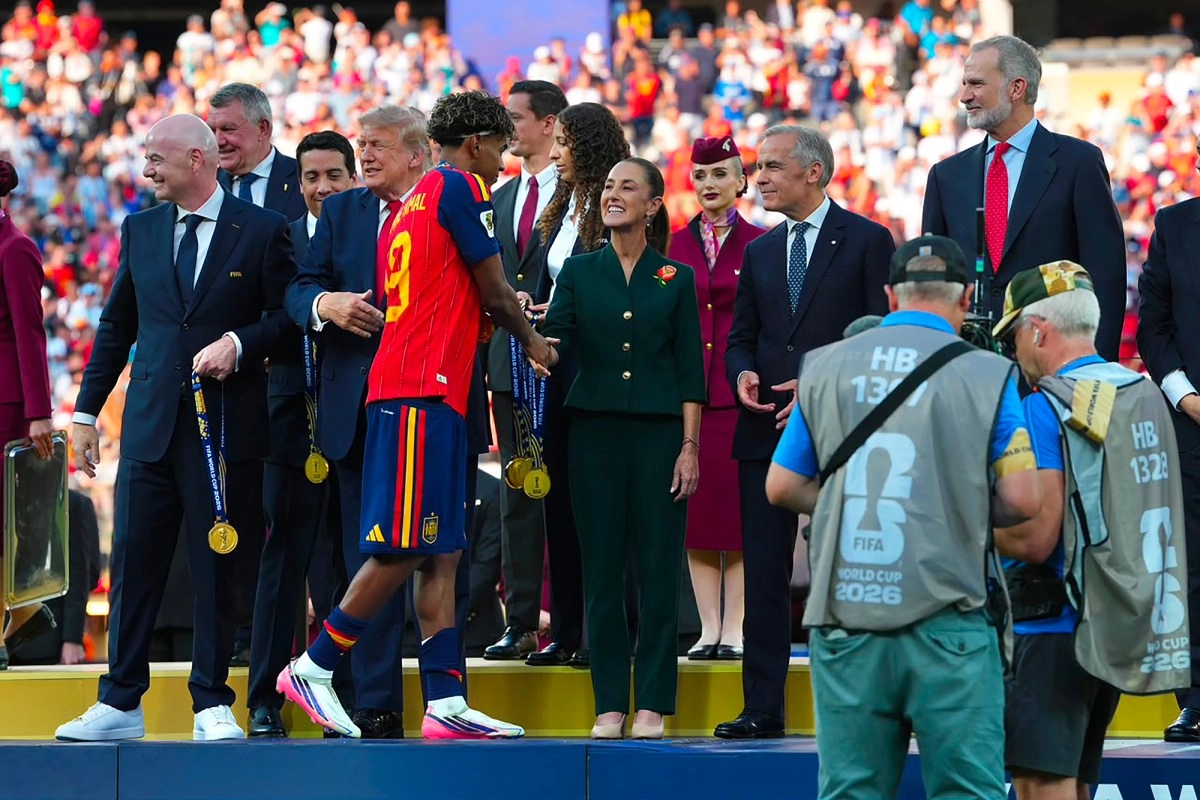

The president of Mexico, Claudia Sheinbaum, congratulated Spain this Sunday for winning the 2026 FIFA World Cup and assured that the tournament left as its main legacy a display of cooperation between the three host countries: Mexico, the United States and Canada.
After attending the final held in the New York metropolitan area at the invitation of President Donald Trump, the president published a message on social networks in which she highlighted that the championship represented a celebration of unity between nations and praised both the champion team and Mexico's participation as host.
“Congratulations to Spain for deservedly winning the championship,” wrote Sheinbaum after the Spanish team's victory over Argentina by a score of 1-0. He also stated that the World Cup “was a great celebration of joy, emotion and unity between people,” considering that sport once again demonstrated its ability to bring different countries together.
The president also recognized Mexico's role during the tournament and congratulated the citizens for the organization of the matches held in Mexican territory. “Congratulations to each and every Mexican for making Mexico the best venue and to our National Team for the great role it played,” he expressed.
Mexico highlights the cooperation between the three host countries
During the award ceremony, Sheinbaum participated in the presentation of the Ballon d'Or to Spanish midfielder Rodri and placed medals on players from Spain and Argentina alongside President Donald Trump, Canadian Prime Minister Mark Carney and FIFA President Gianni Infantino.
In her message, the president maintained that the shared organization of the tournament demonstrated the capacity for cooperation between the three North American partners.
“The three host countries demonstrate that, when we work together, we are capable of making great projects a reality and leaving a legacy of cooperation, friendship and hope for the world,” he said.
Mexico made history by becoming the first country to host three editions of a World Cup, after having organized the 1970 and 1986 tournaments. On this occasion, the championship was held for the first time with an expanded format of 48 national teams and 104 matches.
The Mexican cities of Mexico City, Guadalajara and Monterrey hosted a total of 13 matches, including the inaugural match between Mexico and South Africa played on June 11 at the Mexico City Stadium.
The message contrasts with the moment that the T-MEC is experiencing
Sheinbaum's statements on regional cooperation occur in a context of differences between the governments of the United States, Mexico and Canada regarding the review of the Treaty between Mexico, the United States and Canada (T-MEC). While the Mexican Government presented the organization of the World Cup as an example of coordination between the three countries, the administration of President Donald Trump is maintaining negotiations to modify various aspects of the trade agreement and has insisted on reviewing issues related to tariffs, border security, migration and rules of origin.
The US government recently determined to keep the treaty in force while talks with Mexico and Canada continue, although it rejected extending it under the conditions posed by both partners. Washington officials have also reiterated that they seek to preserve tools that allow them to apply tariffs when they consider it necessary and reduce the participation of Chinese inputs in products assembled in Mexico.
In this context, the message spread by Sheinbaum after the World Cup final underlined the potential of regional collaboration beyond the trade differences currently maintained by the three governments. Added to this protectionist stance are the permanent demands of the White House regarding security, directly linking the future of trilateral trade with greater demands in the control of irregular migration and the fight against fentanyl trafficking.
The cards on the table will be defined this coming July 21, when the delegations meet in Mexico City for the third round of bilateral negotiations.