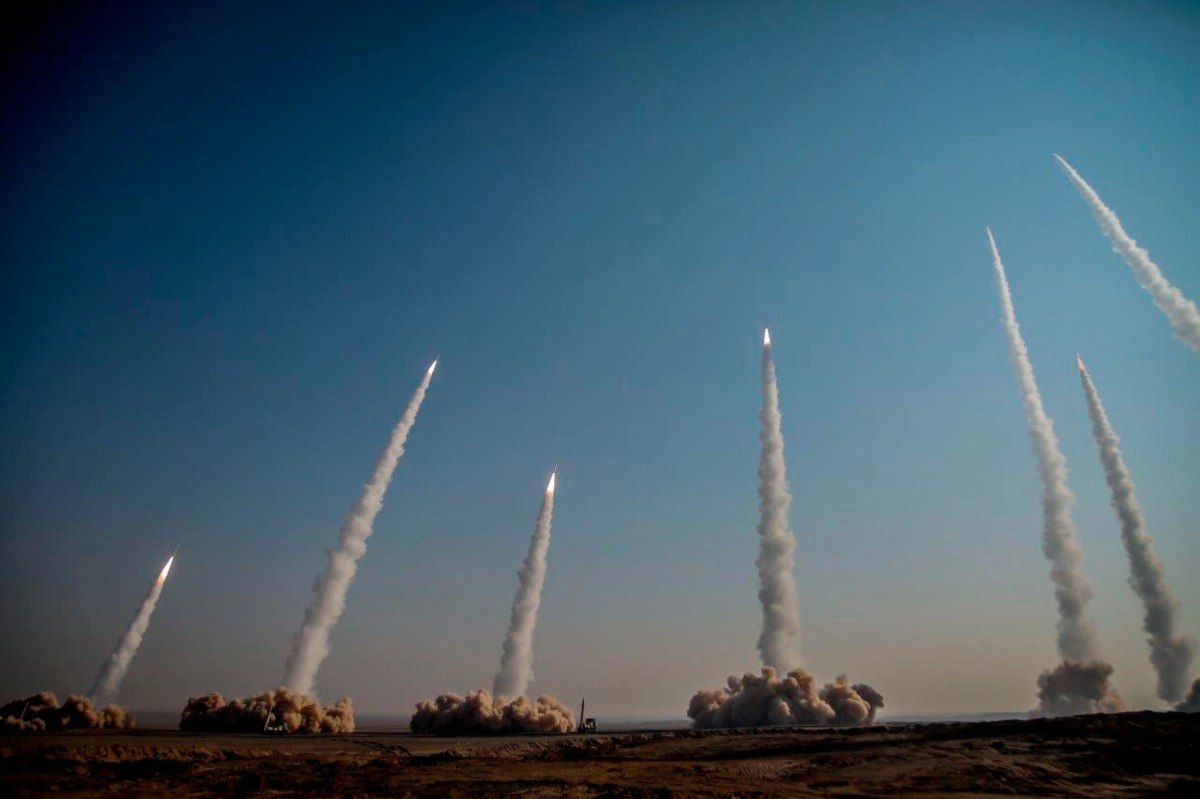

The United States assured this Tuesday that it managed to intercept a surprise attack with ballistic missiles allegedly launched by Iran against US forces deployed in the Middle East, a new episode that reflects the increase in military tension between both countries despite recent announcements about a possible diplomatic negotiation.
According to the United States Central Command (CENTCOM), the launch occurred at 5:45 p.m. (ET) and was executed by the Islamic Revolutionary Guard Corps. “Today at 5:45 p.m. (Eastern Time), Islamic Revolutionary Guard Corps forces launched several ballistic missiles from Iran in an attempted surprise attack against US forces deployed in the Middle East,” the military command reported in a post on the X social network.
The institution added that “all Iranian missiles were successfully intercepted” and assured that US troops remain “in a state of alert and at a high level of preparation.”
Iran claims missile launch
Hours later, the Islamic Revolutionary Guard confirmed the offensive and maintained that the projectiles were directed against a US air base located in Jordan. In a statement released by official Iranian media, the military body stated that "the brave warriors of the IRGC Aerospace Force attacked the air base and the Central Command Center of the United States Army in Jordan with several ballistic missiles."
The statements come amid a new military escalation between Washington and Tehran. Last week the United States carried out a new round of bombings on Iranian territory, which represented the thirteenth consecutive day of attacks since the breakdown of the ceasefire agreed in June.
The confrontation also comes after President Donald Trump said he had ordered a temporary halt to bombing to open the door to negotiations with Iran, although he warned that attacks could resume if talks do not prosper.
Naval blockade against Iran continues
In parallel with the exchange of attacks, the US Army reported that it maintains more than 20 warships deployed in the Middle East as part of operations aimed at enforcing the maritime blockade against Iran.
According to CENTCOM, as of July 28, naval forces had prevented 22 commercial vessels from reaching the Persian country. The balance includes 18 ships redirected, two vessels boarded and two others deactivated for failing to comply with orders issued by US authorities.
The military command indicated that these actions are part of the operation known as the “steel wall,” reestablished this month after the collapse of the ceasefire agreement between Washington and Tehran.
Since the maritime blockade began, US forces claim to have diverted more than 140 vessels, immobilized nine ships that disregarded naval instructions, and allowed the transit of more than 50 ships carrying humanitarian aid.
The growing regional tension coincides with the meeting that President Donald Trump held with Israeli Prime Minister Benjamin Netanyahu, in a meeting focused on the evolution of the conflict and the coordination of the security strategy in the Middle East, while the international community closely monitors the risk of further military escalation.