
A failure in the driver's seat can cause unexpected movements and leave passengers in the second row trapped.
Read also: Ford launches a pink Bronco that was born from the landscapes of Utah
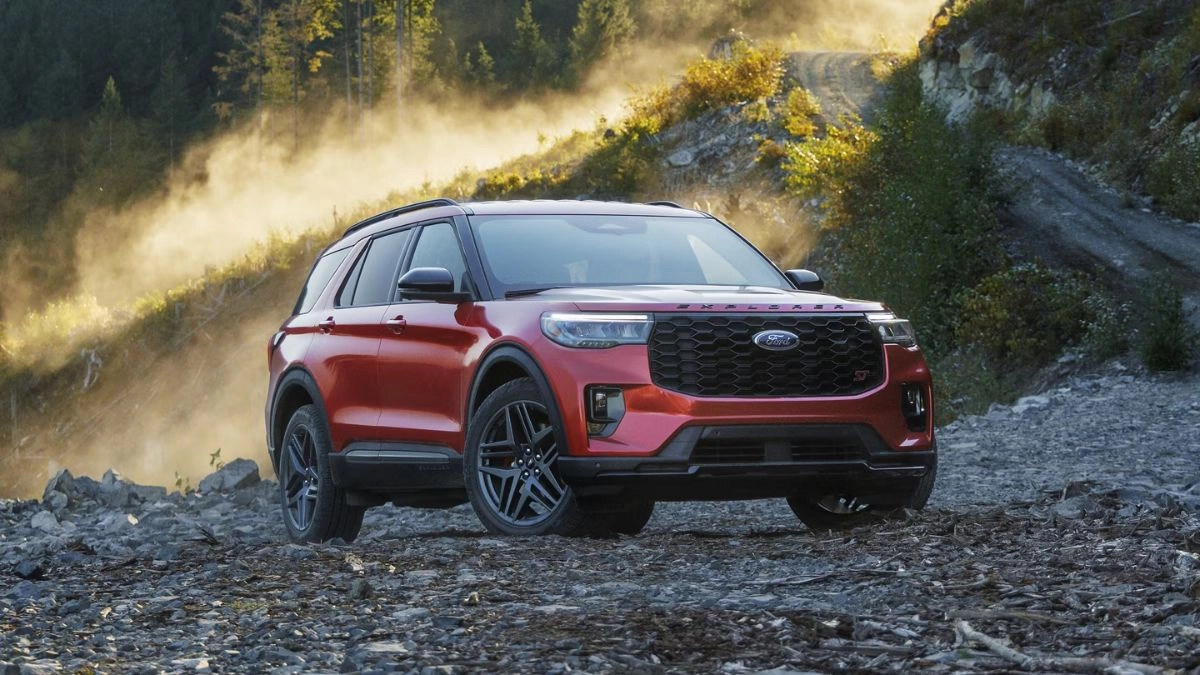
The problem does not appear while the vehicle is moving, but it can become an uncomfortable and potentially dangerous situation when the SUV is stopped. Ford put almost 80,000 units of its Explorer and Lincoln Aviator models in the United States under review due to unexpected behavior of the driver's seat backrest.
You can read: Lamborghini and Halo come together in a Urus inspired by Master Chief
The campaign reaches 64,409 Ford Explorers and 15,170 Lincoln Aviators from the 2026 and 2027 model years. In all cases, these are vehicles that have a specific combination of electric motor and software to manage the seat position memory.
The backrest can move without anyone commanding it
The situation is particularly striking because the seat can begin to recline completely backwards when the driver is not even sitting in it. Movement may occur after unlocking the vehicle remotely, using remote start, approaching with the smart key, or retrieving a position stored in memory.
The risk is mainly behind the seat. If a person occupies the second row when the movement begins, their legs or knees could become trapped between both seats.
Ford and the National Highway Traffic Safety Administration (NHTSA) clarify that the anomaly does not affect the vehicle's behavior while driving. The memory function automatically stops operating when the SUV exceeds approximately 5 km/h (3 mph).
The problem would be a new electric motor
The investigation established that the origin of the problem would not be directly in the memory function, but in the electric motor used to move the backrest.
Starting in November 2025, Ford incorporated a new supplier for this component in the production of the Explorer and Aviator. Under certain circumstances, the motor could incorrectly interpret the position of the backrest.
The system, when trying to recover a previously saved position, could understand that it needed to move the seat all the way back. The result was a move that no one had directly requested.
Additionally, although the mechanism has a feature designed to stop when it encounters an obstacle, engineers' testing determined that the force applied may still be enough to generate a shock or cause an entrapment.
Ford received 133 reports of the behavior
Ford's Office of Automotive Safety forwarded the first reports to the Critical Issues Review Group (CCRG) on June 4, 2026. Based on those reports, an internal investigation began to determine why some backrests reached their rearmost position without owner intervention.
By June 26, Ford had tallied 133 reports related to this behavior. Despite this number of cases, the company assured that up to that point there had been no accidents or injured people as a result of the defect.
NHTSA believes, however, that the risk of entrapment or impact justifies the screening campaign, especially when there are children or other passengers in the second row.
The repair is still in development
Ford is still working on a definitive solution. The company's engineers seek to correct the system's behavior and determine whether a software update, component replacement, or a combination of both measures will be necessary.
When repair is available, owners will be contacted to take their vehicles to an authorized dealer. The work will be performed at no cost to affected customers.
Owners of a 2026 or 2027 Ford Explorer, as well as a Lincoln Aviator from those same years, can check if their vehicle is included in the campaign by using the VIN number on the official NHTSA portal. They should also be attentive to the communication that Ford will send to owners.
Until the solution arrives, the recommendation is simple. It is advisable to avoid having people sitting in the second row when using functions such as remote unlocking, remote start or automatic recovery of a position stored in the seat memory.