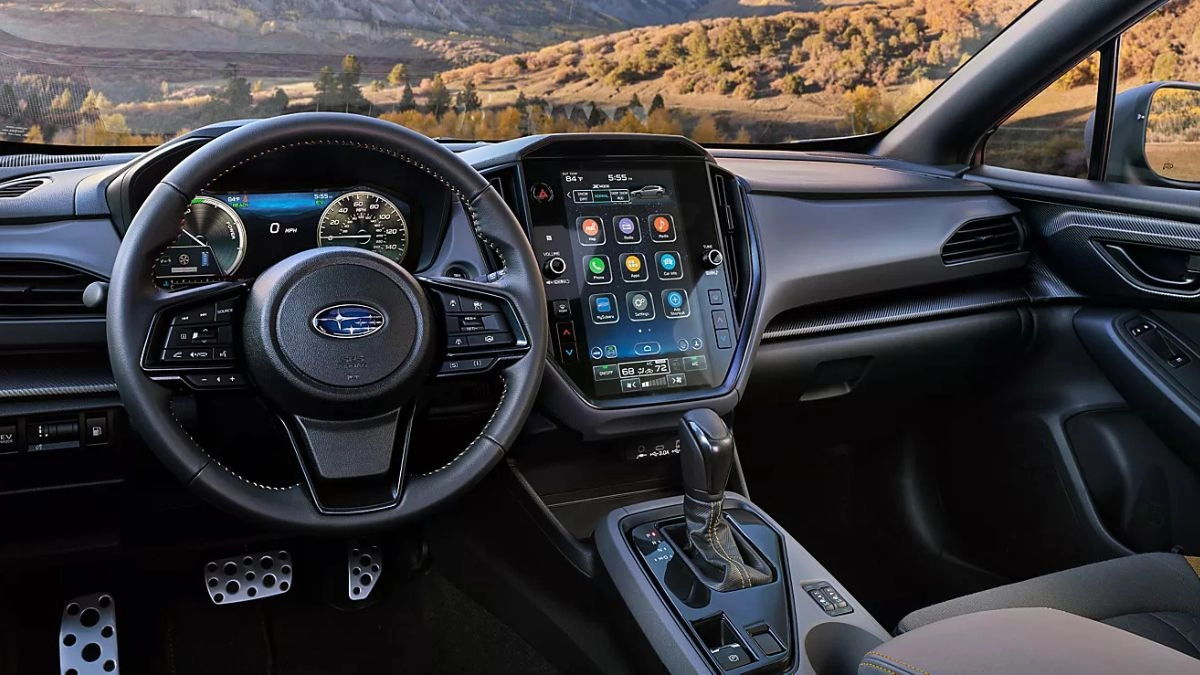

If you've ever looked at the shift knob on an automatic car and wondered what the letters B or L mean, you're not alone. These positions are not intended to be used all the time nor do they serve exactly the same function as the traditional D.
Read also: Ford launches a pink Bronco that was born from the landscapes of Utah
Its usefulness appears especially when the vehicle needs more retention and control. A steep descent, a mountain road, or even carrying a heavy load can be situations where these features make a lot of sense.
You can read: Lamborghini and Halo come together in a Urus inspired by Master Chief
What does position B do?
The letter B is often associated with “Brake” and is designed to increase engine braking. When selected, the vehicle generates greater retention when the foot is lifted from the accelerator, helping to reduce speed without continually relying on the brake pedal.
This is especially practical on long descents. Instead of holding down the brake for much of the descent, the driver can take advantage of the system's resistance to maintain a more controlled speed.
This also reduces the work on the brakes and the risk of them reaching too high temperatures after prolonged use.
What is the L position for?
The L normally corresponds to “Low” and keeps the transmission in low ratios. This allows for a stronger response and greater holding capacity, something that can be useful when the vehicle faces a steep slope.
It can also be an interesting option when transporting heavy loads or towing, since the low gears help to better control the set in situations where more force is needed.
The fundamental difference is that B is more oriented towards increasing retention, while L seeks to maintain low ratios to offer greater control and response.
In hybrids you can recover energy
Position B also has an important peculiarity in many hybrid and electric vehicles. In these models, the greater retention may be linked to the regenerative braking system.
When the vehicle decelerates, the electric motors can function as generators and transform part of the kinetic energy into electricity that is subsequently stored in the battery.
Therefore, on a descent, selecting B can serve both to control the speed and to recover energy that, in a conventional car, would end up mainly converted into heat through the brakes.
They are not gears to use all the time
Although B and L can be very useful, it doesn't make much sense to keep them selected on a flat road or driving normally at high speeds.
Extra holding can cause greater deceleration than expected and cause the vehicle to not behave as it would in D. Additionally, each manufacturer may program these positions differently.
Therefore, it is best to consult the vehicle manual before using them for the first time.
In any case, B and L do not completely replace the brake pedal. They are tools designed to help control the car in specific circumstances and reduce the effort of the braking system, especially on long descents, steep slopes or when carrying a considerable load.