

Tesla Robotaxis are already driving around Texas without a driver
The company expanded the reach of its Robotaxis in Austin and paved the way for growth in other Texas cities
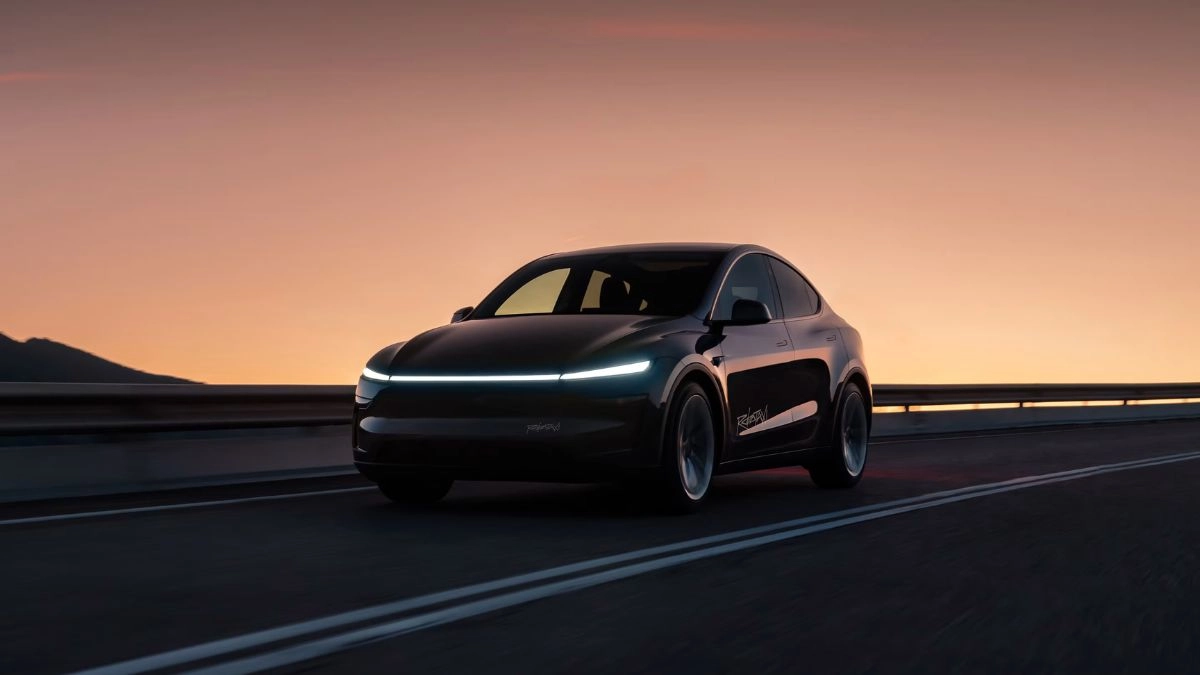

Getting around Austin aboard a driverless vehicle is no longer an experience reserved for a few sectors of the city. Tesla decided to significantly expand the scope of its Robotaxis service and now its autonomous units can circulate throughout the metropolitan area of the Texas capital.
Read also: Thorough test: full analysis of the 2026 Toyota Corolla Cross HEV
The expansion represents one of the company's most important moves in autonomous mobility. Until recently, the routes were limited to certain areas, but the new update allows the vehicles to operate on a much larger surface and connect key points in the city.
You can read: Take note: this costs armoring a vehicle in the United States
Among the incorporated sectors, important road corridors, peripheral neighborhoods and access to the Austin-Bergstrom International Airport stand out. This increases the possibilities of use for residents and visitors looking for a transportation alternative based on artificial intelligence.
An ever-widening territory
The expansion of the operating area marks the fifth growth of the network since the start of the tests carried out in 2025. Thanks to this update, vehicles can travel through sectors that were previously outside the authorized limits, including central areas of high complexity for driving.
For Tesla, each new kilometer traveled is an opportunity to collect valuable information about the system's behavior in real traffic situations. The company seeks to perfect its algorithms in increasingly demanding scenarios.
The expansion also reinforces Elon Musk's commitment to turning Texas into one of the main bases for the development of autonomous driving in the United States.
The role of the FSD system
The Robotaxis used in Austin are Model Y units adapted to operate using the most recent version of the Full Self-Driving system, known as FSD.
Unlike other companies that use large LIDAR sensors, Tesla continues to rely on a combination of cameras and artificial vision systems to interpret the environment and make driving decisions.
The evolution of the software allowed, from the beginning of 2026, the company to progressively reduce the presence of security personnel inside the vehicles. Currently, journeys are made without a human driver at the wheel, while artificial intelligence is responsible for accelerating, braking and maneuvering.
For passengers, this means a completely different experience, as they can sit in the front seat and watch the vehicle respond to traffic conditions in real time.
A still limited fleet
Despite technological advancement, Tesla still faces a significant challenge. The number of Robotaxis available remains small compared to the size of the city and the potential demand of users.
Estimates indicate that between 20 and 50 completely autonomous units are currently circulating. This figure is modest for such a large metropolitan area, which at certain times causes waiting times of more than 30 minutes.
In addition, the competition already has a consolidated presence in the local market. Waymo, Alphabet's autonomous driving division, has more than 250 vehicles operating in Austin, an advantage that Tesla will have to reduce if it wants to lead the segment.
Dallas and Houston appear on the horizon
The experience accumulated in Austin is already serving as a platform for the next stage of expansion. Various reports have detected test vehicles in Dallas and Houston, two markets considered strategic for the growth of the service.
Everything indicates that Tesla is seeking to accelerate the deployment of its autonomous network in different Texas cities in the coming months. The objective goes far beyond urban transportation.