

Facts of the week in immigration: Supreme Court deals blow to TPS and asylum by giving more powers to Trump
The highest court's decisions support immigration restrictions that affect hundreds of thousands of people
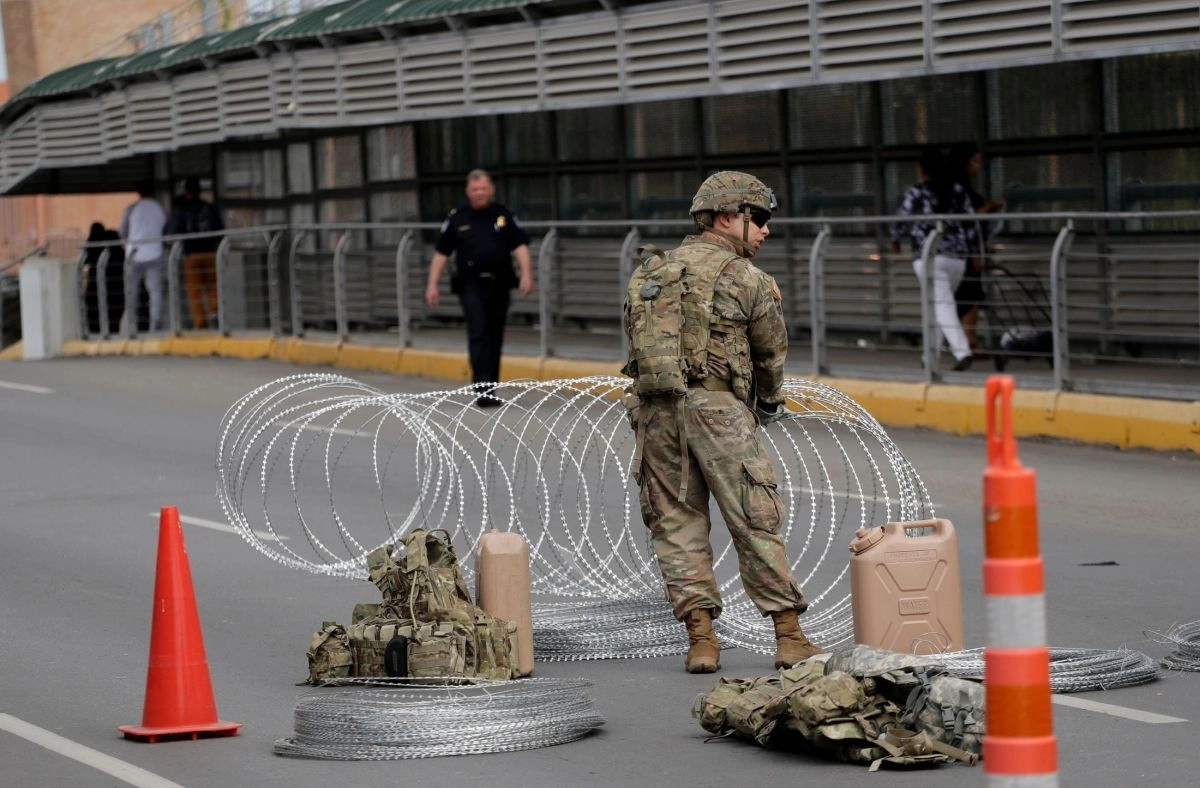

The U.S. Supreme Court continued to issue rulings ahead of its summer recess, handing two victories to President Donald Trump by ruling that asylum claims must be made on U.S. soil and not before crossing the border, and that the administration can cancel TPS for hundreds of thousands of Haitians and Syrians, which also impacts other TPS beneficiaries. This is one of the largest delegalizations in modern US history.
The highest court has not yet ruled on Trump's executive order that seeks to repeal birthright citizenship guaranteed by the 14th Amendment of the Constitution.
In the case of asylum, the decision means that immigration agents are not required to inspect or process asylum requests from immigrants who are on the Mexican side of the border.
As La Opinión reported, "the conservative majority of the court held that the law is clear: a person "arrives" in the United States only when they cross the border. Under that interpretation, immigration authorities are not obliged to inspect or process asylum applications from people who still remain in Mexican territory."|
The asylum ruling gives the green light to a policy known as metering, which began in late 2016 during the presidency of Democrat Barack Obama due to the arrival of thousands of Haitians at the port of entry in San Ysidro, California.
When Trump came to power in January 2019, he implemented metering at all ports of entry, but when Joe Biden became president in 2021, he eliminated the policy.
With the ruling, Trump can implement it again, although the administration has also taken a series of other measures that undermine asylum laws.
Judge Sonia Sotomayor wrote the dissenting opinion and stated that as a result of this ruling “more people will die.” And the policy prevents those with valid asylum requests from submitting them if they are not on the American side.
The Supreme Court endorses the cancellation of TPS
On the other hand, the highest court allowed the cancellation of TPS for some 350,000 Haitians and 6,000 Syrians, removing their work permits and protection from deportation despite the precarious conditions prevailing in both countries.
The ruling will also affect the rest of the program's 1.3 million beneficiaries from 17 countries. Trump canceled protections for nationals of 13 countries and the Supreme Court's decision means that he can do so.
TPS grants work permits and protection from deportation to nationals who are in the United States and who come from countries that are at war or have experienced a natural disaster or other internal conditions that make it unsafe for their nationals to return.
And TPS is just one of the programs chosen by Trump to implement his delegalize-to-deport doctrine.
The Trump administration announced the cancellation of TPS for nationals of 13 countries, including 72,000 Hondurans and 4,000 Nicaraguans who had protection from deportation and work permits since 1999. It also eliminated TPS for 348,000 Venezuelans, and more than 200,000 Salvadorans. Apart from the cancellation of humanitarian parole for half a million Cubans, Haitians, Nicaraguans and Venezuelans.
It remains to be seen whether the devastating earthquakes in Venezuela cause the administration to reconsider its stance on eliminating TPS for that nation.
According to a report by FWD.us, “at the beginning of 2025 and at the beginning of Trump's second term, almost 1.3 million people were TPS holders.” These people “live with 390,000 US citizen children and more than 410,000 US citizen adults.”
The analysis adds that “TPS beneficiaries contribute about $29 billion annually to the U.S. economy, in addition to paying $7.8 billion in combined federal, state and local taxes.”
They also focus on key industries of the economy, such as healthcare.
Republican Congressman from New York, Mike Lawler, stated that of the more than 350,000 Haitians with legal status under TPS, approximately a third work in the health system. The immediate suspension of TPS will cause “a crisis in our hospitals, nursing homes and in the community of people with intellectual and developmental disabilities (I/DD),” he added.
Lawler asked the Trump administration to reconsider the decision, since the State Department itself has indicated that Haiti is controlled by gangs involved in drug trafficking, weapons and kidnappings.
Meanwhile, Alligator Alcatraz closed its doors
La Opinión reported that “the controversial Alligator Alcatraz, an emblematic immigration detention center of Donald Trump's second presidency, will close after having carried out almost 21,000 deportations, announced Florida Governor Ron DeSantis.”
"Today they have zero detainees. They have helped remove many dangerous people from the streets and get them out of not only the state of Florida, but the United States of America. The detainees who were here remain in federal custody. Demobilization efforts at these facilities are underway," DeSantis stated, according to the article.
The center illustrated the excesses and cruelty of the Trump administration in its handling of detained immigrants, placing them in the middle of a swamp and in unsanitary conditions.
CBP is approaching its goal of 25,000 agents.
La Opinión reported that the United States Customs and Border Protection (CBP) reported that the Border Patrol reached a historical record of 21,471 agents assigned to front-line duties, the highest number since the creation of the corporation 102 years ago.
Trump's goal is to increase the number of agents to 25,000.
“The strengthening of the Border Patrol is part of a broader White House strategy to tighten immigration control and accelerate deportations,” the newspaper wrote.
Quote of the week
"I came here as a child and have built my entire life in this country. Losing TPS would mean losing my livelihood, my security, and possibly being separated from the four children I have worked so hard to raise. Like so many other TPS recipients, I have dedicated my life to serving my community, caring for patients, creating businesses, and raising my family. This decision puts all of that at risk, but it will not take away our dignity or our determination to continue fighting for our families," he said. a Haitian immigrant beneficiary of TPS, cited anonymously for security reasons by the National TPS Alliance.