

Who is the DRC fan who stands like a statue at World Cup matches?
With many of their countrymen unable to experience the World Cup in person, people in the Democratic Republic of the Congo feel that this fan represents them
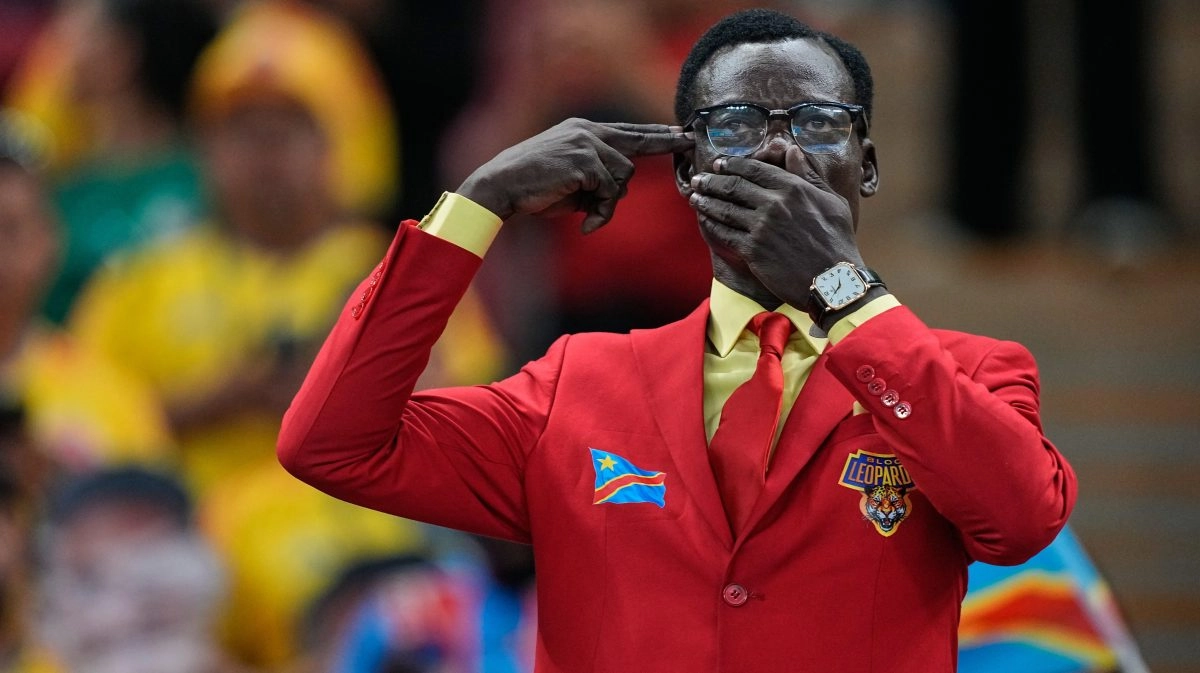

In the midst of the chants and hubbub of the fans at this World Cup, one fan stood out for remaining motionless in silent tribute throughout an entire match. In the game between Colombia and the Democratic Republic of the Congo (DRC), this Tuesday in Guadalajara, the African team fell 1-0. But it had the presence in the stands of its most famous fan, so famous that the players themselves asked to include him in the official delegation.
Michel Kuka Mboladinga, better known as Lumumba Vea, which means “Lumumba lives”, is known as the “living statue” for his peculiar style of supporting Los Leopards, as the DRC team is known.
Dressed in a jacket and tie, often in the colors of his country's flag, he remains completely motionless with his arm raised on a small pedestal in the stadium stands.
The fan's posture simulates that of a monument in Kinshasa that honors Patrice Lumumba, the first Congolese ruler after the independence of the African country from Belgium.
Lumumba, who became prime minister at just 34 years old, was shot by a firing squad with the backing of Belgian authorities and his body was dismembered and dissolved in acid.
“Patrice Lumumba is not only considered a hero in the Democratic Republic of the Congo, but he is also recognized as one of the most prominent voices of the African anti-colonial movement,” Rob Stevens, a journalist with BBC Sport Africa, the sports department of the BBC African Service, tells BBC News Mundo.
“Mboladinga has described his dedication to maintaining his pose at matches as a ‘patriotic mission’ aimed at honoring Congolese history and providing moral support to the cause.”
“It represents the soul of the nation”
Mboladinga has supported his team like a living statue since 2013, although he achieved international notoriety during the 2025 African Cup of Nations when a video of him went viral on the internet, Stevens notes.
The fan missed his country's debut in the World Cup due to the quarantine imposed on visitors from the DRC.
The restrictions were implemented following an Ebola outbreak in the country, which has already infected more than a thousand people and claimed more than 254 lives.
In their first match RDC drew 1-1 with Portugal and displayed a great effort that managed to contain Cristiano Ronaldo and other stars.
Mboladinga has said in the past that being in the stands gives energy to his team.
“His presence in the stands provides the Leopards with a point of reference and support during their matches, as well as honoring the memory of a Pan-African icon who has streets named after him across the continent,” says Stevens.
That Mboladinga is in the World Cup is not only important for the DRC players, but for the entire African country.
“Very few fans from the Democratic Republic of the Congo have been able to attend the World Cup due to the high cost of travel and visas, as well as entry restrictions imposed following the Ebola virus outbreak in the east of the country,” says Stevens.
“With the Democratic Republic of the Congo back in the World Cup for the first time in 52 years – and with many of their countrymen unable to witness it in person – people in the DRC feel that Mboladinga represents the soul of the nation.”
Who was Patrice Lumumba?
A tooth with a gold crown is all that remains of slain independence hero Patrice Lumumba.
Shot by a firing squad in 1961 with the backing of the former colonial power, Belgium, his body was buried in a shallow grave, dug up, transported 200 km, reburied, exhumed, dismembered and finally dissolved in sulfuric acid.
According to documents declassified more than two decades ago, the United Kingdom also supported Belgium and the United States in their desire to eliminate Patrice Lumumba.
Historian Ludo de Witte, author of the book “The Assassination of Lumumba,” noted that while the United States and Belgium were actively plotting to kill the African nationalist leader, the British government secretly believed that Lumumba posed a serious threat to Western interests and wanted to get rid of him.
Belgian police commissioner Gerard Soete, who supervised and participated in the destruction of Lumumba's remains, took the tooth, he later admitted. The tooth was returned in 2022 in a ceremony in Brussels to the family of the murdered leader.
Patrice Lumumba was elected prime minister in the final days of colonial rule.
In June 1960, during the transfer of power, King Baudouin of Belgium praised the colonial administration and referred to his ancestor, Leopold II, as the “civilizer” of the country.
There was no mention of the millions of people who died or were brutalized during his reign, in which Leopold II treated the African colony as his personal domain.
After taking office, in a speech that did not appear in the official program, Lumumba denounced “the humiliating slavery that was imposed on us by force.”
Never before had an African leader dared to speak like this to Europeans and the Belgians were stunned, according to Ludo de Witte.
The total destruction of the body appeared to be an attempt to erase the memory of Lumumba, who had fought for the dignity of all Africans.
For years the Lumumba family did not know exactly what had happened to him. It was not until almost 40 years later, in 1999, that Soete publicly acknowledged his involvement and that he still had a tooth.
De Witte's book, which broke years of official silence, led to the creation in 1999 of a parliamentary commission charged with determining the exact circumstances of the murder and the possible involvement of Belgian politicians.
In its conclusions two years later, the commission stated that although no document had been found ordering Lumumba's murder, members of the then government were morally responsible for the circumstances that led to his death.
In March this year, a Belgian court ordered a 93-year-old former diplomat to stand trial for the murder. Etienne Davignon, who previously denied any wrongdoing, is the last survivor of the ten Belgians suspected of involvement in the crime and has been charged with “participation in war crimes” for his role in the “illegal detention and transfer” of Lumumba.
The hopes in this World Cup
Mboladinga did not want to grant interviews during the meeting with Colombia.
But the famous fan agreed to take photos with fans from both sides and smiled when asked if he was happy to finally be able to attend the World Cup.
The Democratic Republic of the Congo will now face Uzbekistan in their final group stage match on Saturday night in Atlanta.
Whatever the result, Los Leopards will have one of their best allies in the stands.