

ICE raids left millions in losses and a lasting impact on Latino businesses in LA, study reveals
This is revealed by the report "The Cost of Fear", prepared by the UCLA Latino Policy and Policy Institute and the organization Inclusive Action for the City.
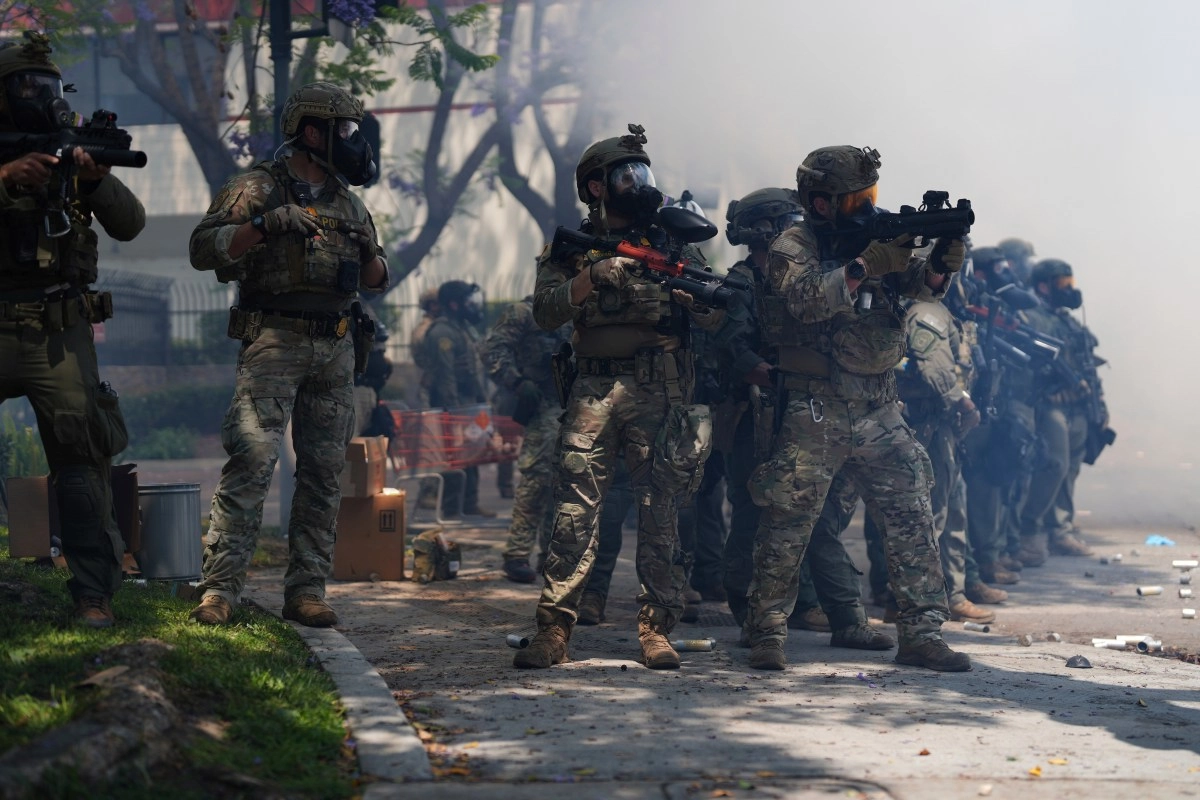

The immigration operations carried out by the Immigration and Customs Enforcement Service (ICE) in June 2025 not only led to arrests and protests in Southern California. They also caused a strong economic shock that continues to affect hundreds of small Latino businesses, according to a study presented this Wednesday by the Institute of Latino Politics and Policy at the University of California, Los Angeles (UCLA).
The report, titled “The Cost of Fear,” was prepared in collaboration with the organization Inclusive Action for the City and documents how the increase in immigration control actions reduced commercial activity in nine majority-Latino corridors in Los Angeles County, generating economic losses, financial uncertainty and impacts on the physical and mental health of the owners.
The researchers analyzed 989 establishments located near nine points where immigration operations were documented, in addition to conducting surveys and focus groups with 75 Latino business owners from communities such as Westlake, Huntington Park, Pacoima, Paramount, Whittier, Cypress Park, Ladera Heights, the Fashion District and downtown Los Angeles.
Millions of dollars in losses and fewer clients
The study concluded that businesses located near the operations recorded 46,000 fewer customer visits and estimated losses of $3.16 million during the two weeks after the raids. The authors note that the real impact could be considerably higher, since the analysis only covers nine sites and a limited period. If a similar decrease continues throughout the county, economic losses could reach 52 million dollars in two weeks and up to 114 million dollars in a month of continuous application of immigration operations.
The area most affected was the Fashion District, popularly known as Los Callejones, where a loss of close to 1.5 million dollars was estimated in just two weeks. The report also reveals that pedestrian flow decreased by up to 3.23% in businesses located less than 400 meters from the points of operation, while eight of the nine commercial areas studied experienced a reduction in the influx of consumers.
Fear continues to affect merchants and workers
The testimonies collected show that the consequences went beyond the drop in sales. 100% of the entrepreneurs interviewed reported a decrease in clients and income; 59% stated that their sales fell more than 50%; 68% reduced hours or closed temporarily, while 51% indicated that part of their staff stopped coming to work for fear of the operations.
One year later, 95% of participants continue to report financial stress. More than half said their income no longer consistently covers operating costs, while another 43% barely manage to keep going without making a profit.
“Our research demonstrates that immigration enforcement functioned as an economic shock that extended far beyond the immediate disruption associated with enforcement operations,” said Amada Armenta, director of the UCLA Latino Policy and Policy Institute and co-author of the study.
The report also documents a strong impact on health. 76% of participants reported emotional problems, including anxiety, depression, insomnia, panic attacks, persistent stress and worsening of chronic diseases. Some interviewees reported requiring new medical treatments and even stress-related hospitalizations. “Latin businesses have not recovered.
These businesses serve as local economic engines. They employ neighbors, buy from local suppliers and keep money circulating in their communities. When repression drives away its customers and workers, the damage extends to the health, well-being and security of entire communities,” Armenta concluded.