

Mother of a Venezuelan who died after being deported demands that the US treat immigrants with dignity
The family questions the lack of notice from ICE and demands changes to protect those who are removed from the US.
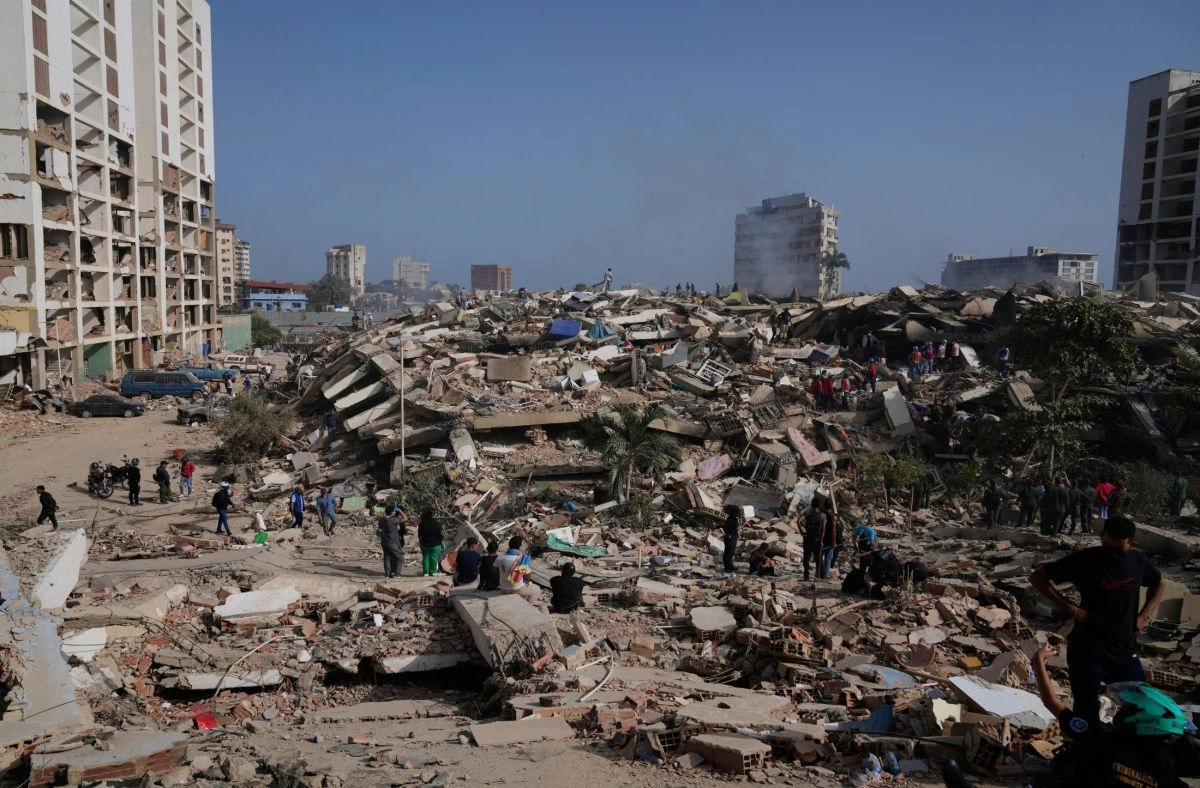

The death of a young Venezuelan a few hours after being deported from the United States has raised new questions about deportation protocols, communication with families and the treatment that immigrants receive upon returning to their countries of origin. The story of Daniel Alejandro Núñez Ramírez, 28, has shocked human rights organizations and dozens of Venezuelan families who today face the uncertainty of having relatives in immigration custody.
According to an extensive report published by El País, Daniel was deported from Jacksonville, Florida, on June 24, on a flight operated by GlobalX that transported 146 Venezuelans to Caracas. Hours after his arrival, he was taken along with other deportees to the Hotel Santuario La Llanada, where an earthquake caused the building to collapse.
His mother, Oswadeliz Núñez, spent five days searching for him until she found his body in a makeshift morgue in the port of La Guaira.
“I need the next deportees to be treated as people,” the mother told the Spanish newspaper.
A deportation that ended in tragedy
Daniel had emigrated first to Peru and later to the United States, where he worked in construction while awaiting the resolution of his immigration case. According to his mother, he was detained by ICE on his way to work and later accepted voluntary deportation due to the difficulty of continuing to pay lawyers.
Before returning, Daniel confessed that the immigration persecution had become unbearable.
“He had told me that he was going to return because the ICE persecution was horrible; he practically had to live in hiding,” Oswadeliz recalled.
One of the aspects that the family most questions is that ICE never officially notified the date of the deportation. The last communication with Daniel was a call just four minutes after landing in Venezuela. Hours later, the earthquake occurred that collapsed the hotel where he remained in the custody of the Venezuelan authorities.
Families ask for changes in deportations
The mother maintains that, if she had been informed in a timely manner, she would have been able to personally receive her son and prevent him from remaining in the custody of the Bolivarian Intelligence Service (SEBIN).
He also denounces that the Venezuelan authorities delayed the delivery of information about the deceased and that he had to visit hospitals, government offices and finally an improvised morgue to locate Daniel's body.
According to the aforementioned media, the Venezuelan government has not yet published an official number of victims among the deportees affected by the collapse. While some initial reports spoke of 12 deaths, later figures of up to 32 deaths began to circulate, without official confirmation.
For its part, the Department of Homeland Security (DHS) told various media outlets that the flight arrived “without incident” and recalled that, once a person leaves ICE custody, the agency is no longer responsible for them.
“I want this to never happen again.”
After cremating his son's remains, Oswadeliz assures that now his goal is to promote changes in the deportation processes.
"I want to fight to change the law. If a person does not have a criminal record, their family should be able to receive them directly when they are deported," he said.
While questions continue about what happened in Venezuela, a mother's request summarizes the demand of many families: that those who are deported return home with dignity and not become a statistic.