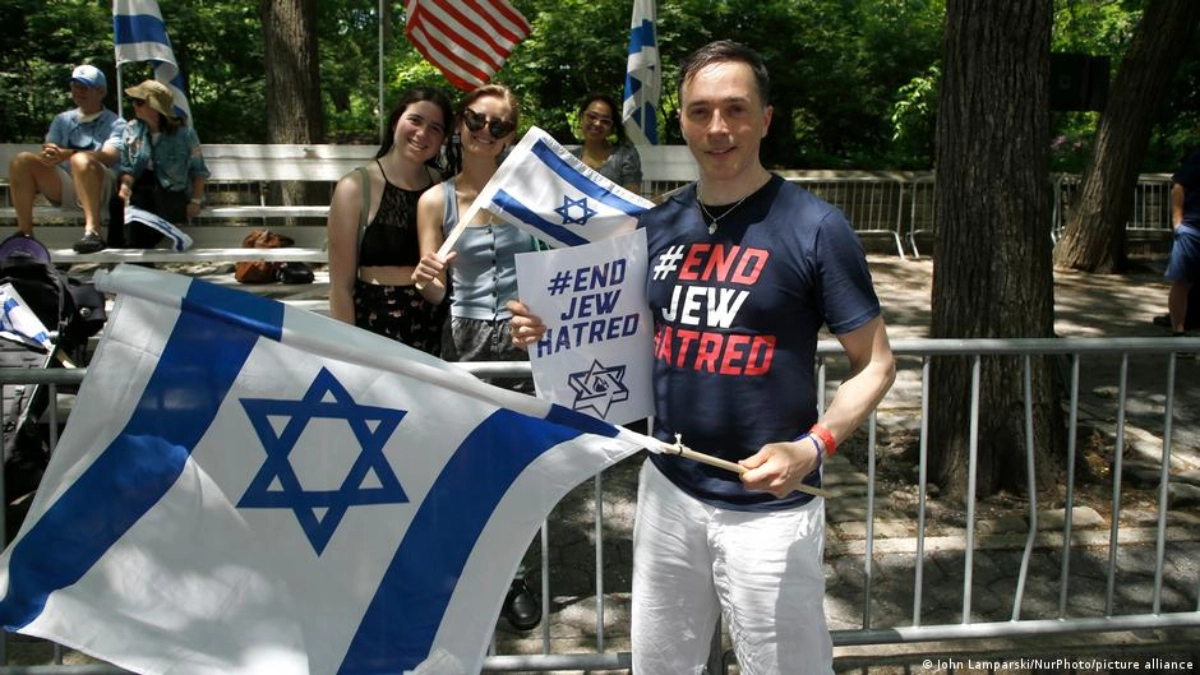

Three years ago, the increase in incidents of anti-Semitism – attacks against Jews for being Jewish – led to the formation of the Large Communities Task Force against Anti-Semitism (J7) made up of Jewish organizations from the United States, Canada, the United Kingdom, France, Germany, Argentina and Australia. 90% of the world's 16 million Jews live there.
In our country the organization is represented by the Anti-Defamation League (ADL) and the Conference of Presidents of Major American Jewish Organizations.
A new report
J7 published this week the Annual Report on Antisemitism 2026. “2025,” it says, “was the deadliest year of anti-Semitic violence against Jews in the diaspora” since the attack against the AMIA in Buenos Aires in 1994.
"Last year," the ADL says in a press release, "20 people were killed in anti-Semitic attacks. Fifteen during a Hanukkah celebration in Bondi Beach, Sydney; two at Manchester's Heaton Park Synagogue; two at the Jewish Museum in Washington; and one in Boulder, Colorado: Karen Diamond, an 82-year-old grandmother, marching in support of Israeli hostages held in Gaza.
In addition, 300 people were injured.
“More than 23,000 anti-Semitic incidents that occurred in the J7 countries” were documented, an increase of 136% compared to 2022. Violent incidents increased by 97% in the same period.
Contrary to the rest, the number of attacks between 2024 and 2025 decreased in the US by 30%, which they attribute to the reduction of protest camps on campuses.
But even so, we have 17 attacks reported every day, five times more than 10 years ago.
The Working Group determines that ““anti-Semitism in our seven countries is no longer a temporary increase; It is our new normal.”
Timeline of change
Unsurprisingly, anti-Zionism was the excuse used as the motivation for attacks in 45% of cases here, compared to 10% five years ago.
The change is palpable after the massacre caused by Hamas on October 7, 2023, when they murdered 1,200 people, but even more so after the massacre that the Netanyahu government caused in Gaza, in a war that exceeded the proportionate reaction, with some 73,000 Gazans dead, according to figures from the Gaza Ministry of Health, the vast majority of them civilians. The images of destruction and the little attention of official spokespersons to the suffering of Gazans fueled an already malignant fire.
The perpetrators of anti-Semitic attacks and hatemongers against Jews hide behind this tragedy. Nothing justifies their attacks.
Trends and features
left and right
The document also contains concern about the presence of anti-Semitic tendencies on the left and not only on the extreme right. In certain cases progressive groups expel Jews from their ranks if they justify the existence of the state of Israel.
In March 2025, the ADL conducted a survey on the extent of anti-Semitism. Nearly 1 in 5 experienced physical attacks, threats or verbal harassment because of their Jewish identity. 44% experienced “exclusion or minimization.”
Criticism of Israel
The United States uses the 2016 IHRA, International Holocaust Remembrance Alliance definition to specify when intense criticism of Israel crosses the line into anti-Semitism to trigger Title VI of the Civil Rights Act. These instances include holding Jews responsible for the actions of the Israeli government, denying Israel's right to exist, comparing it to Nazism, promoting stereotypes about Jewish power or control of banking or the media, denying or distorting the Holocaust, and accusing Jews of dual loyalty, as American Catholics were accused of the Pope.
But, says IHRA, “criticism of Israel similar to that directed against any other country cannot be considered anti-Semitic.” Yes, “denying the Jewish people their right to self-determination” is.
Free expression
In closing, the application of current legislation against anti-Semitism must respect due process “and not be used to single out people for constitutionally protected expressions.”