

“Serious consequences” in Latin America for collaborating in “extrajudicial executions” like those carried out by the US
The complaint arises after the publication of a report that documents torture and drone attacks on civilian vessels on the Pacific and Caribbean coasts.
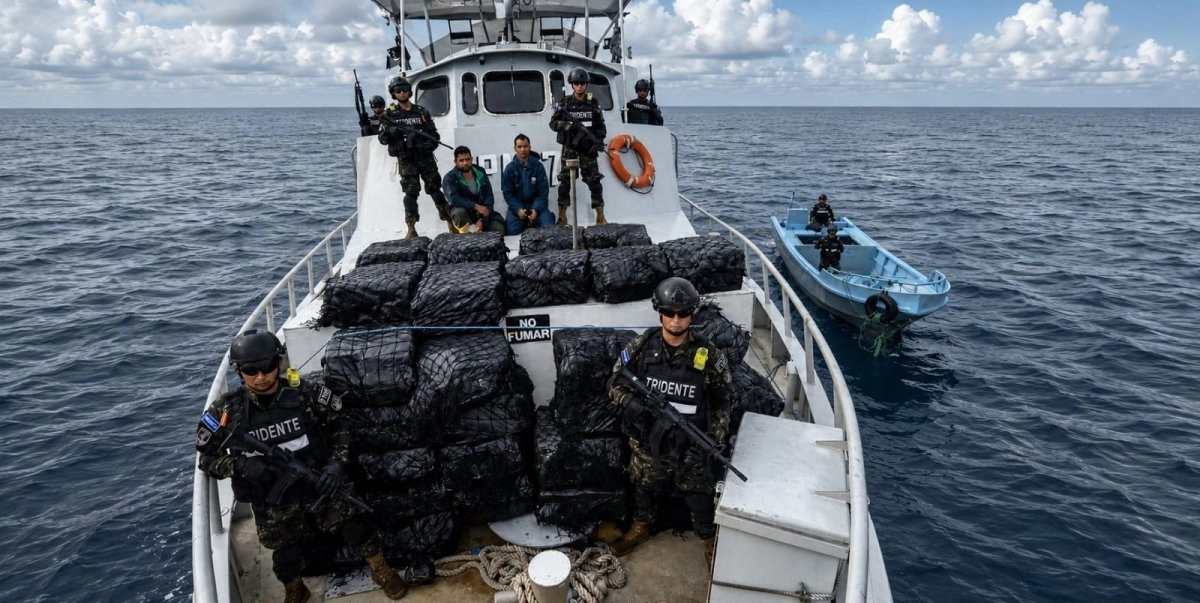

Human Rights Watch (HRW) issued a stern warning to Latin American governments about the possible legal and political consequences of collaborating with operations that could lead to extrajudicial executions, in reference to alleged attacks against fishing vessels in the Pacific and the Caribbean linked to the anti-drug strategy promoted by the administration of President Donald Trump.
The organization presented a report documenting alleged abuses committed during the growing security cooperation between the United States and Ecuador, an alliance that, according to the NGO, is developing in a context of serious human rights violations and with little transparency about the role of US forces.
Juanita Goebertus, director for the Americas of HRW, stated that governments in the region that collaborate directly or indirectly with operations that violate fundamental rights could face international responsibilities. The organization maintained that the fight against organized crime should not imply the elimination of legal guarantees or the sacrifice of human rights.
The report, prepared from 62 interviews, satellite analysis, maritime records, court documents and more than a hundred photographs and videos, examines four incidents that occurred between January and March of this year that, according to HRW, raise serious doubts about the extent of cooperation between Washington and Quito.
They denounce torture and attacks in a joint military operation
One of the reported cases occurred in the Ecuadorian town of San Martín, near the border with Colombia, during an operation that US officials previously described as joint.
According to the investigation, Ecuadorian forces arbitrarily detained four Colombian agricultural workers, subjected them to alleged torture, and subsequently attacked properties with air-dropped munitions that, according to Human Rights Watch, had no connection with criminal groups. The victims reported beatings, electric shocks, threats and mock executions. The organization claimed to have found medical evidence, testimonies and forensic analyzes that support the accusations.
Although the Trump administration acknowledged the presence of US forces in the operation, it has not detailed their specific participation. The US Southern Command publicly described the mission as a success and assured that the Ecuadorian troops acted in a professional manner.
Doubts persist about attacks on fishing vessels
The report also analyzes the disappearance of the Ecuadorian fishing boat Fiorella and the drone attacks against the vessels La Negra Francisca Duarte II and Don Maca, registered off the coast of the Galapagos Islands. Thirteen survivors interviewed by HRW said that, after the attacks, they were detained by armed men dressed in military uniforms carrying United States insignia. Later, they said they had been handed over to the El Salvador Coast Guard.
However, the Department of Defense and the US Coast Guard have denied any involvement or knowledge of the events, while Ecuadorian authorities have also not officially confirmed several of the incidents described.
Human Rights Watch acknowledged that it was unable to identify who carried out the drone strikes or determine with certainty what happened to the Fiorella and much of its crew. However, he pointed out that there is sufficient evidence to demand a thorough and transparent investigation.
The organization announced that it will share its findings with other human rights groups and asked the United States Congress to demand explanations from the Trump administration about the scope of security operations with Ecuador. The organization reiterated that dismantling organized crime does not require sacrificing constitutional guarantees or violating human rights on the continent.