

Trump and Netanyahu wanted to reconfigure the Middle East, but the risk now is a permanent crisis
US and Israeli leaders have miscalculated war with Iran, according to BBC News international editor Jeremy Bowen
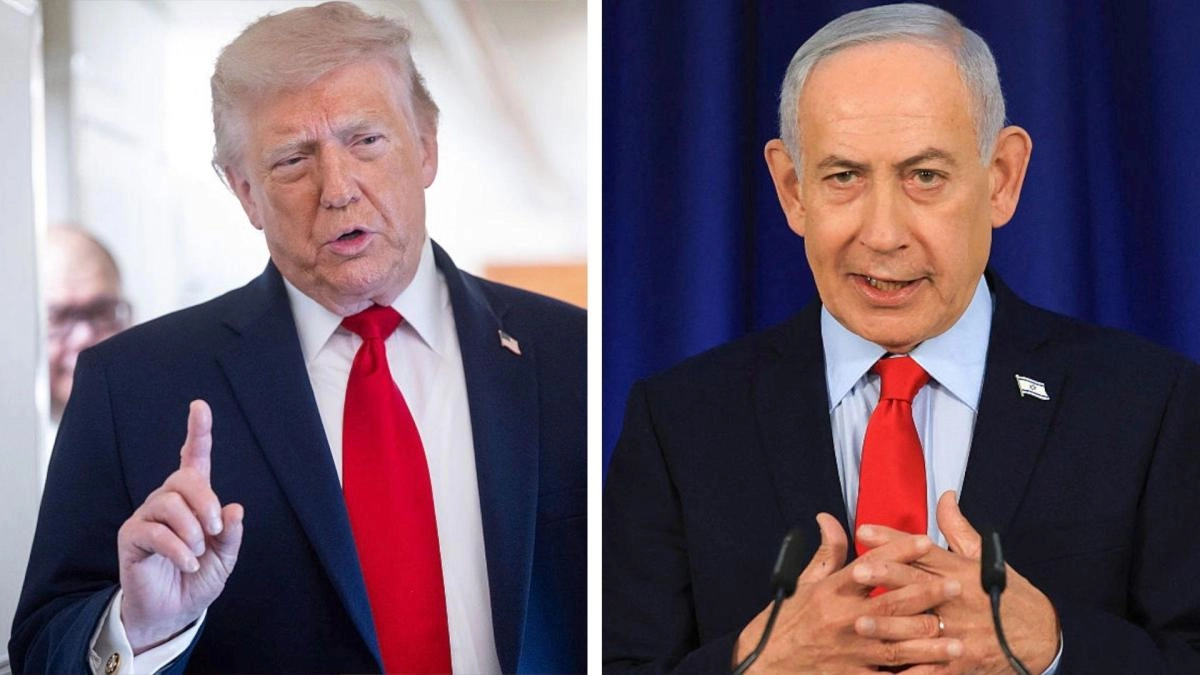

Donald Trump and Benjamin Netanyahu believed that a victory over Iran would serve to reconfigure the Middle East.
The region is transforming, but not in the way they expected: the Islamic Republic of Iran has not been defeated; The risk now is a permanent and prolonged crisis of attrition, which will oscillate between tension and open conflict.
The Iranian regime has proven to be a much tougher nut to crack than Trump and Netanyahu had assumed. Their judgment was wrong and they have lost control of the consequences.
The most recent of these is Iran's downing of a US Apache helicopter.
This is yet another reminder that the Iranian leadership can still inflict damage on the United States and will not relent in its determination to emerge victorious from this war.
For them, victory is equivalent to survival and a greater deterrence capacity, materialized in the recognition of their control over the Strait of Hormuz, one of the most strategic sea routes in the world.
The president and his generals will try to gauge their response to the loss of the helicopter: they want to firmly demonstrate that they will not be intimidated, but at the same time they seek to preserve the diplomatic process, which is moving slowly and, so far, without results.
The Apache crew survived; Had he died, there would probably have been a much stronger response.
Trump has opted to reach an agreement with Iran to reopen the Strait of Hormuz and agree the terms of long-term negotiations on key issues, starting with Iran's reserves of enriched uranium and its nuclear plans.
The war is unpopular in the United States and the president is looking for a way out that he can present as a victory, something that is proving difficult.
The plan that went wrong
Trump and Israel's Prime Minister Benjamin Netanyahu are learning an old lesson.
Ever since humans discovered the art and curse of war, leaders have found it easier to start war than to end it with a clear victory.
As they led their countries into war with Iran on the last day of February, both issued video statements and chose words that reflected the belief that a moment of historic change was at hand.
They were confident that the regime that had ruled Iran since the overthrow of the shah in 1979 was coming to an end.
Already at dawn, at Mar-a-Lago, his Florida resort, Trump returned to the promise he had made in January to Iranian opponents of the regime: “Help is on the way.”
"To the great, proud people of Iran, I tell you tonight that the hour of your freedom is near. Take shelter. Don't leave home. It's very dangerous outside. Bombs will fall everywhere. When we're done, take control of your government. It will be yours. This will probably be your only chance in generations," he said.
The next morning, Netanyahu appeared in the sunlight on the rooftop of the Kyria—the Israeli Defense Ministry skyscraper in downtown Tel Aviv—to record his speech. Like Trump, he spoke as if victory were certain.
"This coalition of forces allows us to do what I have longed for for 40 years: completely crush the terrorist regime. This is what I promised and this is what we will do," he proclaimed.
Throughout his political career, Netanyahu has maintained that the real threat to Israel comes from Iran, and not from the Palestinians or his country's Arab neighbors.
He tried, unsuccessfully, to convince other American presidents to join him in attacking Iran. In this sense, Trump was different.
For more than two years — since Hamas attacked Israel on October 7, 2023 — Netanyahu assured Israelis that the power of his US-backed army would defeat their enemies and usher in a more prosperous and secure future. The answer was force, not diplomacy.
Netanyahu conveyed the image of a man whose time to act had come.
However, when he appeared before cameras after Trump ordered him to cancel his plans to attack Beirut on Monday, prominent Israeli columnist Ben Caspit commented that he looked like a deflated balloon.
Caspit is one of the prime minister's fiercest critics. In any case, it is clear that Netanyahu's strategy of using force to bend the region to his will has failed.
Why Iran resisted
Trump expected a quick victory. He had watched with satisfaction as the US military captured the president of Venezuela and his wife, sent them to a New York prison, and installed a docile successor in Caracas.
A textbook regime change, I thought; much better than the endless wars waged by its predecessors in Iraq and Afghanistan.
Iran would be next on the list.
You both have to wonder what went wrong. The United States has the most powerful army in the world. Israel is the military superpower of the Middle East.
Trump and Netanyahu saw a regime in Tehran reeling from an economic crisis caused by sanctions, mismanagement and corruption.
Israel had dealt devastating blows to its allies: Hamas in Gaza and Hezbollah in Lebanon. His other key ally, Bashar al-Assad, had been deposed as president of Syria and had fled to Moscow.
In January, the Iranian regime violently quelled huge demonstrations against it, killing thousands of Iranian citizens.
They underestimated the resilience, cruelty and cunning of the Islamic regime. They believed that taking down their supreme leader and his closest lieutenants would lead to the internal collapse of the regime.
They also overestimated the effectiveness of military force against a regime that has faced constant threats for almost 50 years, that has prepared to survive an attack and that has painstakingly developed a national security doctrine backed by its religious and ideological convictions.
The Gulf oil states—allies of the United States and, in the case of the United Arab Emirates and Bahrain, also of Israel—have suffered devastating blows.
It is not simply the loss of revenue from petrochemicals and their derivatives, such as fertilizers.
They have built their future on creating an oasis of stability and multi-million dollar business in the Gulf.
Potential investors and tourists observe how the war turns that vision into a mirage.
The Iranian regime believes that its survival—and the ease with which it managed to strangle the global economy by closing the Strait of Hormuz and attacking its Arab neighbors in the Gulf—can translate into a long-term deterrence capability against the United States and Israel.
The men who have replaced the old guard of Iranian leaders brought down by Israel and the United States are as ideological as their predecessors, but they are much more willing to take risks in what they consider an existential struggle.
They believe that words alone will not be enough to stop future attacks by the United States or Israel, and they want to demonstrate that further attacks against Iran will carry painful consequences.
The divergence between Trump and Netanyahu
A key part of Iran's strategy is to link the war in Lebanon with the war in the Gulf.
The regime's message to Trump is that it cannot expect any kind of agreement if Israel continues to bomb Lebanon and attempt to destroy Hezbollah, the militia and political movement it has supported since the 1980s as its first line of defense against Israel.
By stopping Israel's plans to attack Beirut—claiming that a deal was near, a claim he has previously made incorrectly—Trump has implicitly shown that he accepts the link between what is happening in Lebanon and what is happening in the Gulf.
On Monday, Netanyahu declared that he would not accept such a link. He described it as “intolerable and completely unacceptable.”
Their problem is that Trump will put his own interests and his desire to end the war over Netanyahu's determination to prolong it until he can declare that the Islamic regime in Tehran has been rendered useless.
Netanyahu canceled a planned attack on Beirut, but since then the Israel Defense Forces (IDF) have continued to hit southern Lebanon hard.
When the Strait of Hormuz was closed in March, dire warnings emerged about the global economic consequences of remaining blocked until June.
Not only does this key sea lane – which was open until the US and Israel attacked Iran – remain closed, but in the absence of significant diplomatic progress, it is difficult to imagine it opening again any time soon.