
A group of schools in Colorado, Florida and Georgia will begin the next school year with a new security strategy that seeks to reduce response time in the event of a possible shooting: drones equipped with pepper gel, strobe lights and sirens capable of locating and intervening against an attacker in a matter of seconds.
The devices, developed by the Texas company Mithril Defense under the name Campus Guardian Angel, remain protected within school facilities and can be activated during an emergency. According to the company, the drones fly at speeds of up to 50 miles per hour (80 kilometers per hour) and are operated remotely from Austin, Texas, with the goal of locating an active shooter in about 15 seconds.
As explained by Justin Marston, executive director of Mithril Defense, the system uses strobe lights, sirens and pepper gel to disorient the attacker while the police arrive. As an extreme measure, the drone can also hit the attacker at about 60 miles per hour (96 kilometers per hour).
A new response to school shootings
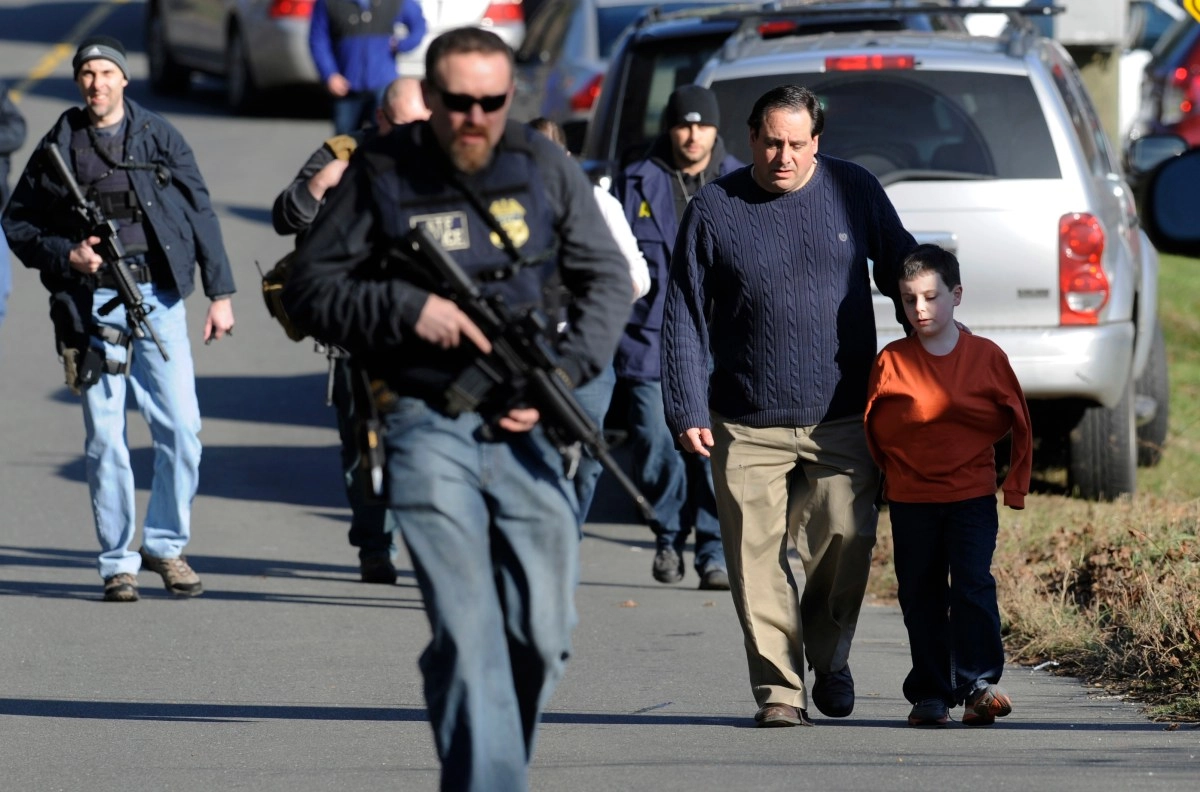
The incorporation of this technology occurs as American schools continue to seek alternatives to address gun violence on campus. Data from the specialized K-12 School Shooting Database shows that school shootings reached a record of 352 incidents in 2023, although the number decreased over the next two years.
The Learning Policy Institute estimates that school districts spend about $4 billion a year to beef up security through metal detectors, surveillance cameras and other technology systems.
“We believe that all schools should have some type of system in place to respond to an active shooter,” Marston said. “Five years from now, no one will want to send their children to a school that does not have a tool of this type.”
The executive also maintained that drones can enter rooms or hallways before agents, reducing the risk for first responders. "An officer should never risk his life doing something a drone can do. If the drone is destroyed, we just use another one; a human life is irreplaceable," he said.
Experts and parents express reservations
Despite the enthusiasm of the development company, education specialists warn that technology does not replace prevention strategies. Jennifer DePaoli, senior researcher at the Learning Policy Institute, said several studies indicate that strengthening students' mental health, promoting trusting relationships between teachers and students, and creating safe school environments are essential to preventing violence.
Some parents have also raised concerns about the potential risks of the system. In Colorado, where the public charter school John Adams Academy is testing this technology with private funding, questions have been raised about the possibility of a student being affected by pepper gel during an emergency.
In Georgia and Florida, the programs are state-funded, while Louisiana recently passed legislation to launch a pilot project in four schools. The estimated cost of the system is $20,000 annually for a school of approximately 80,000 square feet (7,432 square meters), an investment that Mithril Defense says is less than the cost of hiring an additional security officer.
Meanwhile, the debate about the balance between technological innovation, prevention and student protection continues to gain ground as more districts consider incorporating these tools.