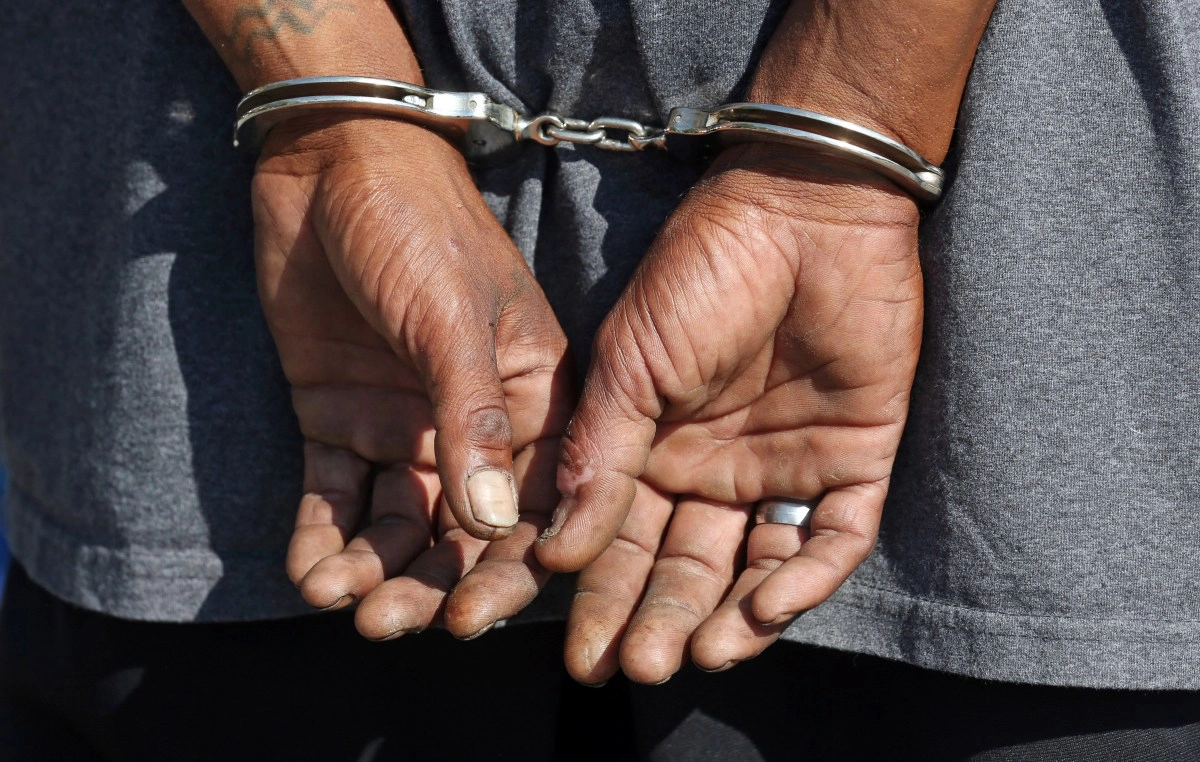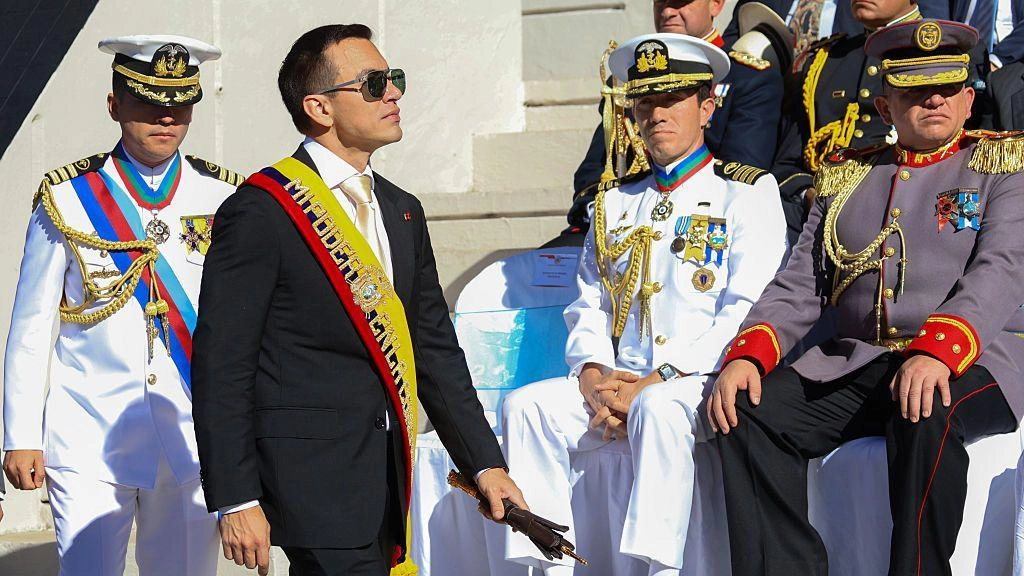

On January 9, 2024, the president of Ecuador, Daniel Noboa, declared the existence of an internal armed conflict in the country and ordered the armed forces to neutralize 22 organized crime groups.
The militarization of public security managed to reduce levels of violence, especially in prisons, but that initial achievement was reversed and in 2025 the country experienced 9,216 homicides, an increase of 30.48% compared to 2024.
Although the State Attorney General's Office recorded a 40% decrease in extortion complaints compared to 2024 and a slight decrease in kidnapping complaints, the increase in the number of homicides implies that Ecuador experienced one of the most violent periods in its history.
Faced with this scenario, the Noboa government implemented measures that have already been implemented in Nayib Bukele's El Salvador.
In addition to the militarization of security, a megaprison was built, states of emergency were extended and security forces were deployed to regain control of the territory.
In December 2025, the president assured that his government had made difficult decisions such as “looking narcoterrorism in the face,” in reference to the declaration of the internal armed conflict.
However, the results of the official strategy have been questioned.
Luis Córdova, a researcher at the Ecuadorian Conflict Observatory at the Central University of Ecuador, tells BBC News Mundo that the country has imported from Bukele an “aesthetic” of the war against crime where criminals locked up are shown “worse than animals” while citizens “who behave well” are free.
“Bukele sold this very well with the Cecot prison [Terrorism Confinement Center] and Noboa implemented it with some success, because he built the Encuentro prison, which he sold to the country as a Bukele-type prison, although while the Cecot is made for about 20, 30 thousand people, 740 enter here; so it is very difficult for it to fulfill a similar purpose.”
"I would say that implementing this 'aesthetic of Bukelism' is very profitable for Noboa to show himself as the man who is not afraid to confront 'the bad guys', but beyond that he has not been able to control organized crime."
Experts highlight that replicating the Salvadoran model in Ecuador is not so easy for several reasons, among which the social and geographical differences of both countries stand out, as well as the different characteristics of the enemy that both governments face.
“The gangs in El Salvador were of a completely different nature to the transnational crime of cocaine nodes in the global market that happens in Ecuador with infinite financing,” Karen Sichel, a doctoral researcher at the Faculty of Criminology at the University of Cambridge, explains to BBC Mundo.
Noboa himself recognized in April of this year the resources that organized crime has in the country: “It is a war, a conflict in which we fight against mafias that move tens of billions of dollars a year.”
And in terms of territory, El Salvador is approximately 13 times smaller in size than Ecuador and its population is mainly urban, while the four Ecuadorian regions – Sierra, Costa, Amazonía and Insular – are characterized by wide geographic and demographic diversity.
Furthermore, Ecuador has areas that are difficult to access and porous borders, ideal for illicit activities. The example of this is that the Amazon region has become a strategic enclave for organized crime.
In the same speech in April, the president assured that his government has “control of the territory, of the entire territory, of the prisons and control of our borders,” but acknowledged that it takes time to combat these groups after years of inaction on the part of the State.
BBC Mundo contacted the Presidency of Ecuador, the Ministry of Defense and the Ministry of the Interior for an interview, but until the time of publication of this article it has not received a response to its request.
An atomized and extensive enemy
Unlike the command capacity of the leaders of the Salvadoran gangs, analysts such as Adam Isacson and John Walsh have highlighted that “Ecuador's criminal networks are more disorganized and chaotic,” which makes it difficult to combat their criminal activities.
The fall of some ringleaders, as well as a constant game of alliances and confrontations, have led to a fragmentation such that when Noboa assumed his second term in May 2025, a report by ACLED – a global organization specialized in armed conflicts – titled: "Noboa declared war on 22 criminal groups in Ecuador. In his new mandate, he faces many more."
Another report on violence in Ecuador in 2025, prepared by the Ecuadorian Organized Crime Observatory, emphasizes how criminal groups, in their process of constant adaptation, diversified both their crimes and their distribution throughout the Ecuadorian territory.
“The geographical fragmentation of illicit activities goes hand in hand with the internal fragmentation of criminal organizations that have undergone transformation processes to be able to exercise the territorial control that different markets demand,” he says.
These different markets referred to in the report include everything from drug trafficking – mainly cocaine – to new illicit activities such as illegal mining, human and arms trafficking, money laundering and extortion.
According to ACLED research, “although almost 80% of the violence is concentrated in the coastal provinces, crucial transit points for drug shipments (…) the diversification of the economic portfolio of criminal groups has driven their expansion towards the interior (of the country).”
For this international organization, organized crime has expanded to more than 150 of the 222 cantons that make up Ecuador.
The Ecuadorian academic from the University of Cambridge maintains that the government faces a problem that exceeds its capacity for analysis and its implementation of public policies, because it only understands organized crime as the enemy that must be killed, but the enemy – in her opinion – is more complex.
"Organized crime would not reach the levels so widespread throughout Ecuador if it were not for the fact that the society in which it operates collaborates with it; this includes politicians, public servants, officials, judges, prosecutors, as well as lawyers, notaries, accountants and people dedicated to real estate issues."
The Ecuadorian government insists that it “does not agree with crime” and, like its Salvadoran counterpart before, is trying to regain territorial control with a massive deployment of military and police forces throughout the country.
However, criminal gangs – which began their actions on the coast due to the strategic importance of the ports – have spread throughout the mountains, the Amazon and even the island area.
Sichel has analyzed the crimes associated with organized crime in Ecuador and has designed maps with the incidence of these crimes in the different regions of the country: "When I was making this index, I told myself that in Ecuador it seems that everything that has value, even animals - such as shark trafficking in the Galapagos - invites organized crime."
Therefore, for the expert, the militarization strategy is not enough: “It is important to have the military, of course, but as long as institutions are not built, particularly in the judiciary, we will hardly move forward because it is not just a problem of the government, it is a problem of society.”
The other enemy
In few areas is this intersection between organized crime and civil society reflected as in money laundering.
In the words of the Ecuadorian Organized Crime Observatory, this crime is in Ecuador “the strategic engine that validates and perpetuates the chains of illicit markets, granting liquidity and legitimacy to drug trafficking, illegal mining and extortion.”
“Organized crime tries to adapt, to adapt, to take advantage of the spaces that legality can offer, to legitimize the money obtained so that it can later be reinvested,” Byron Villagómez, technical leader of this Observatory, tells BBC Mundo.
For Villagómez, a high incidence of this crime can be observed in many legal activities, from the automotive market – especially through used car yards – to real estate; But there is also penetration of organized crime in other sectors such as agriculture and fishing.
The expert adds that the licit and illicit economies are connected through what international organizations have defined as professional enablers.
“For example, to establish front companies that are used to hide assets obtained through money laundering, the legal assistance of lawyers is required; a notary is also required to register them in state institutions,” explains Villagómez.
“When you see the people who help drug trafficking take hold, they are not people who have a tattoo of Los Lobos or Los Choneros,” says Karen Sichel and specifies: “You see educated, professional people who were classmates at your university, who are making money.”
The economic slowdown that Ecuador has suffered since 2023 and the worsening of social conditions have been pointed out as another form of penetration of illicit economies that replace licit sources of employment and income.
For Roberto Andrade, former director of the Financial and Economic Analysis Unit (UAFE), “corruption is transversal and is what allows, along with money laundering, these illicit crimes to take place.”
But this former official considers that in recent years the country has had real strategies and specific objectives regarding the prevention of money laundering.
"Before this stage the country was focused on strengthening the systems, training people and that would automatically lead to investigations, which is true, but it is not the most effective - he comments -. But for about two years it has already been prioritizing which cases the State wants to focus on."
Privatized security
The record number of homicides in 2025 revealed the widespread circulation of weapons in the country, where this trafficking – according to the Ecuadorian Organized Crime Observatory – represents an illicit market in itself.
“In general terms, from 2020 to June 2025, 29,305 cumulative intentional homicides were recorded in Ecuador, of which 83.4% were committed with the use of a firearm,” the Observatory reported, citing figures from the Ecuadorian Ministry of the Interior.
Carla Álvarez, professor and researcher at the Institute of Higher National Studies, tells BBC Mundo that, until the beginning of this decade, Ecuador had fewer weapons than its neighboring countries due to one of the most restrictive state policies in the region.
But then the prison riots and deaths in the streets began. Then, in April 2023, the government of former President Guillermo Lasso allowed the carrying and importing of weapons, and that armed private security guards will support the police.
For the expert, the country has since experienced a logic of privatization of security, which was accentuated during the current government.
"Security is no longer thought of from the public, as a public good, as a public right, but as a private privilege. If you have a weapon, you can protect yourself; if you can pay private security, you can protect yourself."
Álvarez considers that both Ecuador and El Salvador have factors in common: from the coexistence of private commercial security along with a public security model, through an important permissiveness for the growth of the private guard industry and historical problems of supervision of arsenals of private security companies.
According to Álvarez, in Ecuador a door was opened for the diversion of weapons to the illegal market through private security companies and some of these companies even fell into the hands of the leaders of organized crime groups.
In terms of weapons, Noboa also followed Bukele's example regarding weapons seized from organized crime.
In April 2022, the Salvadoran government had authorized the reuse of weapons, money and assets seized from gangs to fight themselves.
For Álvarez, this is a measure that conspires with what every security force needs: the homogenization of their weapons to facilitate their supply and management of arsenals.
Although he considers it an “anti-technical” decision, he understands that it is popular to say “we are going to take away these bastards and we are going to use their own tools against them.”
"I believe that the issue of weapons is fundamental, but disarmament is not a topic of public debate. This also responds to a simplification of reality: 'good guys and bad guys, criminals and non-criminals'. And this simplification means that you do not wonder about other elements that intervene in violence," concludes the expert.
Human rights and freedom of the press
Like Bukele, Noboa has received criticism for his confrontation with other State agencies that have tried to put limits on the Executive, such as, for example, the Constitutional Court, which has ruled that the situation in the country did not meet the criteria to be considered an internal armed conflict.
Also, like his Salvadoran counterpart, he has confronted other social actors, from journalists to human rights defenders.
Billy Navarrete, president of the CDH (Permanent Commission in Defense of Human Rights) in Guayaquil, points out that the work of human rights defenders in general has become more difficult.
“The government itself has designated us as anti-patriotic and the case of Mónica Silva Koniuszek [Polish activist found dead in the Ecuadorian province of Santa Elena] and other crimes committed against defenders for their work on the ground demonstrate that difficulty.”
But this discourse is not only handled in power, but also on the street.
“When I get in a taxi, the driver tells me 'hey, you're the one who defends criminals,'” says Navarrete and adds: “Of course, people are distressed by the level of violence and we are there, as if in the middle of that distress, as an object of attack.”
Regarding the press, Artur Romeu, Director of the Reporters Without Borders (RSF) Office for Latin America, highlighted Ecuador's abrupt fall in the 2026 World Press Freedom Ranking, which annually evaluates the conditions for the exercise of journalism in 180 countries.
“The country is among the three that have fallen the most in the world in 2025: it lost 31 positions and moved to 125th place. In 2022, it was in 68th place,” he explained.
In its 2025 report on Ecuador, Human Rights Watch maintained that “the government's response to organized crime has led to serious human rights violations by security forces, including extrajudicial executions, forced disappearances, arbitrary detentions, and mistreatment,” highlighting as an emblematic case the death and torture of four missing children in December 2024.
Criticism from abroad continued from the United Nations itself, where eight rapporteurs reminded the Ecuadorian government that “terrorism and organized crime are different phenomena” and warned that confusing both terms can justify the illicit use of force and restrictions on human rights.
"I think the UN should stop having an ideological inclination and simply focus on life, focus on people. Guarantee life to the majority who do not commit crimes and also review the situation of those who commit crimes without stopping," President Noboa replied.
For Luis Córdova, the country is experiencing a process of autocratization that is due – unlike what happened in El Salvador – not to the success of the fight against insecurity, but precisely to the failure of the official strategy.
"Since Noboa has not managed to change the perception that the security situation is better, he has no choice but to close the paths of democracy so that there is greater journalistic self-censorship and so that there are fewer political actors who disagree in the public sphere."
The president, for his part, defended himself in recent days against those who accuse him of undermining democracy: "You cannot say that he is a dictator. They insult me and my family. Some political organizations that accuse me have links to drug trafficking, they try to blame us. That should be investigated. We are trying to enforce the law."
To conclude, criminology expert Karen Sichel questions “what leads us in Ecuador to ask ourselves about Bukele's case?” and responds that the essential thing is to know “how we want to be governed.”
“Looking at the LAPOP [Latin American Public Opinion Project] and Latinobarómetro surveys in recent years, one sees that the majority of Ecuadorians are interested in having someone come and solve their problems, even if that someone, by doing so, completely eliminates independent institutions or democracy.”
Download the new BBC World Service app. Choose BBC News Mundo and receive news alerts, documentaries and analysis, all in one place. Important: The new app is not available in the United Kingdom or the United States.