

What is the TACO theory and how it helps explain Trump tariff strategy
The idea that the American president always ends up backing down is increasingly shared by analysts and investors
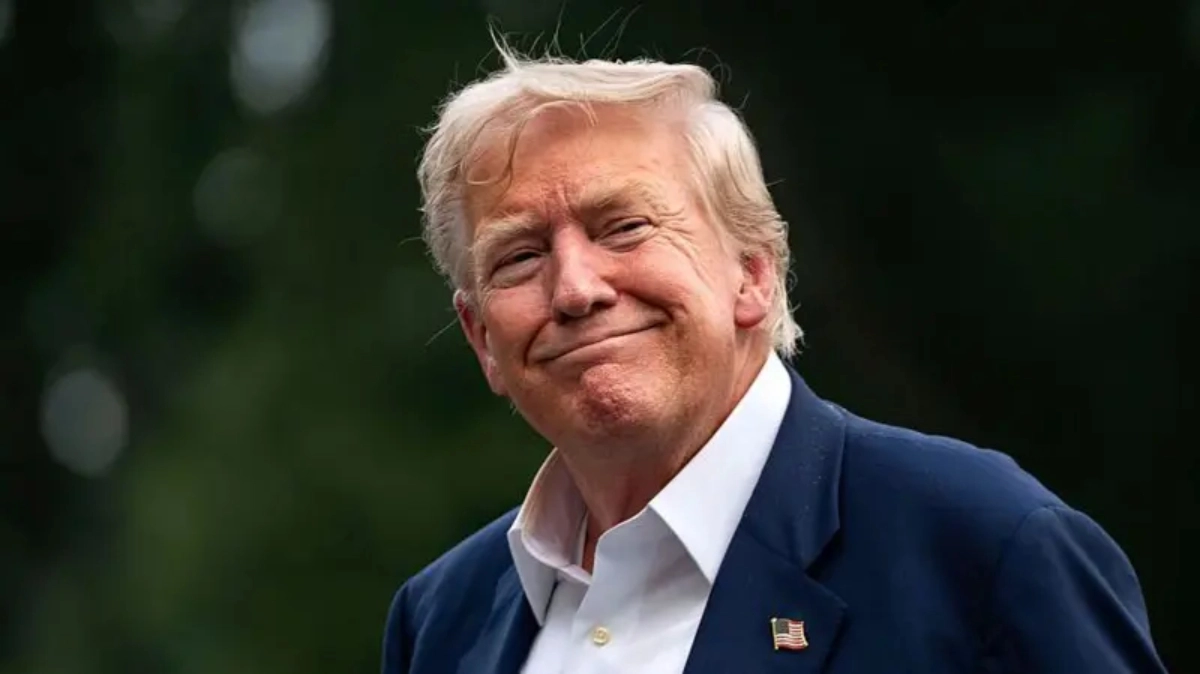

The US president announced 50% tariffs on Brazilian imports in early July.
In the following weeks, his administration imposed personal sanctions on Alexandre de Moraes, a justice on Brazil's Supreme Federal Court.
But this week, by signing the order, Trump took a significant step back and exempted nearly 700 products from the 50% tariffs, bringing relief to certain Brazilian sectors such as orange juice producers and the aeronautical industry.
The exempted products will remain subject to the 10% tariff Trump announced for Brazil in April.
The latest retreat The US president's remarks sparked debate among experts, as well as internet memes, about the "TACO theory," which stands for Trump Always Chickens Out. The term was originally coined by Robert Armstrong, a financial markets columnist for the British newspaper Financial Times, who observed that what he called the "TACO business" had emerged on the world's stock markets: investors taking advantage of Trump's apparent backtracking to make money. An example was what happened in April, when Trump announced his Liberation Day, imposing tariffs on virtually all of the US's trading partners around the world. In the days In the following weeks, US stock markets plummeted amid fears that Trump's tariff policies would trigger a US recession.
However, many investors and speculators bet - and were right - that Trump would back down and bought assets at low prices.
The following week, Trump did indeed back down and stock markets rallied.
Those who bet on Trump's "TACO" made money, as Armstrong noted in his Financial Times column. And that pattern was repeated on other occasions.
Another Round of “TACO”?
In July, Trump launched a new tariff offensive against the world, sending letters to international leaders threatening to impose tariffs as early as August.
Some countries and blocs, such as Japan and the European Union, negotiated agreements that reduced US tariffs on their products, although they remained well above the percentages prior to the president's offensive.
The questions many analysts are asking now are: Is Trump's “TACO moment” over? Will he actually impose the tariffs he promised the world, or will he back down again?
For British economist David Lubin, a senior fellow at the Chatham House Global Economy and Finance program, “TACO” has already been incorporated as a Trump negotiation strategy: making big threats, many of them impossible to execute, just to force the other side to give in in the negotiation.
Chatham House (or Royal Institute of International Affairs) is one of the United Kingdom's leading independent public policy institutes.
Lubin believes that there was, in part, a bit of “TACO” on Trump's part in his backtracking on tariffs on Brazil and that the backtracking was due to the fact that, ultimately In the end, the high tariffs would begin to harm the US economy in an unwanted way.
“You could say there was a kind of 'step back' because the exemptions for aircraft, orange juice, iron and oil seek to limit the economic damage that these tariffs would cause to the US economy,” he says.
The incorporation of the “TACO” into Trump's negotiation strategy is also observed in negotiations with other countries such as China, according to the specialist.
“To a certain extent, the TACO is already part of the use of tariff policy, because Trump sees it as a negotiation process,” Lubin explains to BBC News Brasil.
“If "If moderating a negotiating stance can be described as 'backing down,' then yes, TACO is, in a way, incorporated into Trump's negotiating strategy," he adds.
The economist points out that in the days following the so-called 'Liberation Day,' "the dollar plummeted and US bond yields rose sharply."
"The extension of the negotiations on April 9 was the real TACO moment, because Trump moderated his tariff policy for fear of the damage it could cause to financial markets," he says.
Lubin believes that the US president "was surprised by the firmness with which China responded to the original escalation of tariffs, which reached 145%”.
“It was China’s ability to exert pressure on the US through its dominance in the supply of rare earths that forced the Trump administration to the negotiating table, first in Geneva in May, then in London, and now elsewhere,” he adds.
The consequences of “TACO”
Asked about the effects of Trump’s controversial negotiating strategy, the economist believes that “a trade policy based on tariffs and the destruction of what we used to affectionately call the rules-based international order is harmful to the world and to the United States.”
“I think what Trump is trying to achieve is not beneficial to anyone, except his electorate, and that in a very limited sense and in the very short term. Therefore, I think the world loses with this policy,” he concludes.
He points out, without However, the US leader "has midterm elections coming up, a domestic electorate he needs to support, and a sort of political project he wants to push forward, which includes, among other things, supporting right-wing leaders and sympathizers in other countries." "I think Trump is perhaps right in some cases to argue that, in many respects, this was always part of a plan. I'm not sure Trump seriously considered imposing 145% tariffs on China. That would completely destroy US-China trade," he adds. "The political effects" Regarding the political implications of tariff policy outside the US borders, the expert compares the cases of Canada and Brazil. "If we take Canada as an example, Mark Carney became electable," he adds. (politically) due to US hostility toward the previous Canadian government and Canada in general. In a way, he is repeating what happened with Canada: by expressing anger against Lula's government, he is ironically and paradoxically doing Lula a political favor," he asserts. Despite the latter, the US president seems equally determined to continue his offensive. "President Trump is willing to accept the cost of this self-inflicted wound in order to be able to express his anger against a political antagonist," the economist asserts. With the high tariffs, the sanction against the Brazilian minister Moraes, and the exemption of nearly 700 Brazilian products, Trump would be achieving two simultaneous objectives, according to Lubin: providing political support to former President Jair Bolsonaro and limiting the impact of rising prices on the American consumer.