

Another scandal at the World Cup? They investigate alerts of fraud and illegal bets in the Mexico match
The expulsion of Themba Zwane from South Africa in the 84th minute in the duel against Mexico has raised the alarm about the interference of illegal bets
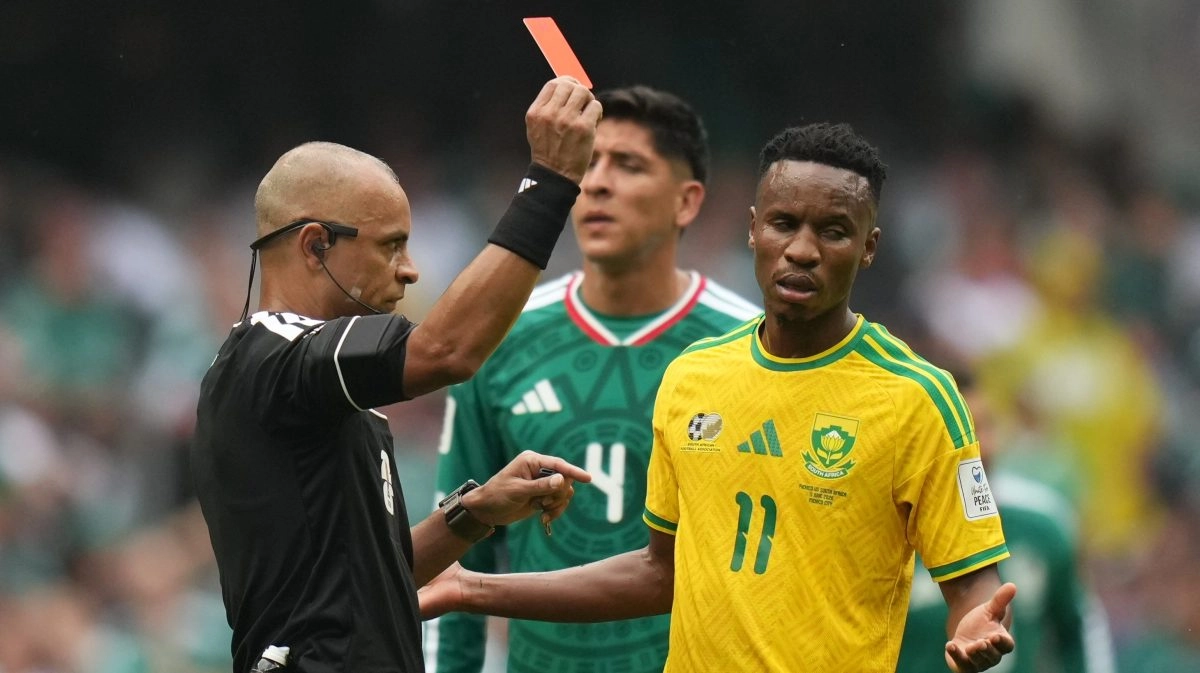

The start of the 2026 FIFA World Cup, held jointly in the United States, Mexico and Canada, has been shaken by the shadow of the betting mafias in a cancer that has been sought to be combated in every possible way.
International alarms went off drastically after the expulsion of South African midfielder Themba Zwane in the 84th minute of the opening match against the Mexico team, a fact that coincides with reports of unusual financial movements on global platforms.
Added to this case is another situation of extreme suspicion in the summer tournament: the multi-million dollar collection of more than $4.5 million dollars by a single user during the match between Spain and Cape Verde. The report by 'The Athletic' and the Copenhagen Group
According to an investigation published by the prestigious sports portal The Athletic, automatic fraud control systems detected totally atypical money flows in several World Cup matches.
The focus is mainly on the performance of the South African team against the Mexican team. The journalistic report establishes that the Copenhagen Group - an international entity specialized in the prevention, detection and sanction of manipulation of results and fraud in sports betting - identified a total of seven red alerts in different matches of the tournament.
The biggest fear of the organizers before the start of the tournament is materializing: the interference of criminal organizations that operate in the live betting markets or “spot-betting” (bets on very specific events within a match). The play of contention: Why was Themba Zwane expelled?
The critical point of the investigation focuses on the last minutes of the opening match. The Brazilian referee Wilton Sampaio showed the direct red card to Themba Zwane after a strong impact on the face of the Mexican soccer player Roberto 'Piojo' Alvarado.
This harsh action caused the FIFA Disciplinary Committee to act harshly, sanctioning the Bafana Bafana player with a three-match suspension, practically reducing his participation in the rest of the group stage.
According to unofficial industry records, the exact timing and circumstances of this expulsion (which was coupled with another red card on the South African team) generated stratospheric and unexpected profits for a massive group of bettors.
On modern betting platforms you can risk money on millimeter variables: substitutions, throw-ins, cautions and expulsions in specific time windows, which facilitates “play-fixing” without the need to alter the final score. No evidence of involvement of the Mexican team
It is essential to specify that the Copenhagen Group report does not include any public indication, direct accusation or ongoing official investigation that suggests that the Mexican National Team or its players are involved in these criminal maneuvers.
So far, the file under technical review is limited exclusively to the forensic analysis of the unusual financial patterns that the integrity algorithms opportunely captured in the Asian and European markets during the 90 minutes of the match. The other parties under the magnifying glass of corruption
The Athletic report details that the alert network covers other tournament scenarios: Spain vs. Cape Verde: A consolidated profit close to $5 million dollars was detected from a single user account through a digital platform, an astronomical figure for international soccer markets.
Spain vs. Saudi Arabia: This commitment was classified as suspicious due to the VAR deliberation times. The technological system took an excessive and unusual amount of time to cancel a score by Spanish forward Ferran Torres, freezing the live betting markets.
United States vs. Belgium: The focus was placed on the surroundings of the North American striker Folarin Balogun, after a controversial revocation of a suspension that weighed on the attacking reference of the Stars and Stripes team, unleashing harsh criticism in the international soccer environment.
To date, FIFA has chosen to maintain a position of maximum caution and has not issued a direct official statement on these alerts from the Copenhagen Group. However, the governing body of world football has historically reiterated its policy of zero tolerance for match manipulation, ensuring that it has the necessary tools to protect the total transparency of its star competition.