

Cuba denounces new US sanctions as an attack on its health system and economy
Bruno Rodríguez rejected the US sanctions and affirmed that they seek to increase pressure on Cuba
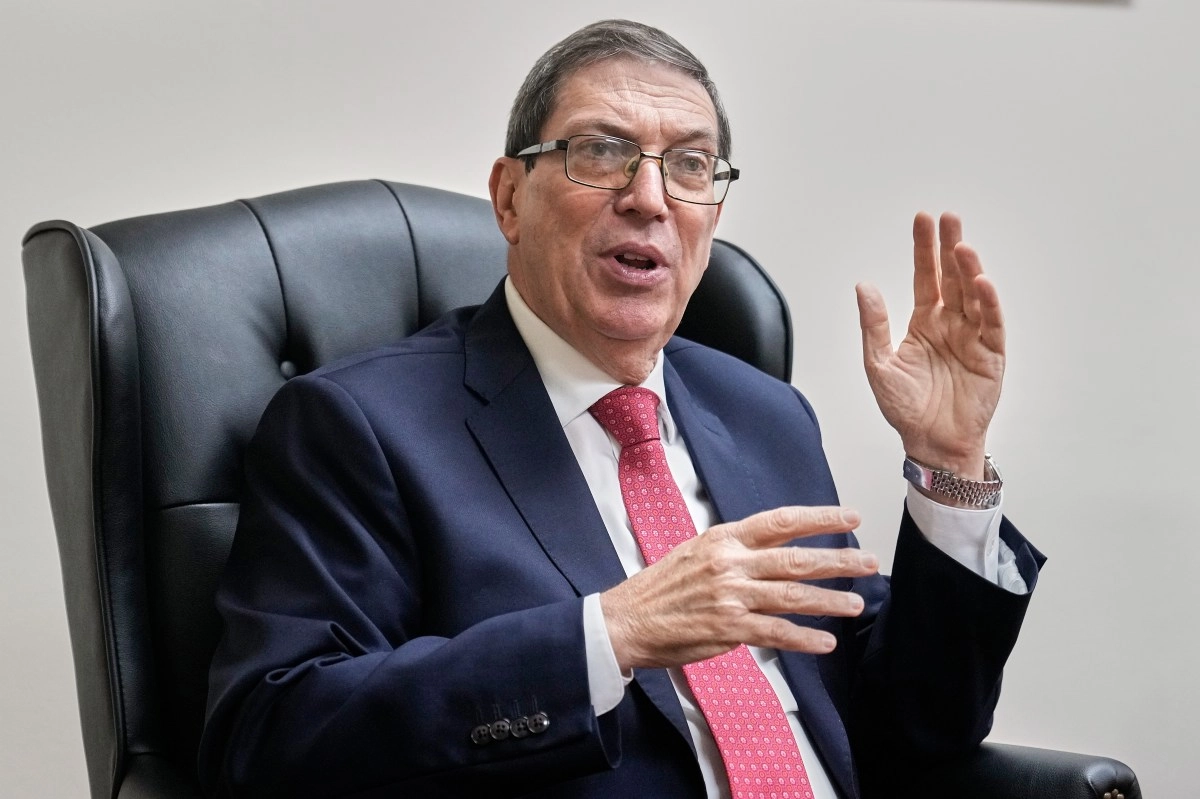

The Government of Cuba responded with strong criticism to the new sanctions announced by the United States against nine entities and two Cuban officials, describing them as a pressure measure that, according to Havana, seeks to affect the population and deepen the country's economic crisis.
Cuban Foreign Minister Bruno Rodríguez stated that the actions announced by the State Department represent an “act of aggression” and accused Washington of trying to impose “collective punishment” against the island's citizens.
Cuba denounces an escalation of economic pressure
Through his social networks, Rodríguez assured that the new measures demonstrate, in his opinion, that the United States intends to increase the impact of the economic embargo on Cuba.
The Cuban Foreign Minister pointed out that Washington continues to reject accusations about the existence of an "economic siege" against the island, but affirmed that the sanctions reveal an intention to cause greater social and economic difficulties.
The reaction of the Cuban Government occurred after the United States announced restrictions directed against organizations linked to strategic sectors of the Cuban economy, including health, energy, transportation and financial services.
Sanctions reach the Cuban medical mission system
Among the entities included in the new US list are organizations related to Cuba's international medical cooperation program.
The US authorities point out that this system uses a forced labor scheme and accuse the Cuban Government of withholding an important part of the income obtained by professionals sent abroad.
The entities related to the health sector sanctioned are:
Two Cuban officials were also included:
Rodríguez rejected these measures and affirmed that sanctioning Cuban medical cooperation affects access to health services for people in different countries.
“The attack against Cuban medical cooperation is equivalent to an attack on the human right to access health services for hundreds of thousands of people,” the official stated.
Cuba defends the impact of its medical brigades
The Cuban Government maintains that its medical missions represent one of its main tools of international cooperation.
According to official data, more than 600,000 Cuban health professionals have participated in medical programs in 165 countries for more than six decades.
Currently, around 24,000 Cuban health workers provide services in 56 nations.
The National Office of Statistics and Information (ONEI) indicated that exports of professional services represented more than 40% of total Cuban exports between 2018 and 2020, a figure that reflects the economic importance of this sector for the island.
New restrictions include energy and port companies
In addition to the medical sector, the United States added several companies related to strategic areas of Cuba to the sanctions list.
The Mariel Container Terminal was included due to its ties to the Cuban military business conglomerate GAESA (Grupo de Gestión Empresarial S.A.), one of the entities that had previously been sanctioned by Washington.
CEIBA Investments Limited was singled out for its investments in the Cuban real estate sector, while ORBIT S.A. It was incorporated for its activities related to financial services and remittances.
Measures are part of Trump's policy towards Cuba
The new sanctions occur within the framework of an executive order signed by President Donald Trump on May 1, through which the United States warned that it could impose restrictions against people and companies that provide financial, technological or material support to the Cuban Government.
The measure contemplates sectors considered strategic, such as energy, defense, finance and mining.
Over the past few months, several Latin American and Caribbean countries have reduced or modified their medical cooperation agreements with Cuba after receiving pressure from Washington.
Among the countries that have reviewed these agreements are Honduras, Guatemala, Jamaica, Antigua and Barbuda, Bahamas, Grenada, Guyana and Trinidad and Tobago.
The dispute between both governments continues to be marked by differences over the impact of US sanctions: while Washington maintains that they seek to pressure the Cuban Government, Havana affirms that they directly affect the population and aggravate the economic conditions of the island.