

An oasis or a trap? The ordeal that the box owners experienced at the World Cup
The legal dispute between the box owners and the administration of the Azteca Stadium will continue to have several chapters in the courts of Mexico
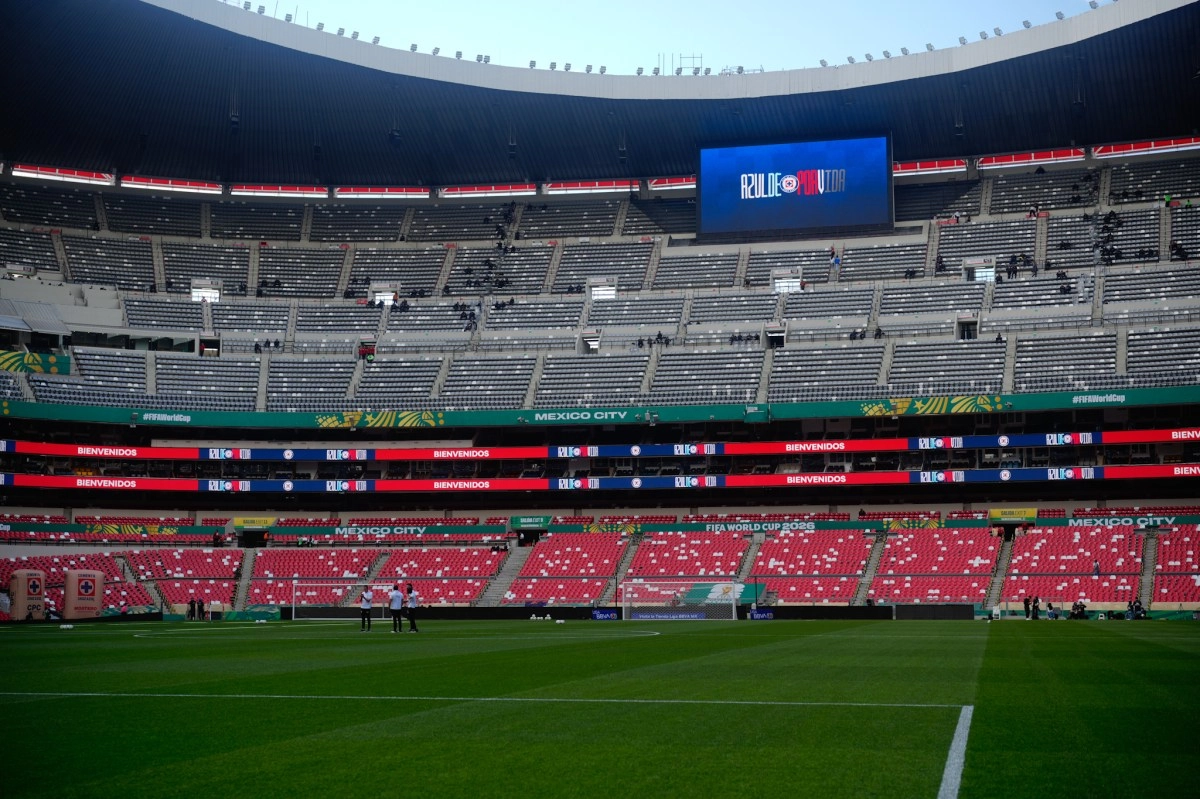

The recent World Cup celebration at the Azteca Stadium was just an oasis in the desert. Behind the World Cup party lies a crude four-decade legal conflict between the administration of the Coloso de Santa Úrsula and the owners of the historic boxes.
This was demonstrated by Roberto Ruano, representative of the Mexican Association of Box and Plate Holders, in a talk with the newspaper Récord. Ruano stated that the balance for the owners was completely negative due to the abuses of the administration of the property, operated commercially within the framework of the tournament under the shelter of allied brands.
According to the leader, the company ignored current contracts, forced users to pay exorbitant sums for food and blocked traditional vehicular access.
Despite having a 99-year contract signed since the founding of the stadium, Ruano regretted that the review of the agreement did not yield any advantages. Access to the matches was already guaranteed by law, but the promised additional services were erased at the stroke of a pen. "If I strictly adhere to what our contracts for boxes and stalls say, we lose. The document stipulates that we can enter each and every one of the events; we had already earned that, there is no advantage there. But the contract also says that we can introduce food and drinks, and it talks about parking that they did not give us. That is why it is a negative balance," said the representative. A court order ignored
The main complaint lies in the flagrant violation of acquired rights. Ruano explained that, although the agreement allows them to enter with their own food and use exclusive parking spaces, the reality at the entrances was rigidly controlled by the stadium security personnel.
For the leader of the group, legal certainty was extremely weakened. The Colossus administration not only ignored the private contract, but also disobeyed a previous court order that explicitly suspended the prohibition of bringing food and cars into the facility. The ordeal of the “Last Mile” for the elderly
Mobility restrictions hit the most vulnerable sectors hard. The “Last Mile” road operation, implemented by the Government of Mexico City and the logistics of the stadium, forced attendees to walk several kilometers to approach the building. This completely alienated the founders of the Azteca. "Many of the owners bought their boxes in the sixties and today they are elderly people who cannot walk that famous last mile. Many people could not attend because there was no way for them to walk three or four kilometers. In that part, there was also a very negative balance," explained Ruano. Boycott of the million-dollar food packages
The rejection of the administration's policies was also reflected in the pocketbook. The managers tried to market special food and drink packages with a cost that ranged from one and a half million pesos. Given this inaccessible price, the demand was a resounding failure: only 3% of box owners decided to purchase them. The “round business” of local sellers
Paradoxically, the economic resistance of the palquistas opened a business opportunity for the Azteca Stadium's own base workers. Given the massive rejection of the official packages, the interior vendors rescued the experience of the attendees by offering products at normal prices.
"Thanks to the solidarity of the owners, we did not buy those packages worth a million pesos. At the end of the day, the sellers had to go do their business: they went to touch us in the boxes to offer us snacks and beers at totally reasonable prices, nothing to do with the madness they wanted to charge. Satisfied for experiencing a piece of the World Cup, but very dissatisfied with everything that is coming," Ruano concluded.