

The wave of arrests and executions in Iran after the war with Israel and the US bombings.
Iranian authorities have carried out arrests and executions of people suspected of having ties to Israeli intelligence agencies.
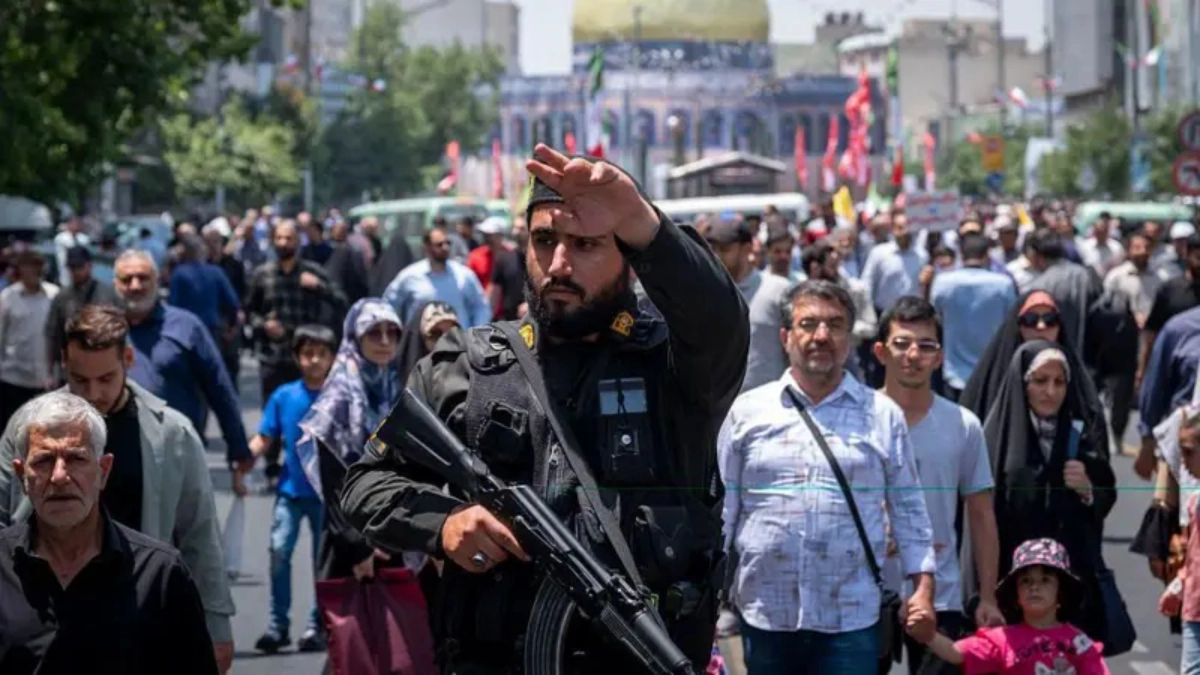

The Iranian authorities carried out a wave of arrests and multiple executions of people suspected of having ties to Israeli intelligence agencies, following the recent war between the two countries.
The events come after the authorities spoke of an unprecedented infiltration of Iran's security services by Israeli agents.
Authorities suspect that information provided to Israel influenced a series of high-profile assassinations during the conflict.
This included the targeted killings of senior Islamic Revolutionary Guard Corps (IRGC) commanders and nuclear scientists, which Iran attributes to agents of Mossad, Israel's intelligence agency, working inside the country.
Shaken by the scale and precision of these killings, authorities have been hunting down anyone suspected of working with foreign intelligence, arguing that they do so for the sake of national security.
However, many fear that this is also a way to silence dissent and tighten control over the population.
During the 12-day conflict, Iranian authorities executed three people accused of spying for Israel.
On Wednesday, a day After the ceasefire, three more people were executed on similar charges.
Since then, authorities have announced the arrest of hundreds of suspects across the country on espionage charges.
State television broadcast alleged confessions from several detainees, who reportedly admit to collaborating with Israeli intelligence.
Human rights groups and activists have expressed concern over the latest developments, citing Iran's long-standing practice of extracting forced confessions and conducting unfair trials.
There are fears of more executions.
Iran's Intelligence Ministry says it is waging a “relentless battle” against what it calls Western and Israeli intelligence networks, such as the CIA, Mossad, and MI6.
According to the IRGC-affiliated Fars news agency, since the start of Israel's attack on Iran on June 13, “the Israeli spy network has become very active inside the country.”
Fars reported that over the course of 12 days, Iranian intelligence and security forces arrested “more than 700 people linked to this network.”
Iranian citizens told BBC Persian that they received warning text messages from Iran's Intelligence Ministry informing them that their phone numbers had appeared on social media pages linked to Israel.
They were ordered to leave the pages or face prosecution.
The Iranian government has also stepped up pressure on journalists working in the country. for Persian-language media outlets abroad, including BBC Persian, Iran International, and the London-based Manoto TV.
According to Iran International, the IRGC detained the mother, father, and brother of one of its female TV presenters in Tehran to pressure her to resign due to the channel’s coverage of the Iran-Israel conflict.
The presenter received a phone call from her father, following instructions from security officials, urging her to resign and warning her of the consequences.
Since the start of the conflict, threats directed at BBC Persian journalists and their families have worsened again.
According to the affected journalists, Iranian security officials who contacted their families said that in a context of war, it is justified to take their relatives hostage.
They also called the journalists “mohareb” (meaning “one who wages war against God”), a charge that, under Iranian law, can carry the death penalty.
Manoto TV has reported similar incidents, including threats against the families of employees and demands that they sever all ties with the outlet.
Some family members were reportedly threatened with charges including “enmity against God” and espionage, both capital offenses under Iranian law.
Analysts see these tactics as part of a broader strategy to silence dissent and intimidate exiled journalists.
Security forces have also detained dozens of activists, writers, and artists, many without formal charges.
There are also reports of arrests of relatives of those killed during the 2022 anti-government protests called “Women, Life, Freedom.”
These actions suggest a broader campaign targeting not only current activists, but also those who participated in previous waves of dissent.
During the war with Israel, the Iranian government severely restricted internet access, and even after the ceasefire, full access has not yet been restored.
Limiting internet access during crises, especially during nationwide anti-government protests, has become common practice in Iran.
Furthermore, most social media platforms such as Instagram, Telegram, X, and YouTube, as well as news websites such as BBC Persian, have long been blocked in Iran and cannot be accessed without using a virtual private network (VPN) proxy service.
Advocates for Human rights and political observers draw similarities with the 1980s, when Iranian authorities brutally suppressed political opposition during the Iran-Iraq War.
Many fear that, with Iran's international standing weakened following the conflict with Israel, the authorities will return their focus to domestic affairs, resorting to mass arrests, executions, and harsh repression.
Critics point to the events of 1988, when, according to human rights organizations, thousands of political prisoners many of them already serving sentences were executed after brief, secret trials by so-called "death commissions."
Most of the victims were buried in unmarked mass graves.
Click here to read more stories from BBC News Mundo.
Subscribe here to our new newsletter to receive a selection of our best content of the week every Friday.
You can also follow us on YouTube, Instagram, TikTok, X, Facebook, and our new WhatsApp channel.
And remember, you can receive notifications in our app. Download the latest version and activate them.