

Activists denounce lack of transparency regarding the transfer of migrants detained in “Alligator Alcatraz”
Under the justification of the beginning of the hurricane season and the imminent threat of Storm Arthur, the authorities quickly evacuated the place
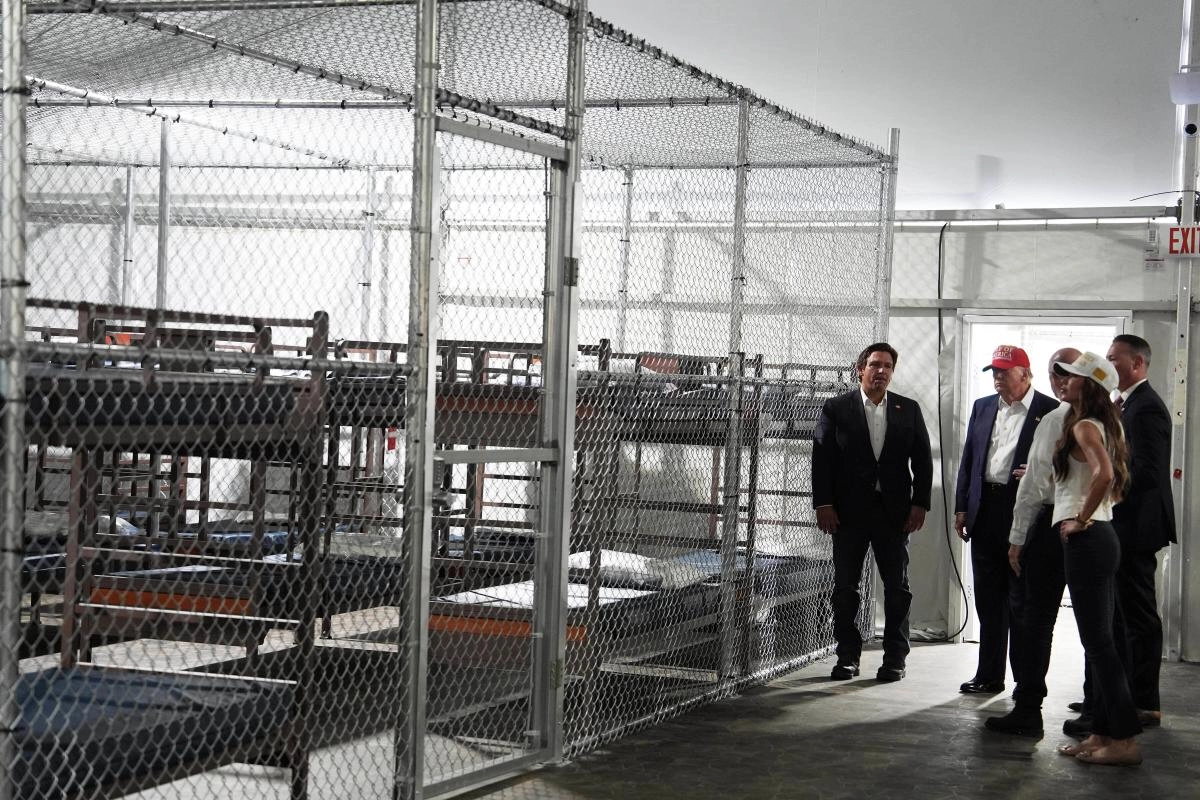

Environmental organizations and civil rights defenders denounced the lack of transparency of federal and state authorities regarding the future of migrants who remained detained in the center known as “Alligator Alcatraz”, a controversial immigration facility located in the Florida Everglades, after the government confirmed the transfer of all inmates before the start of the Atlantic hurricane season.
Although the Immigration and Customs Enforcement Service (ICE) reported that the detainees were relocated to other centers, groups that are maintaining a legal battle against the facility warned that the complex remains operational and continues to represent environmental risks for one of the most sensitive ecological areas in South Florida.
The organizations Friends of the Everglades and the Center for Biological Diversity (CBD) maintain that the transfer of migrants does not mean the definitive closure of the center and affirm that the authorities have not explained what will happen to the facilities or how the possible environmental damage caused during its operation will be remedied.
"These facilities were conceived behind closed doors, built without public participation and operated in secret. Now they appear to be being dismantled without any explanation as to how the site will be restored or assurances that they will close permanently," said attorney Paul J. Schwiep, legal representative for both organizations.
The legal battle over the detention center continues
The environmental groups reiterated that they will keep active the lawsuit filed in 2025 against the administrations of President Donald Trump and Florida Governor Ron DeSantis, for the construction and operation of the detention center within the Big Cypress National Reserve, in the heart of the Everglades ecosystem.
According to the plaintiffs, the facility was built in an accelerated manner without complying with federal environmental assessment procedures required by law. They also maintain that the operations affected habitats of protected species and generated impacts on natural resources in the region.
The organizations assure that, despite the transfer of the migrants, heavy equipment, active lighting systems and constant movement of materials considered potentially dangerous are still observed in the place. Friends of the Everglades Executive Director Eve Samples called the project a costly failure for taxpayers and said they will seek to hold authorities accountable for the damage caused.
For its part, Earthjustice, an organization that legally represents several of the plaintiffs, insisted that the temporary closure does not eliminate the existing risks to the environment or the legal responsibilities derived from the construction of the complex.
Uncertainty about the future of migrants and facilities
The relocation of the detainees occurred in the midst of the arrival of the hurricane season and after reports that pointed to a high operating cost of the center, estimated at more than a million dollars per day. However, DeSantis' recent statements left open the possibility that the facility could be used again in the future. The governor rejected that the complex has been completely abandoned and highlighted that during its operation it allowed nearly 25,000 migrants to be processed.
The uncertainty about the fate of the transferred people and the lack of information about the future of the center have generated new criticism among activists and human rights defenders. In addition to demanding the permanent closure of “Alligator Alcatraz,” the plaintiff groups seek that federal and state authorities implement a comprehensive environmental restoration plan for the affected area.
The case will return to court in the coming weeks, where the organizations hope to obtain court orders that force the government to repair any environmental damage and to make transparent decisions related to a facility that, since its opening, was surrounded by controversy due to its immigration, economic and ecological implications.