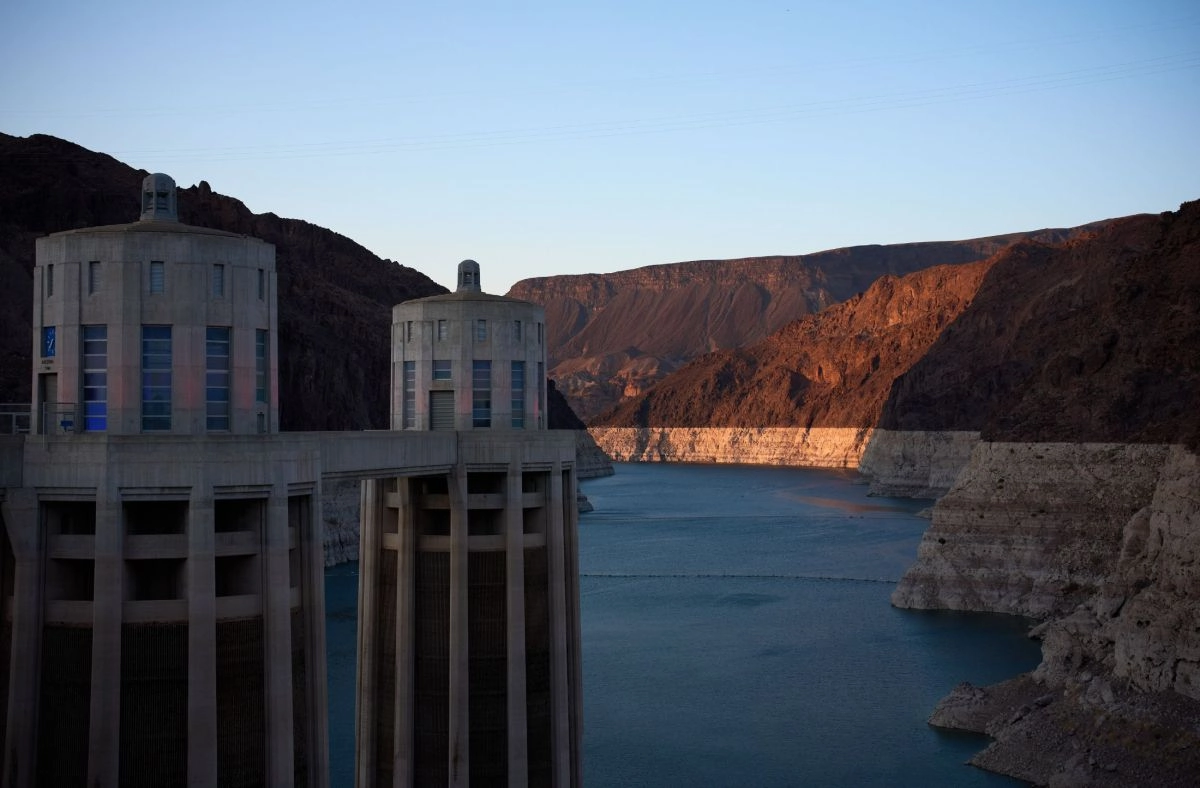

The future of California's water supply is once again at the center of debate after President Donald Trump's administration presented a plan that contemplates deep cuts to the use of the Colorado River during the coming years of drought, a measure that could directly affect California, Arizona and Nevada.
According to information from Reuters, the proposal was prepared by the United States Bureau of Reclamation and seeks to establish new operating rules for the Lake Powell and Lake Mead reservoirs until 2036, given the deterioration caused by decades of drought and the intensive use of the resource.
The document proposes shortage scenarios of up to 3 million acre-feet of water per year for the lower basin states, a reduction that far exceeds the proposal presented months ago by the state governments themselves.
California faces an uncertain scenario
Although the cuts would affect three states, California is among the entities that depend on the Colorado River to supply millions of residents, agricultural areas and industrial sectors.
The proposal comes after the seven states that share the basin failed to reach an agreement after more than three years of negotiations to replace the current rules, which conclude this year.
The Secretary of the Interior, Doug Burgum, defended the project by ensuring that it seeks to respond to new climatic conditions.
“This framework provides the flexibility necessary to respond to changing hydrological conditions, while preserving the opportunity for states to continue working on consensus solutions,” he said.
They anticipate litigation over the distribution of water
The first reactions were immediate. The Arizona Department of Water Resources described the proposal as “unacceptable,” considering that it concentrates the greatest sacrifices on the lower basin states and leaves those in the upper basin without additional obligations. For his part, JB Hamby, California's main negotiator in the talks on the river, considered that the document represents progress, although he made it clear that the process is still far from concluded.
“This is an important milestone, but it is not the final goal,” he declared.
Specialists warn that the proposal could lead to years of litigation between the states involved, while climate change continues to reduce the flow of the Colorado River. Studies cited by the aforementioned agency indicate that the river's flow has decreased around 20% since 2000 and could fall another 20% by 2050, putting the water supply and hydroelectric power generation in the west of the country at risk.