

Global military spending rose in 2025 due to increase in wars and tensions
A SIPRI report indicates that the increase was 2.9% compared to 2024, despite the decrease in US military spending
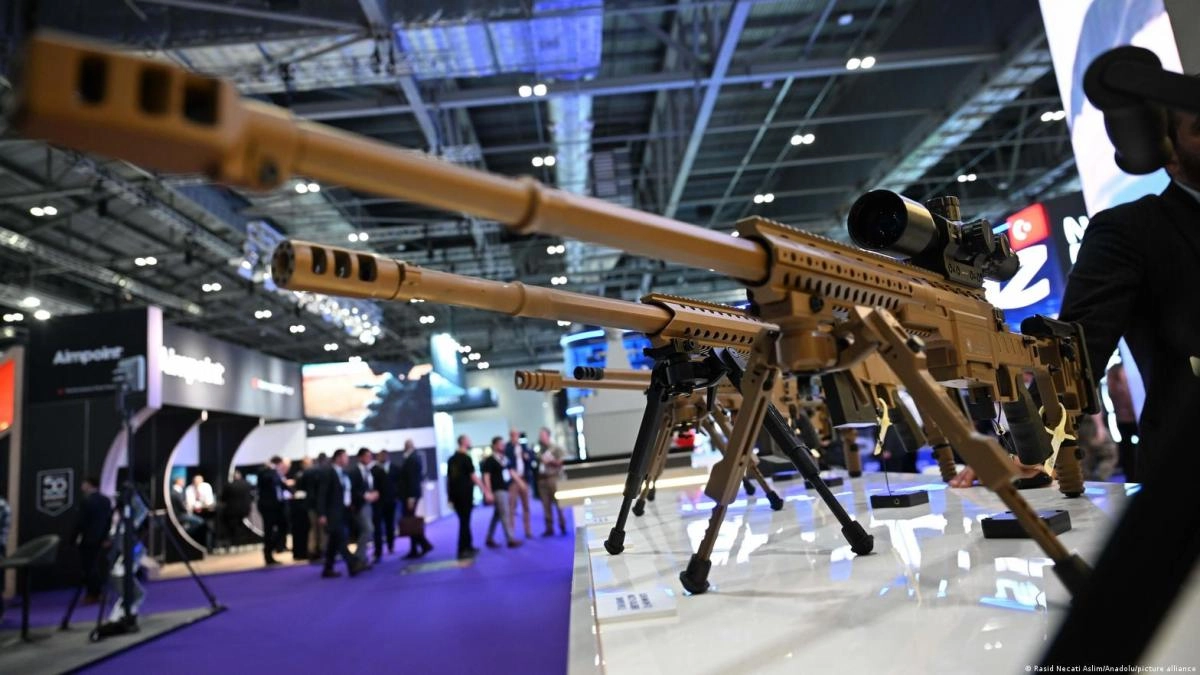

The world allocated nearly $2.9 trillion to military spending in 2025, marking the eleventh consecutive year of growth in a context of multiplying conflicts and tensions, according to a benchmark report published this Monday.
The three main contributors - the United States, China and Russia - something represents More than half of the total, at $1.48 trillion.
The increase was 2.9% compared to the previous year, despite the decrease in US military spending, according to the report by the Stockholm International Peace Research Institute (SIPRI).
This drop was largely offset by increases in Europe and Asia, in “another year marked by wars and intensified tensions,” Lorenzo Scarazzato, a SIPRI researcher, explained to AFP.
The “military burden,” that is, the proportion of global GDP allocated to military spending, is the highest since 2009.
The United States spent $954 billion, 7.5% less than in 2014, mainly due to the suspension of aid to Ukraine.
The main driver of the global increase came from Europe—which includes Russia and Ukraine—where spending rose by 14%, totaling $864 billion.
Strong increase in Asia/Oceania
“This is explained by the ongoing war in Ukraine and the US withdrawal from Europe,” Scarazzato stated. The United States “is pushing Europe to take greater responsibility for its own defense.”
Germany, the world's fourth-largest spender, increased its spending by 24% in 2025 to $114 billion. Spain also significantly increased its spending, by 50%, to $40.2 billion, exceeding 2% of GDP for the first time since 1994.
Russia's spending increased by 5.9% to $190 billion, equivalent to 7.5% of GDP.
Ukraine, for its part, increased its spending by 20%, to $84.1 billion, representing 40% of its GDP. Despite persistent tensions in the Middle East, spending in the region only increased by 0.1%, reaching $218 billion. While most countries in the region increased their spending, Israel and Iran actually reduced it. In Iran, spending decreased by 5.6%, reaching $7.4 billion,although this is mainly explained by a high annual inflation rate of 42%. In nominal terms, spending did increase. In the case of Israel, the 4.9% reduction, to $48.3 billion, is due to the ebb of the war in Gaza after an initial ceasefire with Hamas in early 2025, and another since October, the researchers explained, although they noted that spending was still 97% higher than in 2022. In the Asia-Oceania region, spending totaled $681 billion, an 8.5% increase compared to 2024, the largest annual increase since 2009. The region's "main player" is China, which increased its spending every year for the past three decades and allocated approximately $336 billion in 2025, the SIPRI researcher highlighted. “But the interest likely lies in the reaction of other states, such as South Korea, Japan, and Taiwan, to the perceived threat,” he stated.
Also on the rise in South America
The report notes that military spending in Central America and the Caribbean fell by 27% in 2025, to $17.1 billion, although it “grew by 64% during the 2016-2025 decline.”
“Trends in the subregion are heavily influenced by Mexico's military spending, which fell by a third in 2025, to $13.6 billion,” the report stated. In 2024, however, this country had increased its military investment by 71%. Meanwhile, in South America, military spending "reached $56.3 billion in 2025, an increase of 3.4% compared to 2024 and 5.7% compared to 2016." Brazil, the largest South American spender, increased its spending by 13% in 2025, to $23.9 billion, according to the report. Guyana's military spending increased by 16%, to $248 million in 2025, "driven by growing tensions with Venezuela over the Essequibo oil region." Of the 40 largest spenders globally, Brazil ranks 21st, with Colombia in 29th and Mexico in 30th.