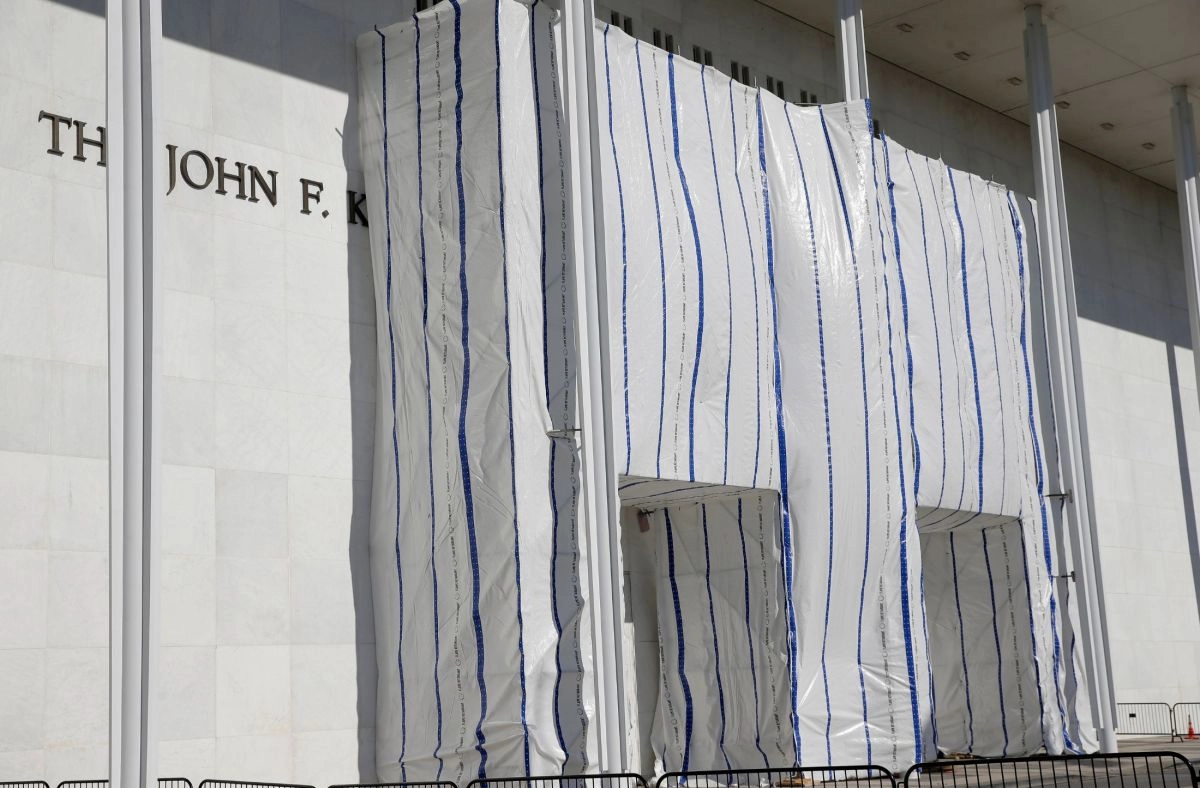

The order was issued by federal judge Christopher Cooper, who set a deadline of June 19 for the government to report how it plans to keep downtown public activities open during an ambitious $250 million remodeling project.
The court request comes after Cooper temporarily blocked the administration's plans to close or significantly reduce the venue's operations while construction is underway.
The conflict over Trump's name
However, Judge Christopher Cooper determined on May 29 that the measure contravened the 1964 legislation that created the institution and established that the center would exclusively bear the name of former President Kennedy.
After the ruling, workers removed references to Trump from both the website and the physical facilities of the venue, a decision that provoked strong criticism from the president.
“We will work with Congress to return this failed institution to them,” Trump wrote in Truth Social after learning of the court ruling.
Million-dollar renovation under scrutiny
In addition to the debate over the name of the center, the administration faces questions about the planned closure for July 2026. Trump had defended the suspension of activities for two years, arguing that it was the fastest way to transform the facility and take it to a new level of “success, beauty and greatness.”
However, Cooper ordered that public access and continuity of programming be preserved while the litigation progresses. The judge also requested information on any recent board decisions and progress on the construction project.
The uncertainty has generated reactions in the cultural sector, to the extent that various artists and organizations, including Philip Glass, the Washington National Opera and the Martha Graham Dance Company, canceled performances in protest of the changes promoted by the administration.