

Switzerland rejects the initiative to limit its population to 10 million, according to the first projections of the vote
The right-wing Swiss People's Party said it was a "sustainability" plan, but its detractors said it was a recipe for chaos.
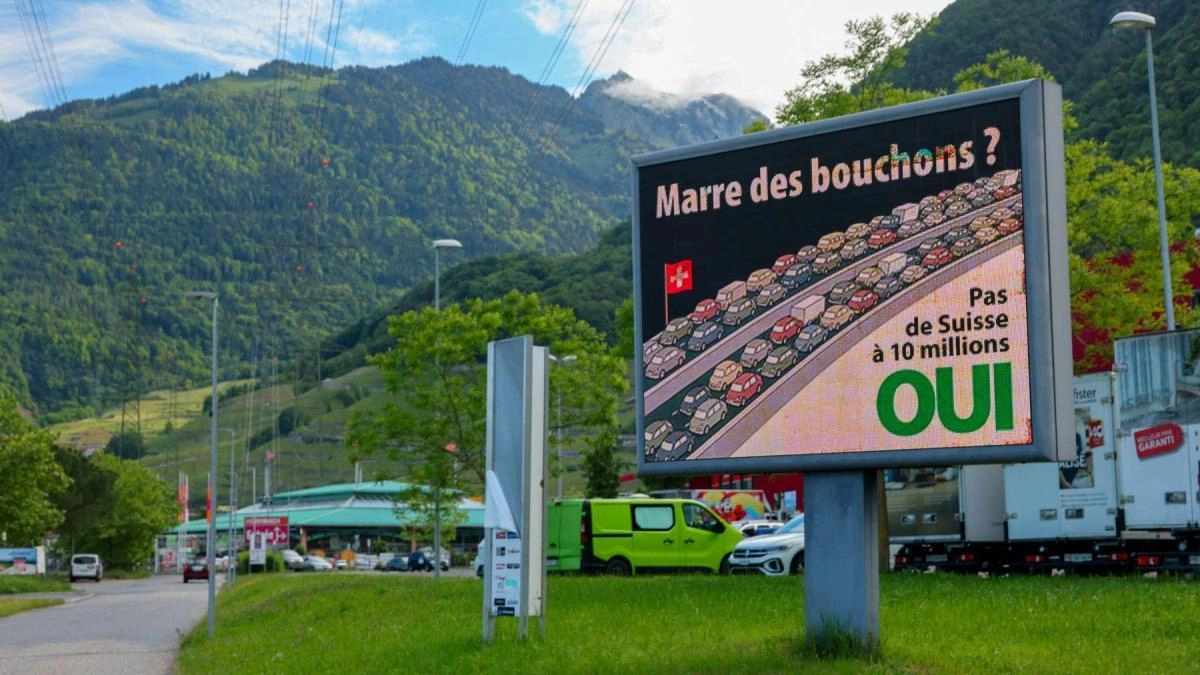

Can a country set a limit to its population? That's the question the Swiss answered this Sunday, when voters went to the polls to decide on a proposal that sought to limit their population to 10 million.
The ballots are still being counted, but the first projections indicate that 55% of voters were against, while 45% of voters were in favor.
The measure was promoted by the right-wing Swiss People's Party, which described it as a “sustainability initiative” aimed at easing pressure on housing, public services and the environment.
The country's system of direct democracy establishes that any major decision must be made at the polls. Only 100,000 signatures are needed to bring a measure to a vote.
Opponents – including the Swiss government, all other major parties, Swiss business and unions – called the proposal a “chaos initiative,” arguing that it would deprive hospitals and hotels of much-needed staff and damage hard-won relations with the European Union, leaving non-EU Switzerland isolated in a very uncertain world.
Switzerland's population has grown rapidly over the past two decades, rising from 7.3 million in 2002 to 9.1 million today, of which 27% are foreign residents.
Many voters are concerned about crowding on trains, high apartment prices and rising healthcare costs.
About half of Swiss products are sold to the EU. But its access to this market depends on Switzerland's commitment to the freedom of movement of Europeans. A cap on its population would mean the end of this agreement.
Opposite visions
Helin Genis and Nils Fiechter have a lot in common, but their diametrically opposed stances on limiting the Swiss population reflect the polarization of the referendum.
They are both young local politicians from immigrant families: Nils is 29 and Helin is 31. Helin's parents are originally from Turkey, Nils' mother is Canadian and he has dual nationality.
“We have lost control,” laments Nils, representative of the canton of Bern in parliament. “Uncontrolled immigration is causing Switzerland to stop being Switzerland.”
Switzerland's problems - housing shortages, traffic congestion, overloaded schools and overwhelmed social services - are, according to him, a direct consequence of immigration.
Helin, a Social Democrat elected councilor in Bern, dismisses these arguments as a search for scapegoats.
"It is not immigrants who determine rental prices. It is not immigrants who raise health insurance premiums. Nor are it immigrants who make political decisions about housing, infrastructure or social investment," he told the BBC.
“Seeing problems from the perspective of migration does not lead to solutions, but to division,” he added.
For undecided voters, a key question was how exactly a population cap would work.
Imposing a strict limit on the number of residents is a measure that no other country has attempted, although China, with its now abandoned one-child policy, did seek to curb population growth.
The Swiss proposal stated that the population should not exceed 10 million before 2050 and ordered the government to take action once the figure of 9.5 million was reached.
These plans could include limiting the number of asylum seekers and ending the right to family reunification for foreign workers in Switzerland.
The thin red line with the EU
If the 10 million limit was reached, international agreements that Switzerland has signed, including the free movement of people from the EU, would have to be terminated.
This prospect caused alarm in the Swiss business association, Economiesuisse.
“We could face difficulties in our relations with the European Union,” warned the association's chief economist, Rudolf Minsch.
This is because Brussels has long warned non-EU countries that they cannot simply cherry-pick the advantages of the EU's single market and avoid commitments such as the free movement of people.
“The EU remains by far the most important trading partner for Switzerland,” explains Minsch, “which is why we are interested in maintaining stable and clear relations with our main trading partner.”
Swiss employers were also concerned about labor shortages and loss of access to a European pool of skilled workers.
Half of Swiss hotel employees are immigrants. Hospitals and nursing homes also rely on foreign workers.
The Swiss People's Party argued that immigration to Switzerland is simply fueling increasing demand for hospital beds and school places, and that limiting immigration would relieve this pressure.
Opponents claim this is unrealistic, pointing out that 20% of the Swiss population is over 65 years old.
Young workers, and young taxpayers, are needed to meet the needs of an aging population, and Switzerland is not creating those young workers by itself, they warn.
The geopolitical factor
For Jon Pult, a social democratic deputy, his greatest fear in the face of a population limit is being “alone in this unstable and dangerous world.”
Switzerland, like its European neighbors, is increasing its defense spending and, despite its neutrality, plans to strengthen its defense ties with them.
It has been hit by rising fuel prices due to the Russian invasion of Ukraine and the conflict in Iran. In addition, its products have been harmed by punitive US tariffs.
Switzerland could jeopardize its treaties with the EU and possibly lose the goodwill of Brussels, warns Pult.
Nils Fiechter dismisses this concern as alarmism: “I am sure that the EU will not allow this to happen,” he says, arguing that the agreements with Switzerland “are exclusively for the benefit of the EU itself.”
However, fear of isolation could have been a deciding factor for some voters.
The Swiss were horrified when Washington imposed 39% tariffs on their products, and a deal to reduce them to 15% has yet to be finalized.
Now, posters urging voters to reject the population limit show US President Donald Trump with a mocking look, with the shadowy profiles of Russia's Vladimir Putin and China's Xi Jinping behind him.
“Break with Europe, at a time like this?” asks the headline.
Nils Fiechter insists that limiting population is about protecting a way of life. "Anyone who loves Switzerland, whether immigrant or not, wants it to remain a place worth living, safe and prosperous. That is precisely what this initiative is about."
But Helin Genis sees nothing positive in it.
“The key issue is not how to exclude people, but how to create enough affordable housing, ensure good working conditions and invest in a strong public service.”