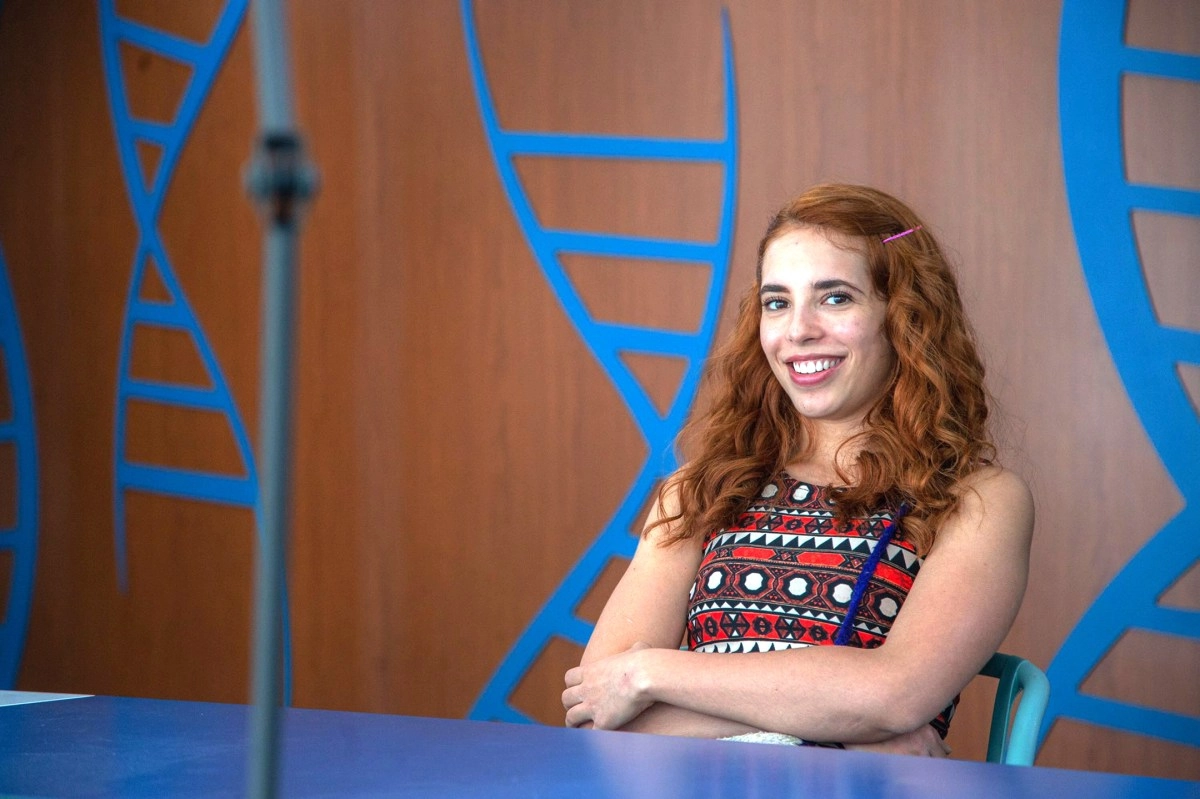

“We are not going to recover, at least in any foreseeable future, the climate and atmosphere already lost,” Ecuadorian climatologist Raúl Cordero told BBC Mundo.
"But that doesn't mean you have to let yourself be. No, because we can still lose more," he added.
Cordero, who worked for years in Chile and conducts extensive research in Antarctica, is currently a professor at the University of Groningen in the Netherlands.
From fires to heat waves to floods, “there is an epidemic of extreme events around the world, which are becoming increasingly intense and increasingly frequent,” he noted.
The 11 years between 2015 and 2025 were the 11 warmest years on record, according to a March report from the World Meteorological Organization.
Cordero explained why the northern hemisphere is warming almost twice as fast as the southern hemisphere, what to expect from the combined effect of climate change and El Niño, and how, despite everything, he finds reasons for hope.
Presenting this year's report on the state of the climate in the United Kingdom, the British Meteorological Service said that "the climate of the 20th century is no more." Do you agree with this?
Yes, I fully agree. Climate ultimately depends on the atmosphere, and the atmosphere you and I were born with no longer exists. The planet on which we were born no longer exists.
We have changed the atmospheric composition of the planet with greenhouse gas emissions.
And we have not changed it just a little: the concentration of CO2, the main greenhouse gas, is today 50% higher than it was a little over a century ago.
If one changes the atmospheric composition of the planet by these tremendous values, the climate will change. And it will never go back to what it was until that extra 50% of CO2 decreases.
So not only is the climate we have today different. The atmosphere is different and there is something even worse: we are not going to get them back, at least in any foreseeable future.
When you say no predictable future, what do you mean?
The predictable future is usually associated with the horizons of human life. It is very difficult for us to reduce the concentration of greenhouse gases in less than 100 years.
That does not mean that one has to let go, that everything is already lost. No, because we can still lose more. If we do not stop greenhouse gas emissions, we will continue to change the climate and make the situation worse.
The problem with climate change is that it causes increases in the frequency of extreme events. There is an epidemic of extreme events around the world, which are becoming increasingly intense and more frequent.
If we continue as we are, the frequency of these extreme events will continue to increase.
Why would it take so long to feel the benefit of reducing CO2 emissions?
CO2 has the problem that it has a half-life of at least a century. That is to say, the CO2 that we have in the atmosphere today changing the climate is not only what we emit, but what our parents and grandparents emitted.
Therefore, the CO2 that we are emitting will not only change the climate today, but will change it for 100 more years. It will continue to change the climate long after those of us who emitted it are dead.
That is why climate change is an intragenerational problem. Unfortunately, the changes in climate that we are causing have an impact that will outlive us.
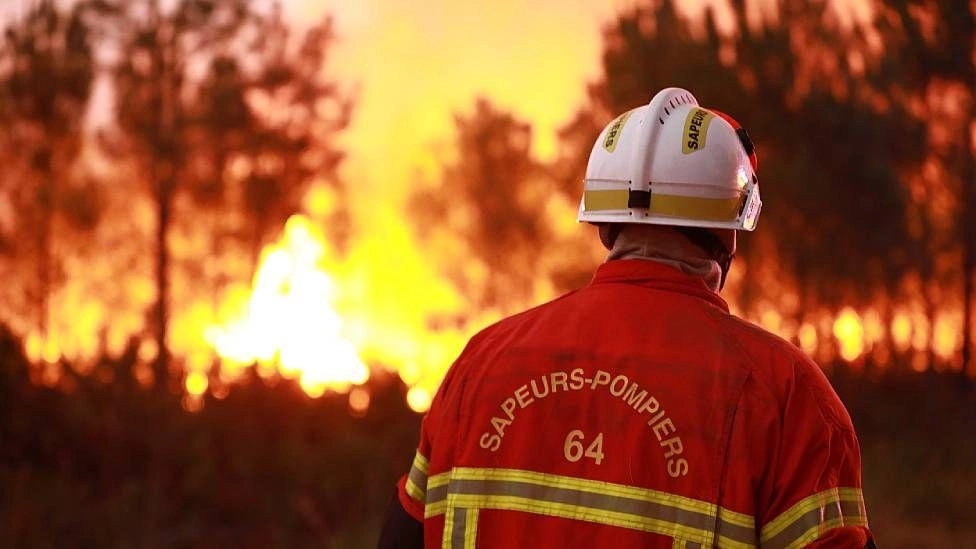
Let's talk then about the extreme events I mentioned. These days we see fires that seem unstoppable in Europe and other parts of the world. And there is talk of mega fires that generate their own climate with electrical discharges that start new fire outbreaks. Are these a clear effect of climate change?
It is difficult to attribute responsibility for individual fires to climate change, but we can attribute the tendency to have increasingly intense fires to climate change.
In other words, climate change is making them more and more likely.
What is happening today in Europe is something that happened in January 2025 in California, the richest state in the richest country, with every material means imaginable at its disposal. And despite that, they had a nearly two-week fire that burned down suburbs in Los Angeles.
Similar events have occurred in Australia in 2020 and in Chile in 2017 and 2023. In 2024, more than 100 people lost their lives in a fire that, like the one in California, penetrated a city, Viña del Mar, with such speed that it made it impossible for many people to escape.
So what is happening in Europe is unfortunately not unexpected.
And if we do not stop global warming, these types of events will not only become more frequent, but they will become increasingly worse.
It has also been said that another factor that aggravates fires is poor forest management...
In Chile, when the mega fires of 2017 occurred, many thought “it is the excess of the forestry industry, the excess of forest,” etc. It is difficult for many to understand that this has to do with a problem of change in atmospheric composition.
I'm not saying that forest management or lack thereof doesn't play a role, but that's not the main problem behind megafires.
Until we accept that catastrophic fires are the result of having almost irreversibly altered the composition of the atmosphere, we are not going to solve the problem.
These types of mega fires are of an intensity never seen before and, no matter how heroic the firefighters are or the material means available, they cannot be stopped.
Different fire management models have been tried in California, Australia, Chile and southern Europe, and none have managed to stop the recent increases in the burned area.
The only way to stop the situation from worsening is to stop emitting greenhouse gases.
The body that monitors mortality in Europe, the European Mortality Monitor, said that the June 2026 heat wave produced an excess mortality of more than 10,000 people, more than 5,700 in France alone. Is this another example that the climate of a few decades ago no longer exists?
Heat waves are the deadliest manifestation of global warming.
For example, when you are told that the global temperature is going to increase one degree, two degrees, you say well, that is not much. This is also something difficult for many to understand, that within these “small” increases in the averages are hidden sharp rises in temperature for a few days.
These are heat waves, sharp increases in temperature that are occurring more and more frequently as the average global temperature rises.
The frequency of heat waves has intensified by 200 or 300% depending on the area of the tropics one pays attention to. In my hometown of Guayaquil (Ecuador), for example, the frequency of heat waves has increased almost 400% since the 1980s.
Heat waves are by far the most lethal climate risk and are already estimated to be killing hundreds of thousands of people around the world.
Why is this not news? Because when you die they never give you a certificate that says “died from a heat wave.” For now, the only way we can detect these deaths is through excess mortality statistics, which are known after the event has ended.
In the last heat wave in Europe, in June 2026, the inhabitants of Paris were exposed to temperatures almost 15 degrees above typical values. These temperatures represent a serious risk for older people. Statistics indicate that when you are over 65 years old and do not have access to air conditioning, the risk of dying during a heat wave on a very hot day in summer doubles.
When we talk about global warming, the percentage increases in the risks we face are scandalous. But unfortunately they stir few consciences.
The European Union's Copernicus Earth observation program points out that Europe is warming twice as fast as the rest of the planet. What is this due to?
It's not just Europe. The Northern Hemisphere is warming almost twice as fast as the Southern Hemisphere. One reason is that there is less ocean in the northern hemisphere than in the southern hemisphere.
In the southern hemisphere we have little territory, a small part of Africa, Oceania and a part of South America, nothing more.
The fact that the northern hemisphere has more territory means that it is warming more because the land responds faster than the ocean to radiation. That is why the rate of warming of the oceans always tends to be slower than the rate of warming of the continental surface.
But there is an additional element which is the Arctic. The Arctic is the fastest warming region of the world by far. The reason is that there is what is called feedback. Excess heat is melting the ice that covers the Arctic Ocean. When the ice melts, the darker ocean is exposed, which, by absorbing extra solar radiation, warms up, melting more ice.
That vicious cycle explains why the Arctic is melting so quickly. And since the Arctic is a huge area, it ends up dragging down the entire northern hemisphere and Europe, the continent closest to the Arctic.
What happens in the southern hemisphere?
Warming is global, but not the entire planet warms at the same rate.
The southern hemisphere warms more slowly, among other reasons, because it has the area of the world that warms the slowest, Antarctica.
It is not that in the southern hemisphere we are not having a bad time, but when it comes to warming, we are a little behind the northern hemisphere.
Why is the situation in Antarctica so different from that in the Arctic?
The difference is made by the fact that the Arctic is an ocean covered by ice, while Antarctica is a continent, that is, most of the ice in Antarctica is not in contact with the ocean but with continental rock. By not being in contact with the ocean, that vicious circle that we explained before that is rapidly melting the Arctic does not occur.
On the other hand, the ice sheet that covers the Arctic is much thinner. It's a few meters. In the case of Antarctica, the mass of ice that covers the Antarctic continent is on average two kilometers thick. This layer of ice is so thick that fortunately it will take a few centuries to melt.
The US National Oceanic and Atmospheric Administration officially declared the arrival of El Niño in June. What can be expected in Latin America from the combination of El Niño and climate change?
El Niño in general is the most influential climate mode on the planet, affecting different anomalies.
There is one that has only one sign, which is the temperature anomaly. In the end, El Niño is a warming of the surface temperature of the Pacific and that area that warms is so large that it ends up pushing the global thermometer upward.
So, if 2026 isn't the warmest year on record, 2027 is going to be.
The second anomaly caused by El Niño is that it causes very heavy rains in parts of the planet and favors droughts in others.
For example, potentially historic droughts are expected this year in the Amazon basin, the Bolivian highlands, South Africa and Southeast Asia.
And on the other hand, abundant rainfall is expected in the Middle East, the south of the United States, northern Mexico, in the central area of Chile, in the south of Brazil and the central area of Argentina.
Global warming exacerbates many of the impacts of El Niño.
For example, the droughts that El Niño once favored in the Amazon basin are now much worse. Because? Because global warming, by heating the atmosphere, ends up drying out the soil. Severe droughts are not only due to the lack of rain, but also to high temperatures that dry out the soil.
On the other hand, global warming by pushing the thermometer up also ends up increasing humidity in the atmosphere. And that moisture, once it condenses, can end up in precipitation.
So areas that received more precipitation during El Niño years could receive even worse precipitation due to global warming.
Given this panorama of extreme phenomena, do you see any positive signs of hope?
Yes. Although it may not seem obvious, I am an optimist.
On the mitigation side (reduction of emissions) we are advancing at a pace that would have been unthinkable a decade ago.
Much progress has been made in the energy transition in developing countries and in some very important countries, such as China, the transition to renewables is going from strength to strength.
The transition is already happening in much of the global south and this makes me hopeful that greenhouse gas emissions will begin to decline sooner rather than later.
Then there is another very important thing, which is the issue of adaptation to climate change. Many countries, through economic development, are gaining access to technology that will allow them to cope with the worst impacts of climate change without so much human loss and material damage.
Fortunately, air conditioning penetration is also advancing rapidly, not only in Europe, but in the rest of the world.
So, beyond the fact that the situation today is very bad in climate terms, I would say that we have never been more prepared to face a global challenge.
I believe that in a few decades we will be able to begin to talk about global warming as a controlled problem. That is my opinion, but I recognize that this is not the global scientific consensus. The consensus is less optimistic.
I tend to be optimistic since I come from the world of ozone research. The ozone hole in the 1980s was an existential problem for humanity.
If the ozone hole had expanded, destroying the planet's ozone layer, human life on the planet would have been unviable. Fortunately, that problem is under control.
The success we had with the ozone hole makes me hope that we will be able to overcome, not without pain, not without sorrow, the challenge of global warming.
The US, Canada and other countries seek to increase the exploitation of fossil fuels. Why do you think they do it given the scientific evidence?
Mitigating climate change involves stopping using fossil fuels. So, obviously there are countries that produce these fuels that are not interested in the transition to renewables.
When one talks about oil countries, one tends to think of Saudi Arabia or Norway or the United States. But in South America, for example, my native country, Ecuador, is very unlikely to become a champion of the energy transition in the short term since its main export product is oil.
However, I believe that the golden age of fossil fuels has its years numbered.
India and China are advancing rapidly in the energy transition. None of these large countries have oil so for them, the energy transition is economically convenient.
Obviously the transition to renewables is not something that will happen overnight. But the Gulf countries and some countries in our region should think about what they are going to do and sell.
Because that toxic product that we have been selling, that kind of atmospheric drug that is oil, is a product that will not have consumers sooner rather than later.
Some say that due to climate change, there is a “new normal” to get used to. Others, however, feel uneasiness or anguish. What is your reflection on what we are experiencing at this moment on the planet?
First, I don't like to use that phrase that you have to get used to the “new normal.”
One can get used, for example, to a new climate when one moves to another country. But climate change does not work like that because it is a continuous change: we live in a continuous worsening of the situation.
It is very difficult and very stressful to continually have to adapt to a new reality.
This “non-normality” makes adaptation very difficult and complicates the economic development of the majority of the world's population in countries of the global south that still depend on the agricultural industry. Agriculture depends heavily on regular rainfall and a regular climate.
The moral is that there is no “new normal.” We have to create that new normal by stabilizing the climate and to do that we have to stop the use of fossil fuels. There is nothing else.
Download the new BBC World Service app. Choose BBC News Mundo and receive news alerts, documentaries and analysis, all in one place. Important: The new app is not available in the United Kingdom or the United States.