
Low-cost airlines are going through one of the most difficult times in their history, a crisis that some believe surpasses the difficulties they experienced during the pandemic.
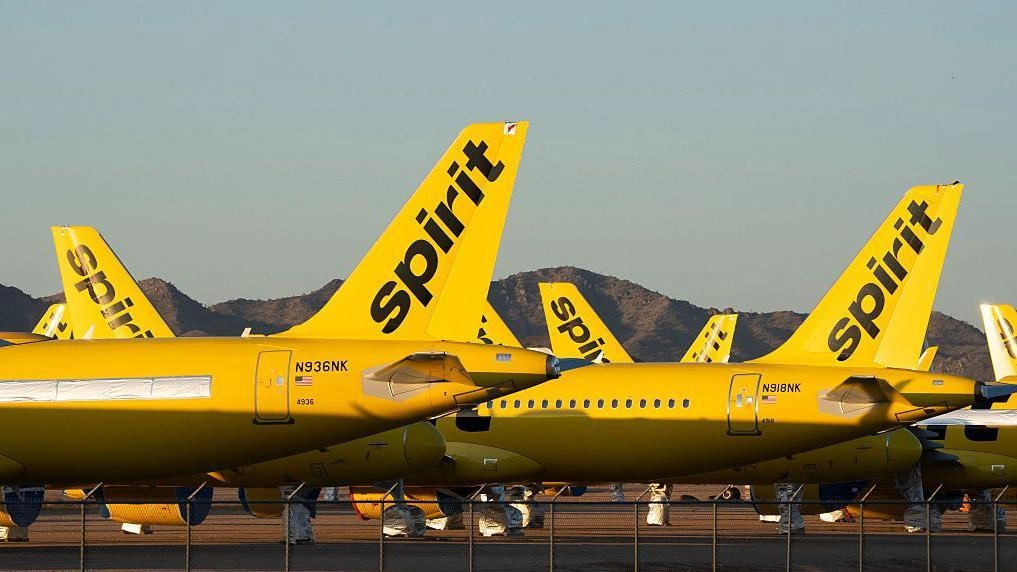
In May, the American low-cost Spirit became the first large airline to disappear in the last 25 years in the US, and experts agree that, given current oil prices, the same could happen to several more.
British giant easyJet (which moved its headquarters to Australia after Brexit) is facing potential takeover by a US investment fund firm specializing in acquiring airlines in financial difficulty, despite the European Commission saying that only European citizens can control it.
Tony Fernandez, founder of AirAsia, a Malaysian low-cost airline, told the BBC World Service's Business Daily programme: "Covid was terrible for us in Asia, I lost almost $10 billion in revenue."
"The difference is that people didn't expect to fly during the pandemic, now they do. And creditors want to get paid. Everyone is treating it as if it were a normal time, so the current situation is a little more difficult."
Due to their business model, these airlines are particularly sensitive to any type of increase in their operating costs.
The rise in fuel prices brought about by the closure of the Strait of Hormuz in the midst of the conflict in Iran is causing its profits to almost disappear completely.
“Even IATA (International Air Transport Association) has said that one of the main reasons for Spirit's bankruptcy was the war in Iran,” Marina Efthymiou, professor of aviation management at Dublin University, told Business Daily.
Why are low-cost airlines having so many problems? Why are they being affected more by the war than traditional airlines?
And, perhaps more relevant to all of us, what do these difficulties mean for airfare prices in general?
More passengers, fewer amenities
The history of low-cost airlines began in 1977 with the launch of the Laker Airways Skytrain, which covered the route between London and New York at a third of the price charged by traditional airlines such as PanAm or TWA.
Although the company went bankrupt in 1982, it created a model that many others would adopt in its place: that of getting rid of additional amenities that traditional airlines offered.
“No more free Cokes and pretzels, less leg room,” said Business Daily host Rahul Tandon: “the idea was to get you to your destination based on the idea that the only thing that matters is getting there by paying as little as you can.”
In a sense, Tandon said, it was the “democratization of flying.”
The model was so effective and popular that it spread throughout the world, with such famous brands as Ryanair and easyJet in Europe; Southwest Airlines, JetBlue and Spirit in the US; and Volaris, Jetsmart and SkyAirline in Latin America.
However, by their very nature, low-cost airlines turned out to be much more sensitive to global situations.
Turbulence
The 2020 pandemic left many airlines in a critical situation and the current increase in fuel prices is the final blow for some.
Professor Efthymiou said: "Profit margins have been shrinking, especially for low-cost airlines, which already have a very tight structure and operations. They have already cut all types of costs as much as possible."
He added: “With rising fuel prices again accounting for a significant portion of their operating costs, it is very difficult for them to pass on that additional expense when dealing with customers who are price sensitive.”
This is particularly true for airlines that have not been able to lock in fuel prices through forward contracts, as many large airlines can.
“This is a modality in which you pay for fuel well in advance,” said Business Daily co-host Will Bair.
"You may not get the best offer on the market, but you are guaranteed a guaranteed and fixed price. This way, if the price drops, you will not benefit from lower oil prices, but you will have the peace of mind of having a fixed price," he added.
“Michael O’Leary, Ryanair’s CEO, noted when presenting this week’s financial results that, for the full year 2027, they have covered 80% of their fuel costs at a price of US$67 per barrel.
“This figure is considerably lower than the current price of oil, standing rather at levels prior to the conflict with Iran.”
Professor Efthymiou explained that, in the case of companies like Spirit, ensuring future prices is not in their best interest, even though the risk of sticking to the international price of oil can lead to bankruptcy, as indeed happened to the airline with the yellow planes.
Complicating life for low-cost airlines is increased competition with traditional airlines, which have adopted a version of the low-cost model that is available for short hauls as part of their overall offering.
Thanks to this, many passengers feel that, currently, what they would pay for a ticket on a low-cost airline is very similar to that of a ticket on a traditional one.
Even more basic?
Faced with such a scenario, and with passengers sensitive to price increases, several airlines are considering alternatives to remain competitive.
Michael O'Leary, the CEO of Ryanair, has given some ideas of what ultra-low-cost airlines could look like in the future, eliminating even basic services such as toilets.
"We have three bathrooms," O'Leary told Irish broadcaster RTE, "if I can eliminate the two bathrooms in the back of the planes, I can add six extra seats. With those six extra seats, I could reduce everyone's airfare by an additional 5% throughout the year."
"If you remove the last 10 rows of seats, we would have a cabin for standing passengers and another for seated passengers. The price would be US$27 for seated and US$1 for the standing area. I guarantee that we would fill the standing area first," he ventured.
Professor Efthymiou expects there will be strong changes in the low-cost market, particularly if the conflict in Iran spreads.
“It should be said that we will see many mergers and acquisitions, airlines that declare bankruptcy and others that will rush to fill that gap in the market,” he said.
"If this crisis continues, airlines with low profitability and a very small scale could cease operations. Even in the case of airline groups - such as the unfortunate situation that the Irish Aer Lingus is going through, where 500 people will lose their jobs - this will generate disruptions that will further affect the options that users have available."
An example is what is expected to happen after the disappearance of Spirit, explained Bair, who cited data from the University of California on the effect that the airline had on the US aviation market.
“The University of California at Berkeley conducted research on what they called the ‘Spirit effect,’ noting that the airline's mere presence in the market was reducing overall airfares in the US by 10%.”
Without knowing what the future may bring – including a possible alternative to the current fossil fuel used by airplanes – what Tandon does expect is a market with fewer options, something that will end up affecting travelers' pockets.
"I guess if we're going to see more mergers in this sector, that means less competition. And usually that means prices are going to go up."
*This is an adaptation of the BBC's Business Daily podcast. If you want to hear the program in its original English, click here
Download the new BBC World Service app. Choose BBC News Mundo and receive news alerts, documentaries and analysis, all in one place. Important: The new app is not available in the United Kingdom or the United States.