

The 2026 Hyundai Tucson arrives more connected and intelligent
This version which will be launched as a 2026 model will feature a more robust design, fully hybrid propulsion and a technological leap driven by AI.
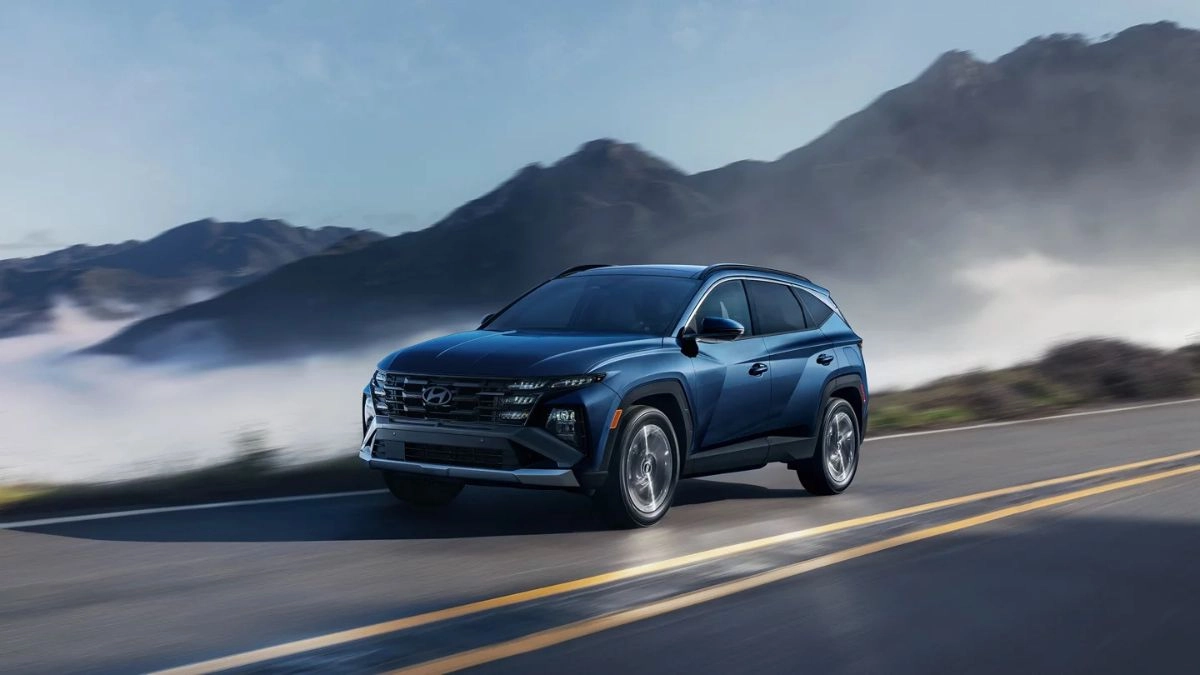

With more than two decades of history and millions of units sold globally, the Hyundai Tucson is one of the brand's commercial pillars.
But in 2026, this compact SUV will take a radical turn: it will only be offered with hybrid propulsion systems, it will incorporate technology based on artificial intelligence and it will adopt a completely renewed design.
Although Hyundai has not yet officially revealed the model, sources close to the company assure that the fifth generation of the Tucson is already in the final stages of development in South Korea.
The project, known internally as NX5, will mark the beginning of a new era for Hyundai's best-selling model globally.
The first to see it will be South Korean customers, with a possible debut towards the end of 2025. It will then arrive in Europe, the United States and Latin America, although in the latter region, as has happened before, its landing could take one or two more years.
Robust design with the “Art of Steel” seal
One of the great novelties of the 2026 Tucson will be its new design language, based on the concept called “Art of Steel”, which in Spanish translates as “Art of Iron”. This aesthetic has already been seen in other concept models such as the Hyundai N Vision 74 and the new Hyundai Nexo, the brand's hydrogen SUV.
The new silhouette of the Tucson will be marked by more square lines, a prominent hood and a front grille that leaves behind the diamond pattern to embrace a more futuristic and minimalist style.
The front will feature split horizontal LED headlights and DRL lights with a pixelated design, elements that will clearly differentiate it from the current model.
Unofficial renders circulating on the networks also show a cleaner and more stylized bumper, as well as new wheels with a more radical design. All of this will contribute to a more robust and avant-garde look, in line with the brand's new ambitions.
A connected, safe, and intelligent cabin
Beyond the exterior design, the interior of the new Tucson will be one of the great revolutions of this new generation. Various leaks indicate that Hyundai will debut its new Pleos OS in this model, a platform designed to integrate intelligent functions, advanced connectivity, and next-generation driver assistance systems.
The focal point of the cabin will be a vertical tablet-like screen, with an interface reminiscent of a modern smartphone. In it, you will be able to interact with an assistant with artificial intelligence, inspired by platforms such as ChatGPT, capable of processing voice commands, navigating, controlling vehicle functions and providing contextualized information in real time.
The Tucson will also feature Level 2.5 autonomous driving, which allows the vehicle to accelerate, brake, change lanes and provide roadside assistance almost autonomously, although always with driver supervision. This integration will put it on par with higher-segment SUVs in terms of technology.
Goodbye to conventional engines
The 2026 Tucson will also be the first global Hyundai model to completely eliminate traditional combustion engines. This means that there will be no gasoline or diesel versions, as is the case in previous generations.
Instead, the range will be made up exclusively of hybrid (HEV) and plug-in hybrid (PHEV) engines. This decision responds to both environmental regulations in key markets such as Europe and the United States, as well as the brand's progressive electrification strategy.
While official power or range figures have not been confirmed, the HEV is expected to use a 1.6-liter turbocharged engine with electric assistance, and the PHEV variant could offer between 35 and 45 miles of range in 100% electric mode, depending on the market.
Hyundai has also worked on reducing the vehicle's weight and improving the efficiency of the hybrid system to maintain competitive performance and offer consumption below 45 mpg combined, at least in the HEV version.
Phased production and arrival in Latin America
The The official presentation of the 2026 Tucson will take place in South Korea before the end of 2025, and local marketing is expected to begin in the first months of 2026.
It will then arrive in Europe and North America, where emissions regulations and interest in electrified cars have already boosted a good portion of the brand's sales.
As for Latin America, analysts estimate that the fifth-generation Tucson could be available between late 2026 and early 2027, depending on regional production plans. It's worth remembering that the current Tucson (launched in 2020) only arrived in countries like Colombia in 2024.
Hyundai hasn't confirmed pricing, but the base Tucson Hybrid is expected to start around $32,000, while the PHEV version could exceed $40,000, depending on the trim level.