

Less work and less sending money to Mexico
Lower migration and uncertainty about deportations in the Trump era are responsible; support among Hispanic voters is crumbling

Although Maricruz Torres was born in the United States, she has been unemployed for a year. Her husband supports her and does not believe that under the administration of President Donald Trump she will find a new job opportunity, much less that she will be able to send money to her relatives living in Tijuana, Mexico.
“I used to work at a Food for Less store and they fired me,” said Maricruz. “I'm tired of submitting job applications, but nothing comes of it.”
Her mother, Esther Torres, encourages her not to give up and asks her to have faith.
“When I came to the United States, I would give my parents $50 or $100 and they could fill the shopping cart with food, but now money is worthless and everything is very expensive,” said Esther.
Mother and daughter are aware that the country is experiencing a new reality, where skin color is synonymous with risk of arrest by immigration authorities.
“It hurts our hearts to see how they are mistreating so many people and affecting businesses and jobs,” said Esther. “They can pick you up anywhere, at any time, and deport you.”
A new analysis from Americans for Tax Fairness (AFT) reveals that job growth in Latino-heavy industries such as construction, manufacturing, and healthcare plummeted during the first eight months of the Trump administration compared to the same period in 2024 under President Joe Biden.
Industries with a high concentration of Latino workers created nearly 300,000 fewer jobs between January and August 2025 than during the same months in 2024, a decline of more than a third (35%).
“Republican tax policies are hurting the entire country, but as usual, Latinos are being hit especially hard,” said David Kass, ATF Executive Director.
“President Trump and congressional Republicans delivered large tax cuts to billionaires, They cut healthcare and nutrition for workers and families, and implemented incomprehensible tariffs,” she added.
“It's no surprise that Latino support for the Trump administration is plummeting along with the Latino job market as family finances are strained and businesses pull investments in the face of uncertainty.”
Melissa Morales, founder and president of Somos Votantes, noted that Donald Trump's numbers among Latinos are in free fall.
“Whether you look at jobs numbers, economic data, or our polls, the story is the same: Trump's economic policies are resoundingly failing Latino communities,”
She added that the president's image among Latino voters has also begun to plummet in every metric they monitor, “driven decisively by the voters he thought he had: men and Young Latinos. For the third consecutive quarter, the pattern is clear: the more Latino voters experience Trump's economic failures firsthand, the more they turn against him, Latino voters are pragmatic: they vote with their pockets, and Trump has emptied them.”
For her part, Antonieta Cadiz, Deputy Executive Director of Climate Power En Accion, indicated that the president's policies are directly affecting Latino families: in the first eight months of 2025, 85,000 jobs were lost or suspended in the clean energy sector, key to the Latino community, “while the costs of essential services such as electricity continue to rise.”
“We need policies that protect jobs, reduce costs, and strengthen the economies of Latino families,” added Antonieta Cadiz.
Fewer remittances to Mexico, a separate point
If the mid-year trends continue, Mexico will lose almost $4 billion in remittances sent by its citizens living abroad by the end of 2025.
This 5.8% drop in remittances compared to 2024 is due to a combination of factors, led by a drastic change in immigration policies in the United States, where 97% of Mexicans living abroad send money to their families, according to a report published this month by the BBVA Foundation.
“These projections of the continued decline in remittances to Mexico, with projections of losing almost $4 billion by the end of the year, include other factors such as the lack of sufficient income, fear of immigration raids, and new Trump policies, such as an additional tax on sending money,” said economist Carlos Guaman of the El Triunfo Corporation in Santa Ana, California.
“This has severely affected small businesses and the employment of Mexican immigrants in the United States, creating a vicious cycle of unemployment and reduced consumption,” she said. “Consequently, Mexican families will receive fewer remittances, affecting their purchasing power and worsening the national economy.”
The decline in remittances has been fluctuating in uncertainty since 2023, as fewer Mexicans have entered the USlabor market and the current Trump administration has focused on its campaign of mass deportations.
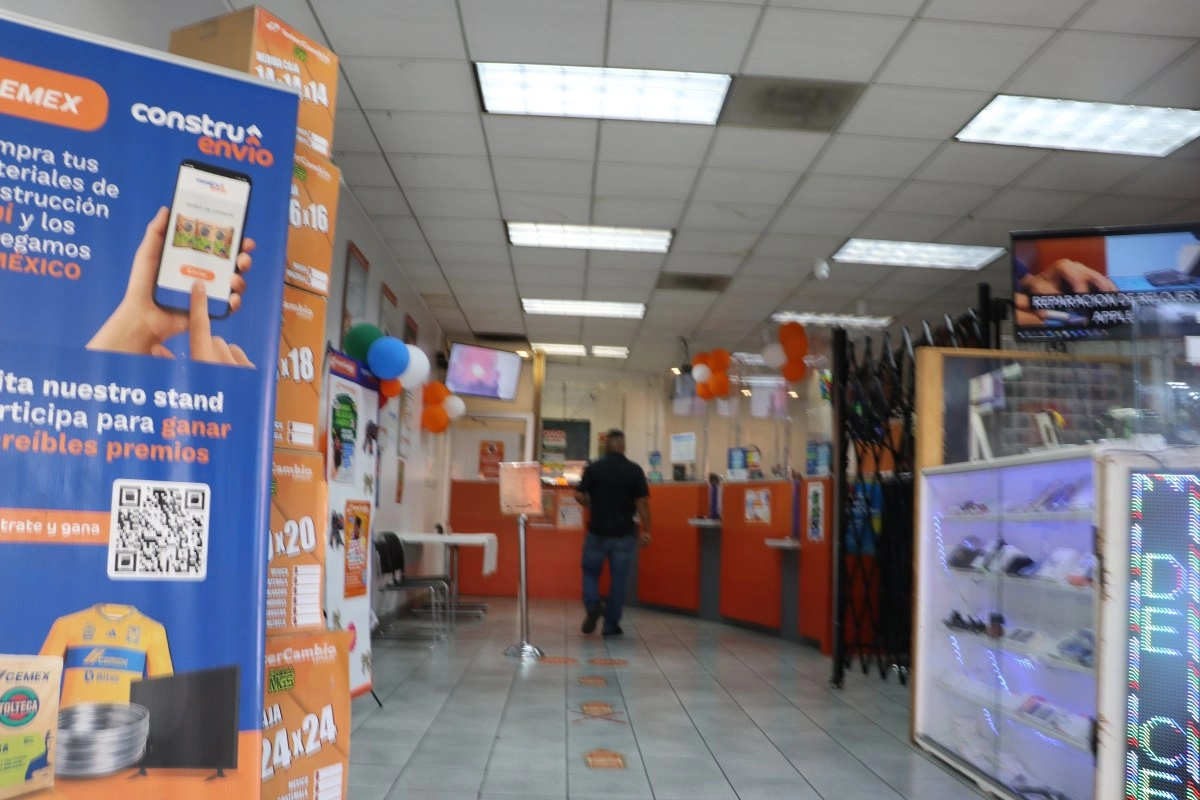
“With us, remittances have dropped by 50%,” said an employee of AZTECA Corp., a money transfer company located at 4826 Whittier Boulevard in East Los Angeles. “If this continues, the business could close.”
The store employee indicated that, in addition, the peso's appreciation against the dollar in the last two years has meant less money for Mexican families.
The value of the Mexican peso has increased: one dollar was worth 18.53 pesos on Friday, compared to 20.50 pesos on January 20, 2025.
Furthermore, the BBVA Foundation estimates that Mexico will receive 61 billion dollars this year, almost 4 billion less than in 2024.
Surviving in the face of adversity
In fact, in the first five months of 2025, employment of Mexican immigrant workers contracted, a trend that has increased over time because many have not shown up for work for fear of deportation.
“People are afraid to go out. That's why I haven't sold anything,” complained Sonia Castillo, who has had a hot dog stand for five years at the corner of Kern Avenue and Whittier Boulevard in East Los Angeles.
Next to her, Rosario Gomez, a costume jewelry seller, said the days of good sales are over.
“I used to earn about $350 a day, and now I barely make $75.00,” she explained. "Do you think I'll have anything left to send money to my family in Jalisco?"
Guadalupe Valadez Lozano, 61, originally from Labios de Moreno, Jalisco, Mexico, who arrived in the United States in November 1985 and works in maintenance at the San Antonio de San Gabriel parish and has dedicated her life to construction, said she continues sending money to her family, "especially to help in times of crisis."
"Despite the devaluation of the dollar, 15 days ago I sent $300.00. It's not much, but it helps a lot to the family we left behind," she said.