

Trump blames Tylenol for contributing to the growing rate of autism, and promotes another medicine as a replacement
He announced it without providing any medical evidence to support the FDA's new recommendation
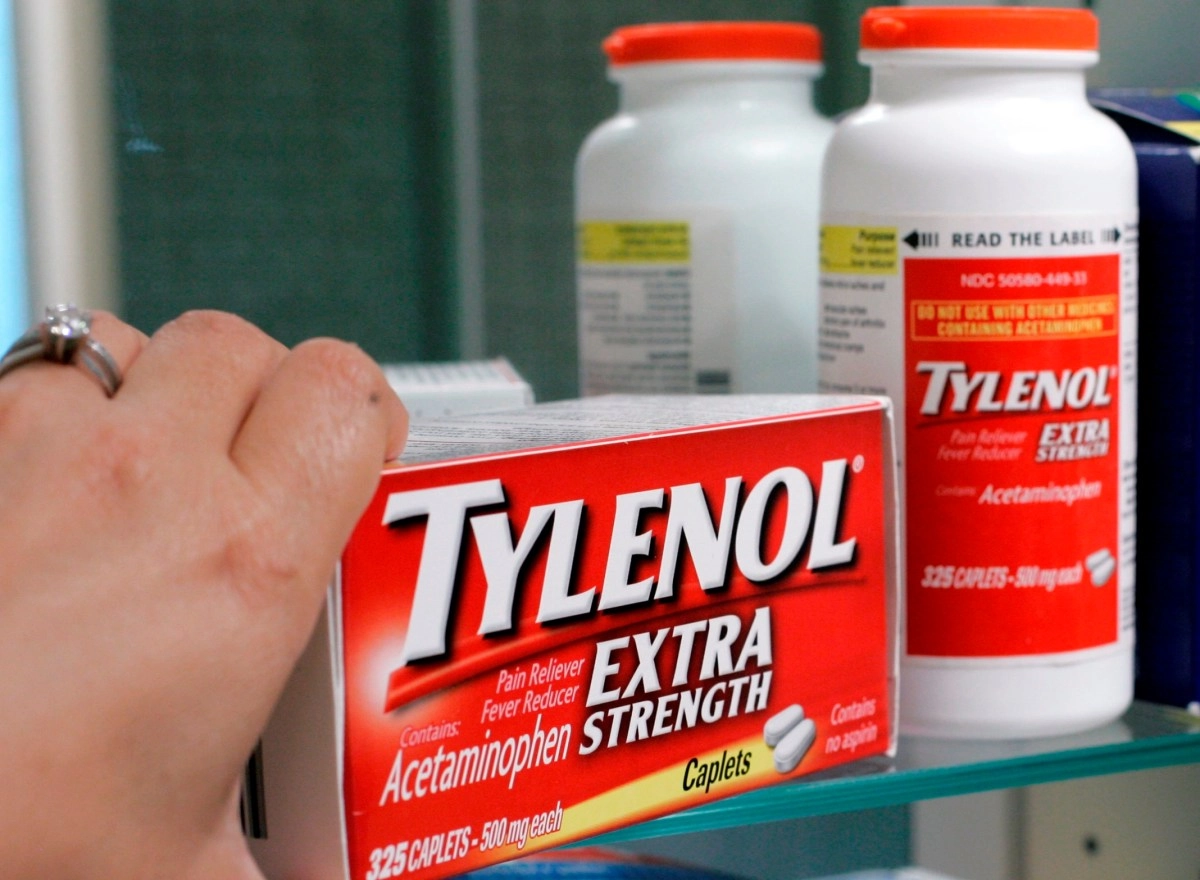

The administration of President Donald Trump has seen the growing rate of autism in the United States as a public health problem. That's why this Monday he released an announcement described by many as "historic." Following medical findings related to children, Trump focused his announcement on autism on two main areas: the use of acetaminophen during pregnancy, which is associated with an increased risk of autism; and the promotion of a drug (leucovorin) as a possible treatment. From the White House, Trump stated that women should not take paracetamol (acetaminophen, also known by the brand name Tylenol) throughout their entire pregnancy. He added that the Food and Drug Administration (FDA) would begin notifying doctors that its use “may be associated” with an increased risk of autism, but did not immediately provide any medical evidence to support the FDA's new recommendation.
Trump said an experimental treatment (leucovorin, an analog of folic acid) will be promoted instead as a promising option for children with autism spectrum disorder.
These measures, recommended by top public health officials, including Health and Human Services Secretary Robert F. Kennedy Jr., seek to respond to concerns about the rise in autism diagnoses in the United States.
The announcement is the latest step the administration, pushed by Kennedy and his supporters, has taken to reshape the landscape of public health in the United States.
Trump convinced
In his speech, the US president made some points:
Alarm over rates of autism
Recent studies suggest that paracetamol use during pregnancy may be linked to an increase in cases of autism in children. However, major medical societies and much of the scientific community insist that the evidence to establish a direct causal relationship is insufficient and that the drug, Recommended for decades as a safe pain reliever during pregnancy, it remains safe under medical supervision.
On the other hand, the promotion of leucovorin,currently in use for other medical purposes, as a “potential” treatment for autism also generates controversy, since its use for this purpose is still experimental and not widely supported by conventional medical science.
Controversy and reactions
The initiative has generated concern and controversy in a good part of the medical and scientific community, since they believe that the process to establish a link between the use of medications and the onset of autism must be exhaustive and based on high-quality research, and they warn about the risk of sending contradictory or alarmist messages to the population.
The announcement, presented as a historic advance and part of a presidential commitment to “make America healthier,” coincides with the launch of a new data science initiative on autism led by the National Institutes of Health (NIH), aimed at financing new research teams focused on the causes and treatments for the condition.
This announcement comes amid heightened public and scientific discussion about the causes of autism, the best prevention policies, and the need for improved diagnosis and care.
US Autism Rates
Autism rates in the United States show a continued increase. According to recent data from the Centers for Disease Control and Prevention (CDC), approximately 1 in 31 8-year-olds were diagnosed with autism spectrum disorder (ASD) in 2022, up from 1 in 36 in 2020 and 1 in 150 in 2000.
However, experts say this increase is primarily attributed to a better understanding, screening, and diagnosis of autism, as well as increased access to assessment services. The prevalence of autism in the country has increased almost 5-fold since 2000, reflecting improved diagnostic capacity rather than an actual change in incidence.
Variations exist by gender, ethnicity, and geographic region, and research efforts are underway to identify the causes of the increase.
Although some individuals and official sources have suggested unconfirmed theories about external factors, experts insist that the increase is mainly due to improvements in detection and diagnosis.
Uncertain link between paracetamol and autism
Linking paracetamol during pregnancy with autism connotes important scientific, medical, and social implications, but the current consensus suggests that this association does not imply direct causation. Large and rigorous studies have indicated that while a correlation may exist, it could be explained by shared genetic factors or underlying conditions that require the use of the drug, rather than by a causal effect of paracetamol. In fact, when siblings are compared where one was exposed and the other was not, the risk disappears, pointing to familial factors rather than the drug itself. Thus,Causally linking a drug like paracetamol to autism without solid evidence could generate unnecessary alarm, affect adherence to safe medical treatments, and hinder the correct interpretation of epidemiological research. Therefore, it is key to distinguish between statistical association and causality, especially in complex neurological conditions like autism, which involve multiple genetic and environmental factors. Experts insist on continuing the research, but without rushing into interpretations that could lead to erroneous conclusions.
Social and public health implications
The possibility of associating a drug widely used for decades with autism could generate fear in pregnant women and the general population, affecting medical decisions about pain and fever management. This can lead to indirect adverse effects if safe treatments are avoided.
Furthermore, an inaccurate public message could negatively influence trust in healthcare systems and scientific communication.