
The Department of Justice (DOJ) announced federal charges against 15 members and collaborators of the group Direct Action Minnesota (DAMN), accused of participating in an alleged coordinated campaign to interfere with federal immigration operations, harass immigration agents and obstruct the work of law enforcement during raids carried out in the Minneapolis metropolitan area.
According to an indictment filed in the District of Minnesota, they face various charges including conspiracy to impede federal officials, interstate harassment, interstate threats, assault against federal agents, incitement to commit violent acts and destruction of government property.
Authorities reported that 12 of the defendants were arrested during a coordinated operation carried out in recent hours by Homeland Security Investigations (HSI) agents. Two remain fugitives and another was already in federal custody for different matters.
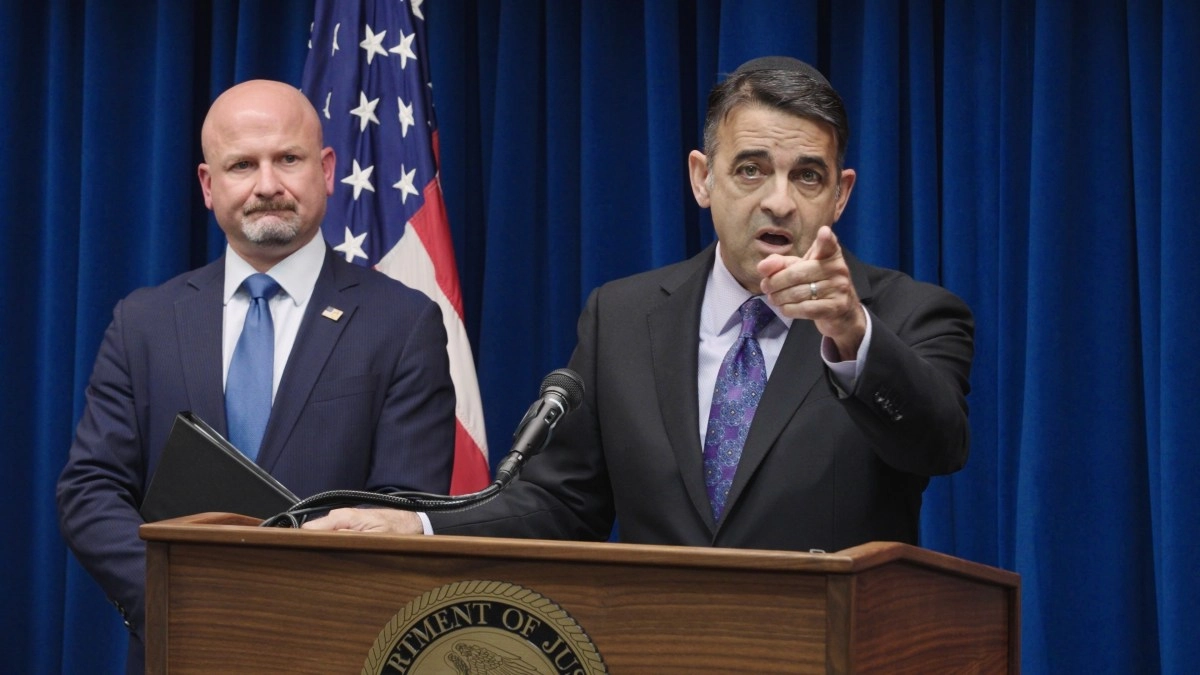
U.S. Attorney Daniel N. Rosen said the investigation focused on a network of activists who the government says developed organized tactics to impede enforcement of federal immigration laws. “The defendants are being prosecuted for their actions and not their political opinions,” Rosen said during a news conference in Minneapolis.
Accusations linked to immigration operations
According to the indictment, Direct Action Minnesota defines itself as a decentralized coalition that opposes federal immigration operations and promotes direct action to prevent detentions and deportations.
Prosecutors maintain that members of the group used physical blockades, agent surveillance, tracking of official vehicles and encrypted communication systems to interfere with Immigration and Customs Enforcement (ICE) activities. The investigation details incidents that occurred between January and May of this year, including blockades around the Bishop Henry Whipple federal building, headquarters of offices related to immigration operations in Minneapolis.
Authorities allege that some participants used trailers, makeshift barricades and metal structures to prevent access by official vehicles. They also point out that members of the group would have followed federal agents outside their workplaces and shared information about their movements through encrypted messaging platforms.
Among the facts included in the indictment is an incident in May in which an activist allegedly crashed her vehicle into the official car of a federal agent. Another defendant faces charges for allegedly damaging a government vehicle and snatching documents from officials during an operation.
Debate on Antifa and political protest
Federal authorities link several of the defendants to anti-fascist groups in Minneapolis, including the Black Cat Workers Collective and the Ray Rainbolt Memorial Shooting Club. The accusation maintains that some of these groups promoted direct confrontation tactics and trained activists to intervene in immigration operations.
Various civil rights organizations and experts have previously noted that Antifa operates as a decentralized movement rather than a formal organization. Even federal officials have maintained in the past that it is mainly an ideological current made up of independent groups.
The accusations also come after the so-called “Operation Metro Surge,” a broad mobilization of federal agents in Minnesota that caused protests and confrontations between activists and immigration authorities.
Justice Department officials said the case is part of a national strategy focused on investigating acts of political violence and attacks against federal agents. However, the authorities recalled that a formal accusation constitutes only an allegation. All defendants maintain the presumption of innocence and shall be presumed innocent until proven guilty in federal court beyond a reasonable doubt.