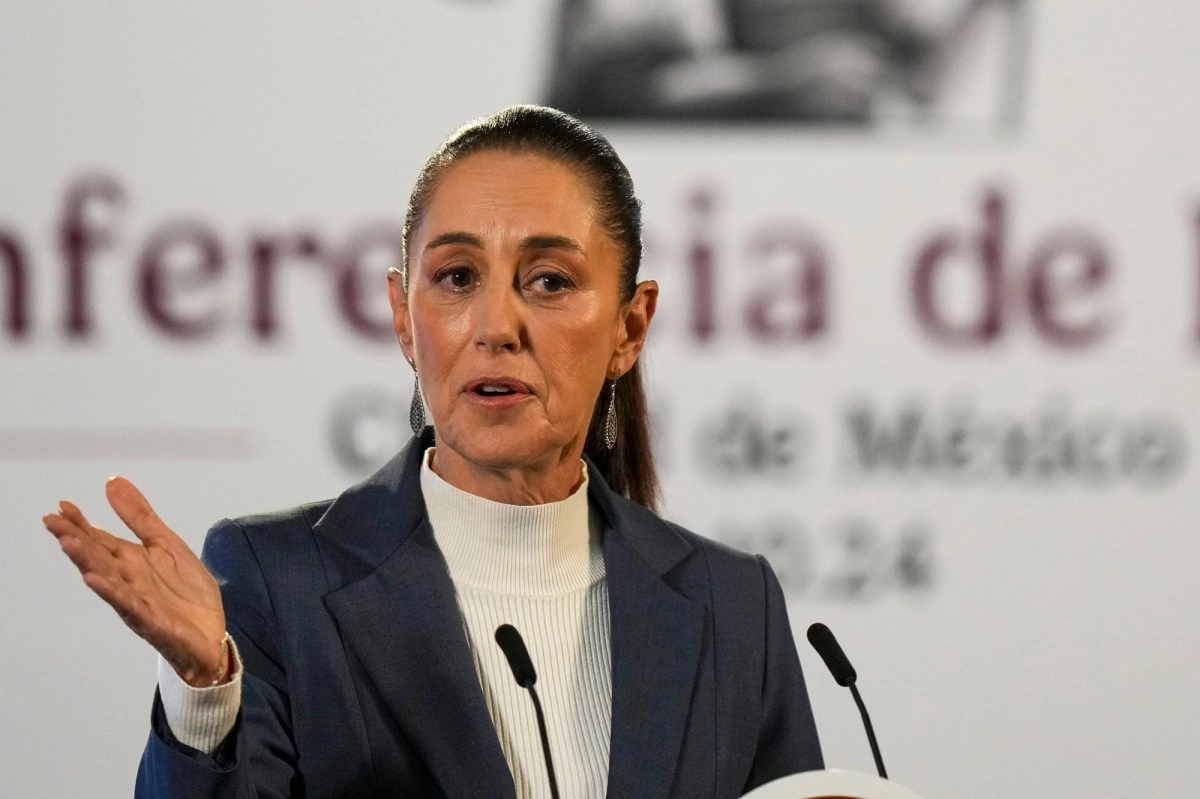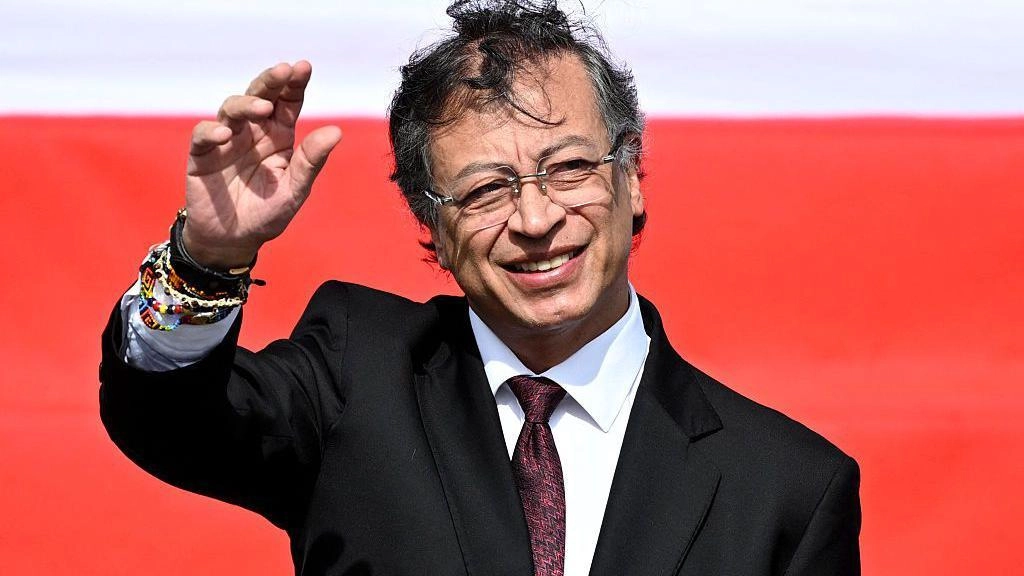

Gustavo Petro ends his presidency in Colombia without leaving anyone indifferent.
Detractors and disillusioners will celebrate this coming Friday the end of a mandate, the first on the left in the modern history of the country, often chaotic and confrontational.
Supporters will long for a government that since 2022 defended and gave voice to groups that were often relegated: left-wing voters, landless peasants, victims of the armed conflict, and indigenous and Afro-Colombian communities.
Petro will cede power this August 7 to an antagonistic movement: the new right of Abelardo de la Espriella, a president who made his rhetorical crusade against the left and Petrism a campaign asset.
In the last presidential elections, the country was practically divided in half between De la Espriella (49.6% of votes) and Petro's ideological successor, Senator Iván Cepeda (48.7% of ballots), in elections seen as a plebiscite for the Petrista administration.
Many believe that antipathy towards Petro led to historic support for De la Espriella, the president with the most votes. Others point out that support for the president is behind Cepeda, despite the defeat, achieving the best historical result for a left that will now have a lot of strength to oppose.
Whether sympathizers or detractors like it more or less, Petro's mandate broke molds and leaves behind legacies.
1. A personalist president
Petro and former president Álvaro Uribe (2002-2010) are at ideological opposites.
The first is a left-wing leader who opted to expand the state's role in the Colombian economy and reach out to armed groups to finally achieve peace in a country marked by violence.
The second, a right-wing leader who reduced the size of the State and imposed a tough hand on crime.
But they are both united by a strong, personalist leadership that transcended their own parties and turned their styles into the two most recognizable currents of this century in Colombia: Petrism and Uribism.
In the age of social media, however, Petro upped the ante.
"He communicated in a hyper-direct way, he maximized attention like a tweeter or YouTuber. He was the leader of the current moment of the attention economy," Javier Mejía, Colombian professor of Political Science at Stanford University in the US, reflects for BBC Mundo.
“The country was waiting for Petro's X for four years,” he adds.
With his tweets, Petro exhorted his supporters, criticized the opposition, showed off his achievements, and set the agenda. He also discovered to Colombians that a single publication could create unimaginable consequences.
The best example occurred on January 26, 2025, when at 3:41 in the morning he announced on
During that Sunday, businessmen, merchants and other Colombians with interests in both countries held their breath because of the tension that increased before their eyes with each publication by Trump and Petro.
And that was just one of several controversies that the outgoing president was involved in during his term.
"It provoked strong opposition and resistance. Politics became tense and the relationship between the president and Congress became strained. It was a battle of legitimacy that led Petro to a certain populism," Yann Basset, a political scientist at the Universidad del Rosario in Colombia, analyzes for BBC Mundo.
"Petro claimed to represent the people against supposedly illegitimate adversaries. That caused strong tensions in Colombian institutions," he adds.
Petro polarized and that, in part, gave him both benefit and discredit.
A few weeks before the last elections, several polls agreed that his approval and disapproval levels were almost on par, although acceptance was unusually high for a Colombian president at the end of his government.
Professor Mejía believes that Petro's “partisan” style is here to stay.
"It has been inherited by De la Espriella. Despite Colombia's strong and historical two-party system between liberals and conservatives, there has always been a way of doing politics with institutionalist logic: governing for everyone, without partisanship," says Mejía.
"Petro did this differently and it will be difficult to return to that institutionalism. A lot will be governed for each person's voters," he predicts.
2. The change in the conversation
Even among Petro's staunchest critics there seems to be a consensus that the outgoing president changed the conversation in Colombia.
"There was a tendency to talk about the armed conflict and it opened up the topics: environment and social justice, with the three major reforms that it proposed in work, pensions and health. These are topics that occupied the present and will surely continue to do so in the future," says Basset.
Mejía points out that this occurred in part due to the type of profile with which Petro surrounded himself to govern:
"From the typical Bogotá lawyers and politicians from the same old universities, they moved on to environmentalists, philosophers and anthropologists from other institutions. They talked about other things because a new bureaucracy arrived that saw the world differently, with other issues and priorities."
“With Petro, the expectation that other sectors of society, poor and less favored, would have access to power and political weight changed the terms of the conversation,” adds Alejandro Castillejo, professor of Anthropology at the University of the Andes.
Castillejo adds that this was favored by opportune timing: “Petro entered the presidency when the country is betting on the future and the future after the Havana Peace Agreement.”
That treaty ended more than five decades of war between the State and the FARC, the largest and longest-lived guerrilla in Colombia, and marked an alternative course.
Many Colombians began to demand more than peace from the government.
In 2021, in the most important social outbreak in Colombian history, tens of thousands demanded more social justice, equal opportunities and a change in the economic model.
A year later, Petro won the presidency.
"It was at the right time. There were great transformations and it capitalized on the context. It made a left-wing government viable," analyzes Mejía.
3. A consolidated left
Before Petro, the left had never governed Colombia.
It was an invisible, stigmatized force, often linked in the collective imagination to the guerrillas.
Many of its leaders were killed or forced into exile at the end of the last century.
Some analysts point out that part of Petro's success was due to political and, literally, vital survival.
"He was the natural leader. He survived a time of extermination," says Mejía.
In 2016, the Colombian State recognized its role in the so-called “systematic extermination” against several progressive leaders between the 80s and 90s, including presidential candidates such as Jaime Pardo Leal or Bernardo Jaramillo Ossa.
It is estimated that more than 5,700 people were disappeared or murdered in attacks against the left-wing Patriotic Union party between 1984 and 2016, “in events in which paramilitaries and state agents are mainly involved,” according to the Special Jurisdiction for Peace.
Petro, who was a guerrilla, is not only credited with bringing the left to power for the first time, but also with unifying and strengthening it.
Despite De la Espriella's record victory, Cepeda obtained the largest vote for a progressive candidate in Colombian history with 12.7 million ballots, more than Petro obtained when he won in 2022.
And months before the presidential elections, Pacto Histérico, Petro and Cepeda's party, became the largest legislative force in the congressional elections.
Petro bequeaths a strong opposition and a solid left that came very close to repeating the government and will aspire to regain power within four years.
What will be your role after the presidency?
The outgoing president will lead the opposition with Cepeda and will lead the Historical Pact after the party proposed it to him.
A polarizing and confrontational opposition is expected, a priori.
Since the end of the elections, Petro has waved the flag of electoral fraud, without publishing evidence, and has refused to recognize De la Espriella's victory.
It is foreseeable that Petro will continue using his social media channels, where he has accumulated 14 million followers between X, Instagram and TikTok. And that means a great speaker.
Basset warns that, "if De la Espriella tries to forcibly decree legislation that reverses the social reforms of the outgoing government, he will face the possibility of strong mobilization in the streets and institutions."
Petro has a strong audience and the outgoing president is willing to use it.
Download the new BBC World Service app. Choose BBC News Mundo and receive news alerts, documentaries and analysis, all in one place. Important: The new app is not available in the United Kingdom or the United States.