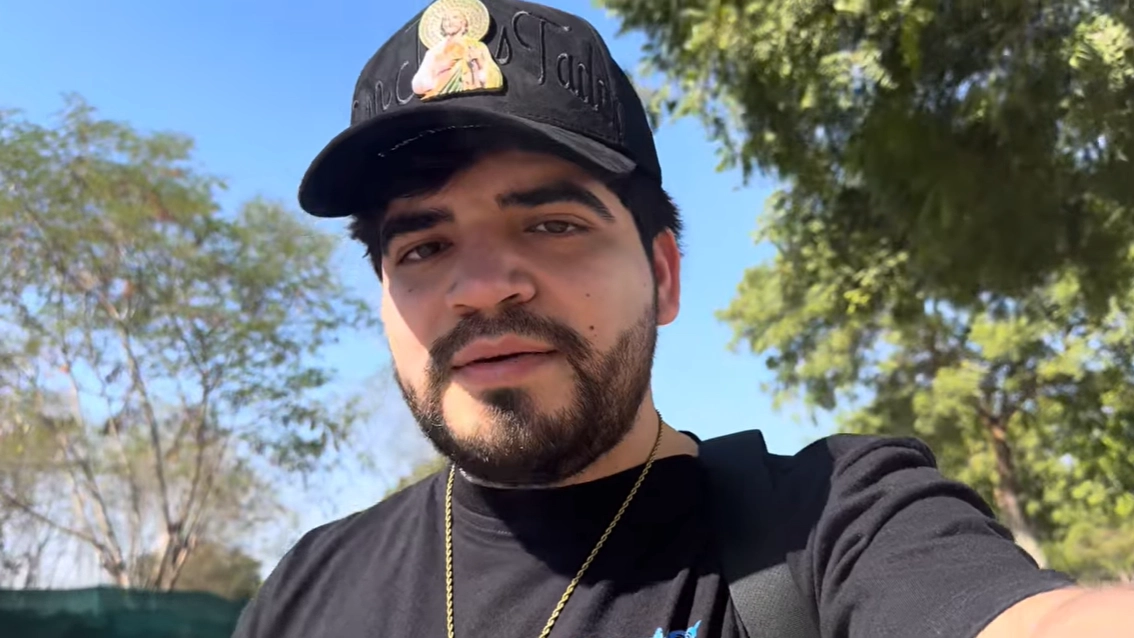

César Gastélum, a 25-year-old influencer, was broadcasting live with two friends in front of a fast food restaurant in Culiacán, Sinaloa, when two men on a motorcycle approached, shot him in the head and killed him.
The attack, which occurred on Tuesday night, was recorded by his camera: hundreds of the 500,000 followers of “Cesarín”, a young creator who shared content about humor, challenges, lifestyle, travel, nightlife and cars, saw it live.
He joins the list of at least ten influencers executed in the northwestern Mexican state since the war between the factions of the Sinaloa Cartel began two years ago.
Gastélum, according to what the authorities have disclosed, was not threatened or investigated, as could have happened in other cases of murdered creators.
He shared content about luxury and had previously published material on the grave of Leobardo Aispuro, alias “El Gordo Peruci”, another influencer murdered in 2024.
“Among the lines of investigation are various publications that allude to a faction of a criminal group,” says a brief statement from the Sinaloa Prosecutor's Office, without giving more details.
The local press attributed the allusions to recent content about “La Mayiza,” a faction of the Sinaloa Cartel loyal to Ismael “El Mayo” Zambada, the convicted capo in the United States whose arrest sparked an internal war.
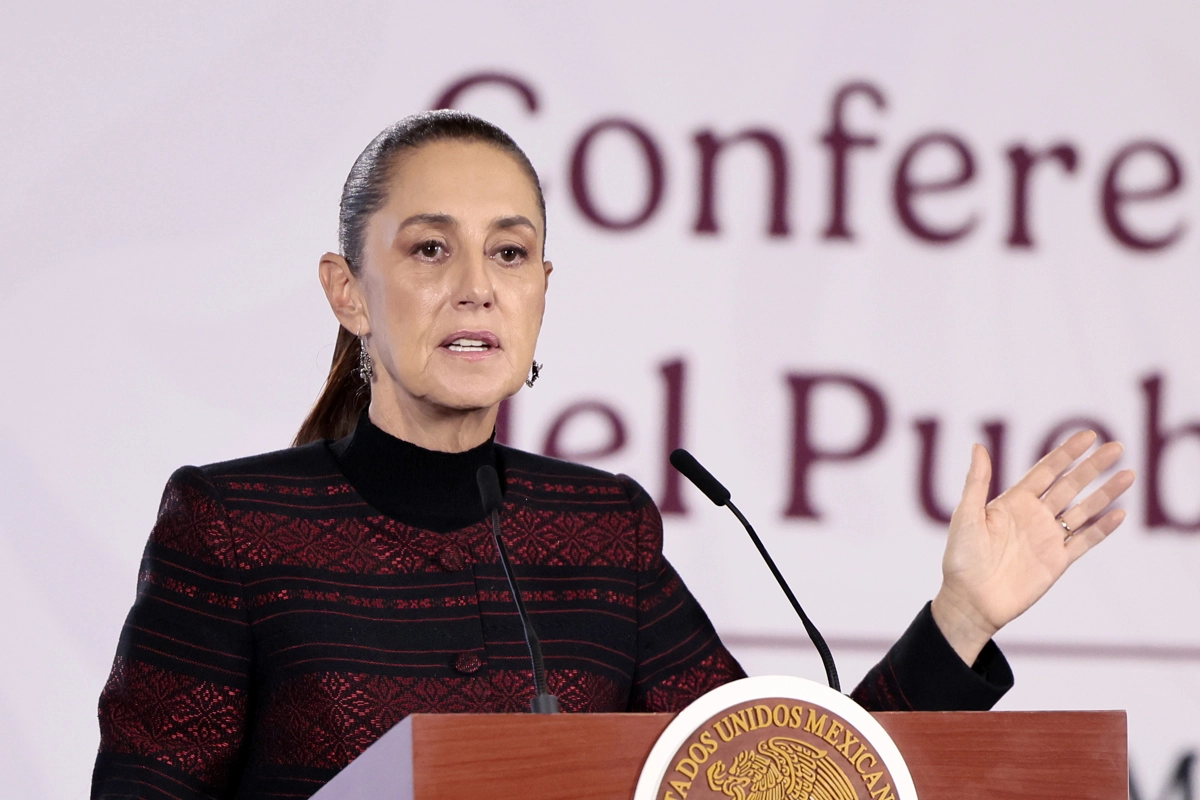
The local and federal governments, in the words of the president of Mexico, Claudia Sheinbaum, promised to investigate and find those responsible materially and intellectually.
The majority of homicides of creators, however, remain unpunished and there is no official record of a category that classifies them under the law.
It is clear, in any case, that many content creators, not only in Sinaloa, acquired a leading role in criminal life in Mexico that has increasingly made them a target.
“The algorithm and the narco promote the same thing: quickly reaching consumption and luxury as maximum values,” analyzes Claudia Arruñada, a communication expert at the Universidad Iberoamericana in Mexico.
“When the model of success is no longer building a methodical career, but rather a meteoric career, social networks and the drug world end up involuntarily being allies,” he tells BBC Mundo.
An opaque phenomenon
In January 2025, pamphlets accusing 25 influencers and musicians, including the famous Featherweight, of being linked to “La Mayiza” fell on the streets of Culiacán from a small plane.
Four of those names had already been executed, and appeared on the flyer as “ELIMINATED.” Two have been killed since then.
Gastélum was not on the list nor was he being investigated by authorities for possible links to the crime, but his brutal murder will inevitably be interpreted by many as part of an apparent trend.
The “narco-influencer” trend, which is based on an opaque phenomenon whose magnitude is difficult to estimate: some do work for drug traffickers, but others, perhaps the majority, are trapped in that context or are citizen journalists who investigate the topic.
Much of what is known, in addition, has emerged after the United States decided to investigate and sanction hundreds of Mexicans allegedly involved in drug trafficking.
Investigations are ongoing and most of the accused creators have denied any involvement.
The explanation for why they are killed may not necessarily be that they are involved in illegal practices: being young, visible and ostentatious in Culiacán today can make you a target.
The new form of drug advertising
The cartels in Mexico are multinationals with various business branches that, like any company, include an advertising area.
Several university studies have found that cartels use content creators as a kind of community managers to make their aspirations and positions known.
When they confront each other, furthermore, the propaganda assets of one side, such as an influencer, become a target for the other.
Just as for years they have used musicians to glorify their leaders or recycle the myth of the social bandit in what was later called “narcocorridos”, today some influencers are the ones who help in this advertising work.
“And they do it, they promote narcoculture, much more efficiently than the song, because it is no longer with metaphors, it is not a fiction, but rather someone showing what is supposedly their own life and linking it with those symbolic structures of the narco,” says Arruñada.
A study by the College of Mexico found that especially on TikTok, a network in which there is almost no moderation, drug traffickers try to recruit through videos that promote easy living, ostentation and defiance of the police.
In Sinaloa, the currently opposing factions of “La Mayiza” and “Los Chapitos” use hashtags and typical narratives of the networks as part of their recurring battle: the former adopted the ranchero hat as a symbol and the latter turned pizza into their icon.
Gastélum, in fact, was recently seen wearing the peasant hat attributed to “La Mayiza.” But that, more than proof, is a sign that popular culture has also been co-opted by drug traffickers.
Another way of washing
In addition to being the aspirational face that normalizes drug culture, it is believed that the influencer, although to a lesser extent, can also participate in money laundering.
In July 2025, a list of 64 Sinaloan content creators investigated by the Financial Intelligence Unit (UIF), dependent on the Ministry of Finance, was revealed for allegedly using their profiles to convert dirty money into clean.
There are several mechanisms, as reported by journalist Óscar Balderas: through raffles and draws, ventures, sponsorships or subscriptions, the influencer gains notoriety that is then rewarded with the money earned on the platform due to the high numbers of reproductions.
The platforms have not unanimously or forcefully rejected these assumptions, although Meta said it had not found violations of its policies in the indicated accounts and YouTube closed the account of “El Makabélico”, an influencer and musician, after he was sanctioned by the US Treasury Department.
In reality, more than the platforms, it is the influencers who would be the laundering mechanism, since they use their activities and businesses as a facade to clean the money.
Gastélum, in any case, was not among those investigated by the UIF.
In addition to investigating the phenomenon, Sheinbaum's government has wanted to break the link between popular culture and drug trafficking by intervening in the lyrics of corridos and promoting other themes in Mexican artistic production.
At the same time, it has waged the most effective war against crime in years, managing to reduce homicides by 48% in 2025, according to official figures.
However, events like Gastélum's, seen live, give the impression that drug trafficking continues to mark life not only on Mexican streets, but also in the digital world and culture.
Arruñada, a professor at Iberoamericana, maintains: “The cases of murdered influencers show that, regardless of whether they are involved with drug trafficking, the content that is symbolically related to drug trafficking is not going to disappear, but on the contrary, it is going to migrate to the next format and it is going to do so in an even more efficient and massive way.”
And he concludes: “No one imagined that drug culture would find an ally in algorithm culture, but that is exactly what they are.”