
In Mexico, extortion has become a criminal tax. In entire regions of the country, merchants, transporters, farmers, ranchers, fishermen, professionals and families must pay to work, circulate or remain in their communities. Floor collection can no longer be understood solely as a property crime: it is a mechanism of economic exploitation, territorial control and social subjugation.
This is one of the central arguments of my new book, Carteles Inc. Mexican criminal organizations are no longer structures dedicated exclusively to drug trafficking. They transformed into networks of diversified criminal enterprises that profit from numerous legal and illegal activities. They are flexible networks in which armed groups, local cells, officials, police, political intermediaries, financial operators, businessmen and service providers participate.
These networks charge for producing, selling, building, planting, fishing, transporting goods or simply keeping a small business open. But they don't just extract money: they select suppliers, impose prices, control routes, eliminate competitors and decide who can participate in certain economic activities. In many territories they do not operate outside the State, but rather through links with authorities, police corporations, political structures and business interests that provide them with information, protection and impunity.
Extortion functions, therefore, as an informal and violent system of taxation. Whoever collects the fee does not offer public services or rights; he sells precarious protection against the threat he himself represents. Payment does not guarantee security: it only postpones the attack. Its true power lies in turning everyday life into a concession granted by the criminal network.
The figures allow us to approximate the magnitude of the phenomenon, although they describe only a part of reality. INEGI's ENVIPE 2025 estimated that 33.5 million crimes occurred during 2024. Extortion represented 17.1 percent of the total and registered a rate of 5,971 cases per one hundred thousand inhabitants aged 18 and over. This is equivalent to approximately 5.7 million episodes in a single year and makes it the third most frequent crime, after fraud and robbery or assault on the street or public transport.
The most alarming fact is that 97 percent of the extortions remained hidden: they were not reported or the complaint did not lead to an investigation file. Consequently, the records of the prosecutor's offices should not be confused with the real dimension of the problem. The distance between the cases known to the authorities and those estimated through the survey reveals fear, distrust and deep institutional weakness.
Extortion is a prolonged form of domination that suffocates communities and economies. It forces businesses to close, abandon homes, sell properties, modify routes, lay off workers and cancel investments. It also destroys trust in institutions. In too many places, reporting can mean informing the extortioner himself that the victim dared to speak, especially when there are police officers, officials or employees of the prosecutor's offices linked to the criminal network.
I do not write this only as an organized crime investigator. I have suffered from this problem myself and I know the fear, helplessness and abandonment it produces. Whoever faces a similar situation discovers that the State can provide telephone numbers, issue statements and open files, but it hardly guarantees effective protection against possible reprisals.
This disaster didn't start with Claudia Sheinbaum. It is the result of an institutional deterioration that accelerated with the so-called war on drugs. The fragmentation of criminal organizations, the militarization of public security, corruption and impunity allowed armed groups to stop competing exclusively for drug trafficking routes and began to dispute markets, public budgets, municipal governments and complete economic activities.
During the government of Andrés Manuel López Obrador, the problem was not corrected. His administration minimized the magnitude of criminal control, adopted a rhetoric of pacification without building police and prosecutor's offices capable of confronting these networks, and transferred more and more civil responsibilities to the Armed Forces. The result was a more militarized State, but not necessarily more capable of protecting the threatened merchant or the transporter forced to deliver a weekly quota.
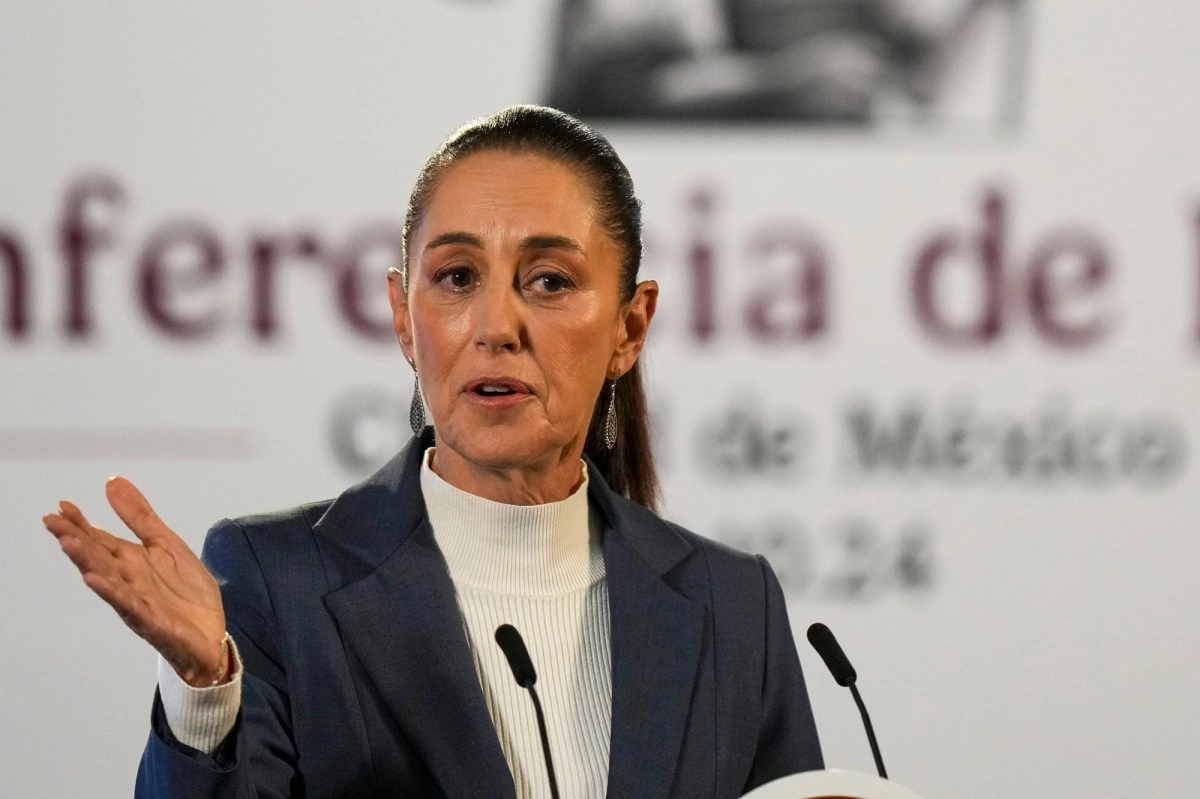
The government of Claudia Sheinbaum launched the National Strategy against Extortion on July 6, 2025. The plan contemplates 089 as the single complaint number, the cancellation of lines used for extortion, the opening of investigations, the deployment of intelligence cells and the intervention of specialized units. According to the Secretariat of Security and Citizen Protection, between July 6, 2025 and June 30, 2026, 1,674 people were arrested for this crime.
Arrests are important, but they are not enough in the face of millions of estimated episodes and a hidden figure of 97 percent. The mistake is to approach extortion as an accumulation of calls, threats and individual collectors, when facing a criminal economic system. Detaining whoever collects the fee is of little use if those who select the victims, protect the operation, manage the resources, launder the money and guarantee impunity remain intact.
Mexico needs asset investigations, effective protection for whistleblowers, purging of police and prosecutors, control of prisons from where extortion is ordered, reliable local units and financial intelligence. Above all, it needs to break the links between criminals, authorities and economic actors. As long as those connections remain intact, each capture will be just a modification of the criminal organization chart.
Precisely on “Extortion and collection of rent: responses from the territory” I will participate on Friday, August 7, from 10:50 a.m. to 11:50 a.m., in the 8th International Congress on Security and Social Proximity that will take place at the La Salle University, Nezahualcóyotl Campus.
Talking about extortion is talking about the country we really have: a Mexico where networks of criminal companies charge for working, producing, circulating and living, while corruption and impunity ensure the continuity of the business. This is the Carteles Inc. tax: a taxation imposed through fear that the State has not yet been able to dismantle.
Today, August 3, at 7:30 p.m., I will present my most recent book, Carteles Inc., together with Marcela Turati and Irma Eréndira Sandoval at Cafebrería El Péndulo de San Ángel, Ave. Revolución 1500, Mexico City. Talking about extortion is talking about the country we really have: a Mexico where networks of criminal companies charge for working, producing, circulating and living, while corruption and impunity guarantee the continuity of the business. This is the Mexico of Carteles Inc. And it is the Mexico that Claudia Sheinbaum's government still does not dare to confront in all its dimensions.