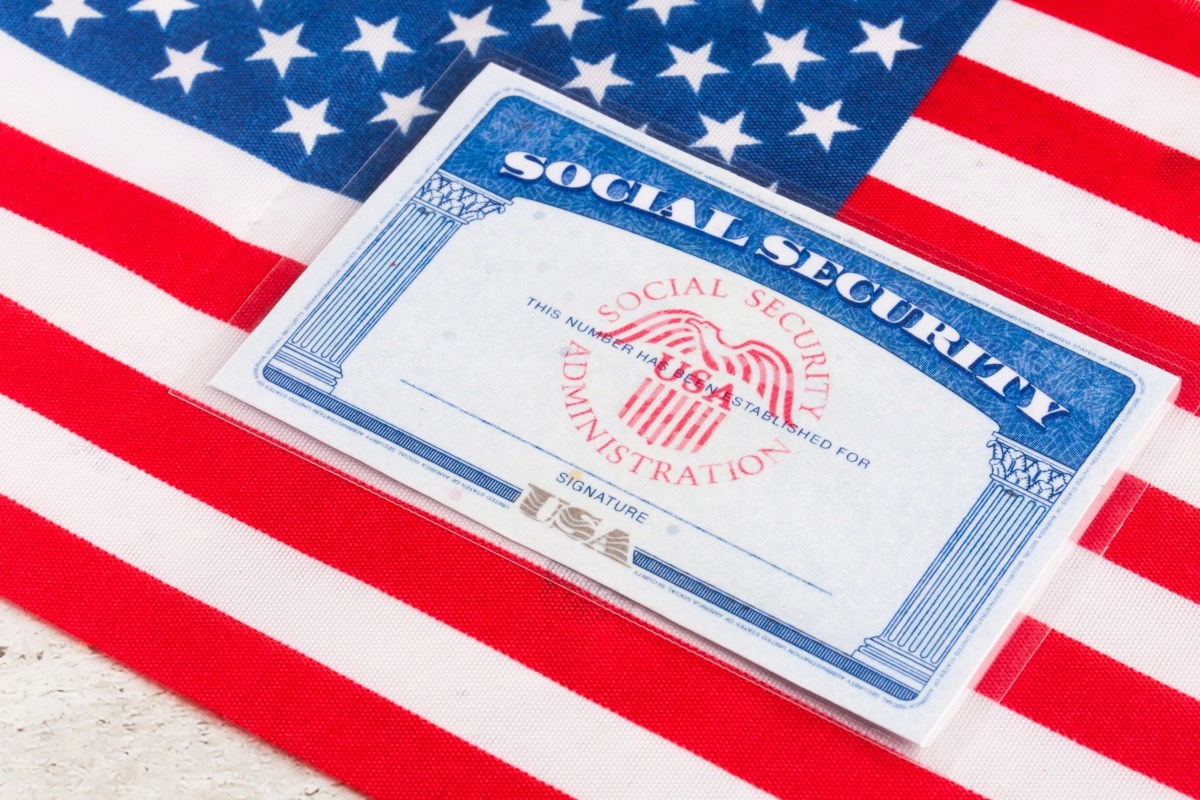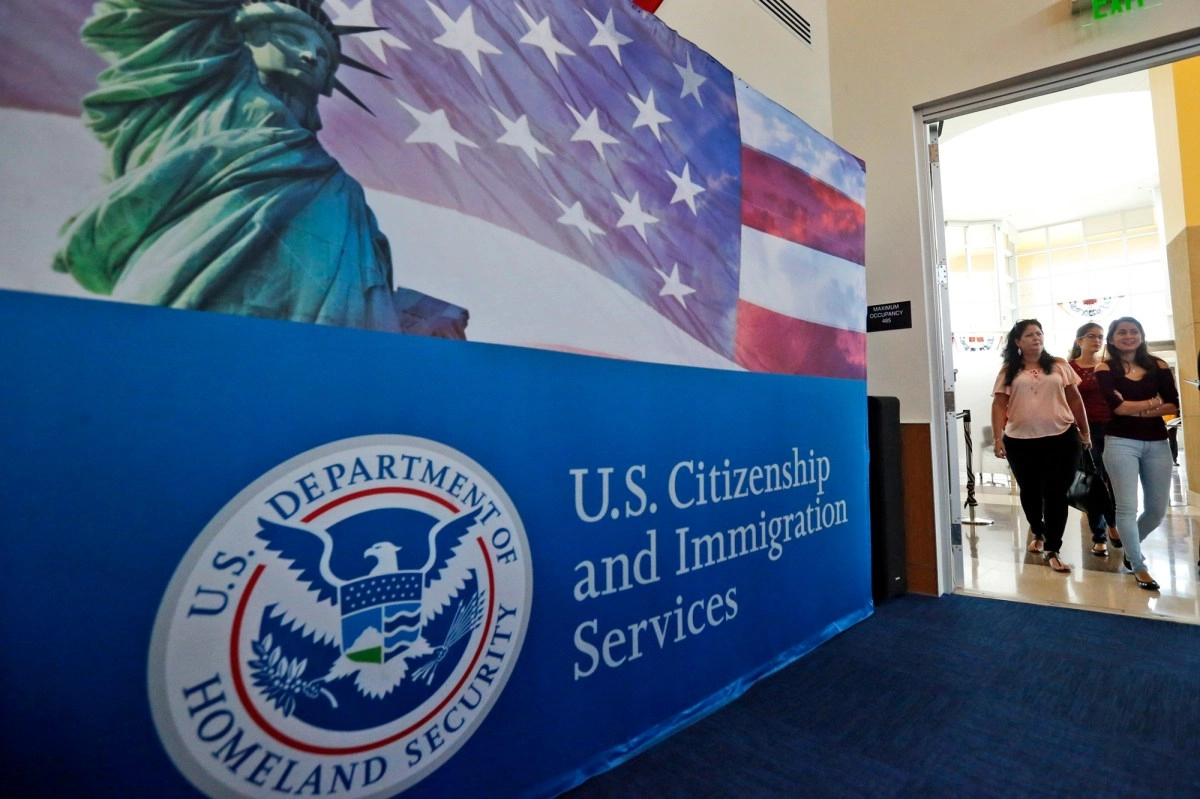

The Trump Administration has revived the public charge rule, a provision that greatly expands the scope of who will be affected and denies permanent residency to applicants who use or will use public benefits such as Medicaid, housing assistance or food stamps.
“The public charge rule will return on September 18, and it is broader than the criteria applied since 2022,” said Xiao Wang, executive director and co-founder of the organization Boundless Immigration, during the video conference “New public charge rules have a discouraging impact on immigrants and their children,” organized by American Community Media (ACoM).
“Whereas previously immigration officials followed specific guidelines for denying a permanent residency application based on whether the applicant demonstrated sufficient financial stability to not become a public charge, they now have a wide margin of discretion,” Wang said.
He explained that it is a question not only of whether they have already received Medicare, food assistance or housing assistance but also of considering whether they could become dependent on them in the future.
“This rule has not yet come into effect; however, the fear it generates and its impact on families across the country and their health have an impact as significant as the number of applications that could ultimately be affected by the measure.”
He mentioned that the last time this administration tried to implement something like this, families withdrew their children from food and health programs out of fear, even though, in most cases, the benefits received by the children would not have affected the parents' application for permanent residence.
Who does it affect?
The main group affected is made up of people who apply for a green card from within the United States, a process technically known as adjustment of status; and those who request it from abroad as spouses, parents and children.
That is to say, the vast majority are cases of family reunification that involve direct and immediate relatives of US citizens and permanent residence holders.
Refugees and asylees are exempt; special immigrant minors (children who have suffered abuse, abandonment or neglect); victims of human trafficking and certain crimes (such as T and U visa holders); and people covered by the Violence Against Women Act (VAWA).
Public charge does not apply to naturalization or U.S. citizenship processes; So, if you already have permanent residence and apply for naturalization, the benefits you have received do not influence the decision.
Benefits received after September 18 are counted under these new criteria, while residency applications submitted before that date are governed by the current (more limited) rule, even if their resolution takes six, twelve or more additional months.
Benefits received by family members, including children who are US citizens, such as Medicaid or food assistance, are not considered benefits received by the applicants themselves.
Therefore, families give up benefits for their children, especially to protect themselves against a risk that, in reality, does not exist.
The impact on Medicaid and CHIP
Joan Alker, executive director of the Center for Children and Families and research professor at Georgetown University's McCourt School of Public Policy, said public charge has a chilling effect on children who are citizens but have an immigrant parent or even a naturalized citizen.
"This affects one in four children in the United States. We are talking about between 40% and 50% of minors in the United States obtaining their health insurance through Medicaid or CHIP (Children's Health Insurance Program)."
He said they have seen very pronounced declines in Medicaid and CHIP enrollment numbers, specifically in the case of children, who are suspected to be from mixed immigration status families.
"Since President Trump took office in January 2025, we have seen 2.3 million fewer children enrolled in Medicaid and CHIP. About a million, a devastating number."
He said that one of the reasons for this decline, even though public charge has not come into force, has to do with the fact that in mixed immigration status families, parents are afraid to enroll their children in Medicaid and CHIP due to the extraordinarily aggressive deportation agenda.
"They are afraid because, for the first time in history, the Department of Health and Human Services has stated that it will share Medicaid and CHIP data with ICE. Although there is ongoing litigation regarding this, the measure remains in effect."
He also noted that some states like Indiana are enacting harsh laws requiring reporting of people from immigrant families.
They anticipate more fear
Dr. Giridhar Mallya, a public health physician and senior policy officer at the Robert Wood Johnson Foundation, said the public charge rule will make an already difficult situation even worse, especially for families with U.S. citizen children who have lived in terror for the past 18 months.
He considered that giving an enormous margin of discretion to immigration agents will lead to erroneous decisions, deliberately made to reduce the number of people who use these essential public benefit programs.
"In the first Trump Administration, the public charge rule had an enormous impact on children from mixed immigration status households. More than 700,000 children in these families lost SNAP (food stamps) benefits in a period of just two years."
But he said this isn't the only thing happening with SNAP right now, as over the past year and a half, the Trump administration has slashed it by nearly $200 billion over the next decade.
At the same time, they are sharing data between the agencies that administer Medicaid and SNAP and those in charge of enforcing immigration laws.
In conclusion, he said that participation in the SNAP program has decreased by 4.5 million people in the last nine months alone, a figure that includes almost one and a half million children.
“These are enormous declines that have not been seen since the 1990s, and that without all the planned measures having yet been implemented.”
What should we do?
Wang advises: First of all, if you are ready to submit an application for legal permanent residence, do so before September 18. In this way, it will remain under the current regulations, which are more limited.
Second, try to find an attorney through a local nonprofit organization, as it is more important than ever to get clarity and be able to discuss what requirements are met and what are not, as well as what types of benefits you are entitled to that will not be affected by this rule.