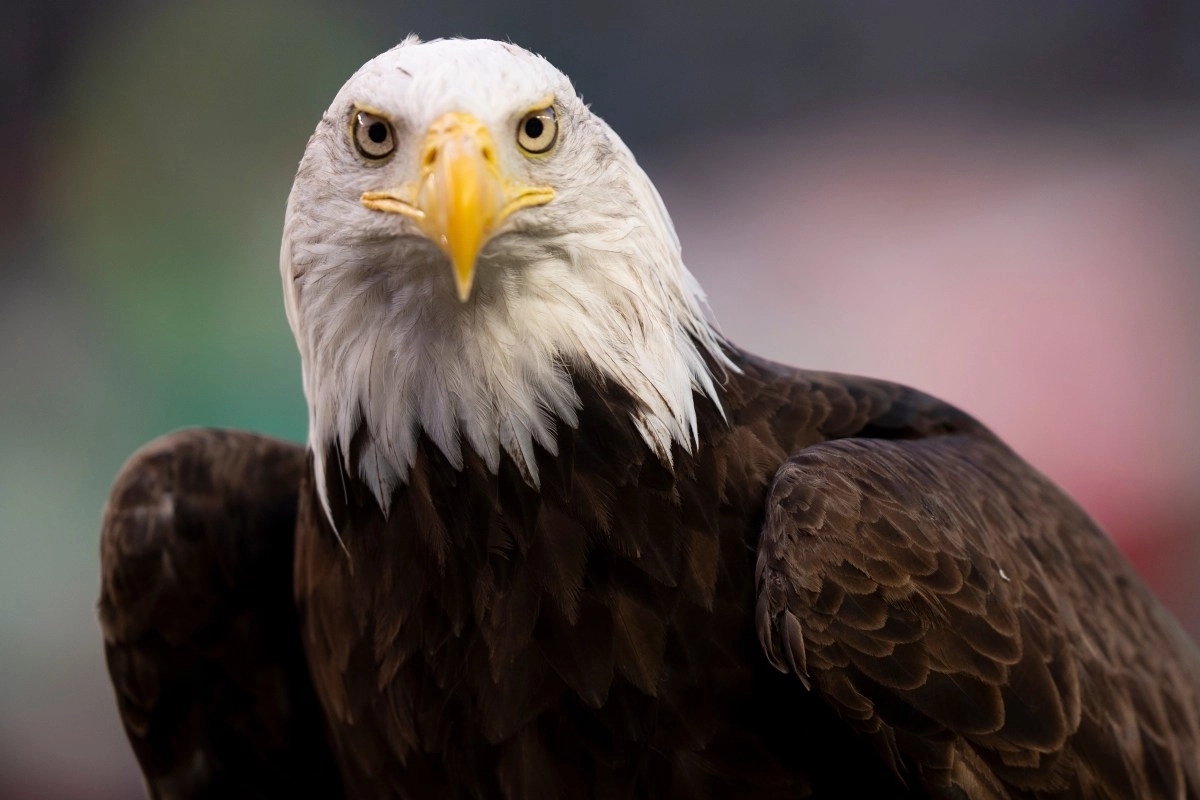

The Justice Department announced that a Washington man faces federal criminal charges for allegedly shooting and killing a bald eagle, a species protected by US law even though it was no longer classified as endangered almost two decades ago.
The case once again put under scrutiny the effectiveness of sanctions against those who attack protected wildlife and the persistence of this type of crime in the United States.
The United States Attorney's Office for the Western District of Washington reported that Benjamin G. Allen, 66, of Brush Prairie, Clark County, was charged with violating the Bald and Golden Eagle Protection Act and the Migratory Bird Treaty Act.
In a statement, prosecutors said Allen “is accused of shooting and killing the bird with a shotgun.” If convicted of both misdemeanors, you could be sentenced to up to one year in prison and a fine of up to $500,000.
According to the prosecution, the events occurred on February 5, 2026. A witness reported hearing a gunshot coming from the defendant's property. Shortly after, specialized agents from the Department of Fish and Wildlife responded to the scene and located a dead bald eagle with blood around its head.
Authorities indicated that Allen raised chickens near the site where the bird appeared. However, the prosecution did not attribute a specific motive for the alleged attack nor did it reveal the content of the statements the man offered during the interview with investigators.
A veterinary examination determined that the eagle died as a result of two shotgun pellets lodged in the brain, evidence that supported the accusation presented by the federal government.
Allen must appear on September 8 in federal court in Tacoma.
Although the bald eagle was removed from the endangered species list in 2007 thanks to decades of conservation efforts, it remains under strict federal protection. The Bald and Golden Eagle Protection Law, in force since 1940, prohibits killing, capturing, selling, transporting or possessing live or dead specimens, as well as their nests, eggs or any part of the animal, except through special permits granted by the authorities.
The Washington case is not an isolated event. In May of this year, Santos Guerrero, a resident of Porter, Texas, accepted responsibility for shooting a bald eagle in 2024. According to the U.S. Attorney's Office for the Southern District of Texas, the bird initially survived the shot, but a veterinary hospital decided to euthanize it due to the severity of the injuries. The defendant faces a sentence of up to one year in prison and a fine of $100,000.
Federal authorities also maintain as a reference another of the most serious cases of illegal hunting of protected birds. In 2024, Travis John Branson, a resident of Cusick, Washington, received a sentence of nearly four years in prison and a fine of more than $777,000 after admitting that he participated for more than a decade in a ring that killed and trafficked eagles and hawks to sell their feathers and other parts on the black market. Prosecutors linked that operation to the deaths of at least 118 eagles and 107 falcons, although they maintained that the actual number of birds killed was considerably higher.
Conservation organizations have warned that, despite the bald eagle's population recovery, the species still faces threats from gunshots, poisoning, habitat loss, and collisions with human infrastructure.