

Allahabad High Court: Kanyadan’ Not Mandatory for Valid Hindu Marriage, Rules Bench
The Allahabad High Court ruled that ‘Kanyadan’ is not mandatory for a valid Hindu marriage, emphasizing that only the Saptapadi ritual is essential. Learn more about the court’s decision and its implications.
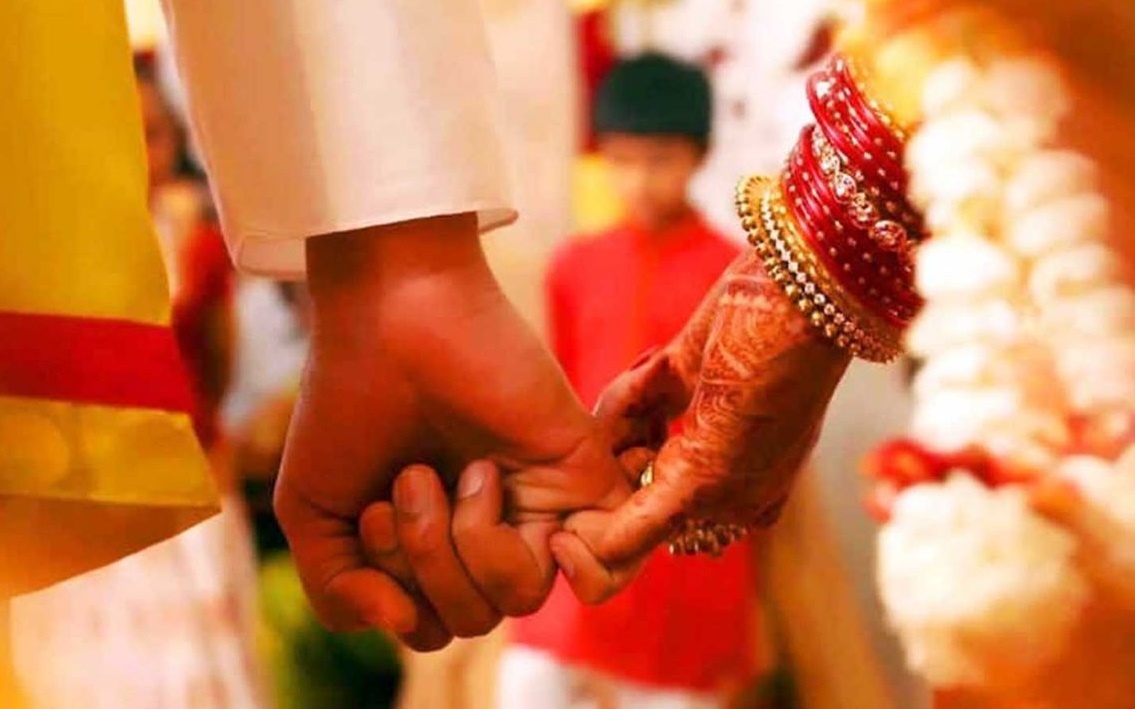

The Allahabad High Court has made a significant observation regarding Hindu marriages, stating that 'Kanyadan' is not a mandatory ritual for a valid Hindu marriage. Justice Subhash Vidyarthi, presiding over the bench, made this statement while referring to Section 7 of the Hindu Marriage Act, 1955. The court emphasized that the Act only recognizes Saptapadi, the ritual of seven rounds around the sacred fire, as essential for a Hindu marriage, without explicitly mandating the performance of Kanyadaan.
Section 7 of the Hindu Marriage Act allows Hindu marriages to be solemnized according to the traditional customs and ceremonies of the parties involved, provided they include Saptapadi. This provision requires the bride and groom to take seven rounds together around the sacred fire, after which the marriage becomes legally binding. The court's attention was drawn to this provision during the hearing of a petition seeking the recall of certain witnesses in a case pending before a sessions court in Lucknow.
The petitioner argued that re-examining two witnesses, a woman and her father, was necessary to determine whether Kanyadaan had been performed during the marriage, as it is considered an integral part of Hindu marital rites. However, the trial court had earlier dismissed the petitioner's plea to recall the witnesses under Section 311 of the Code of Criminal Procedure (CrPC), which empowers courts to summon witnesses for a fair trial.
The High Court upheld the trial court's decision, stating that determining the performance of Kanyadaan was not crucial to establishing the validity of the marriage in question. The court emphasized that the sole requirement for a valid Hindu marriage is the completion of the Saptapadi ritual, irrespective of whether Kanyadaan was performed or not. Consequently, the petition to recall witnesses was dismissed by the court, affirming that their testimony was unnecessary to adjudicate the case effectively.